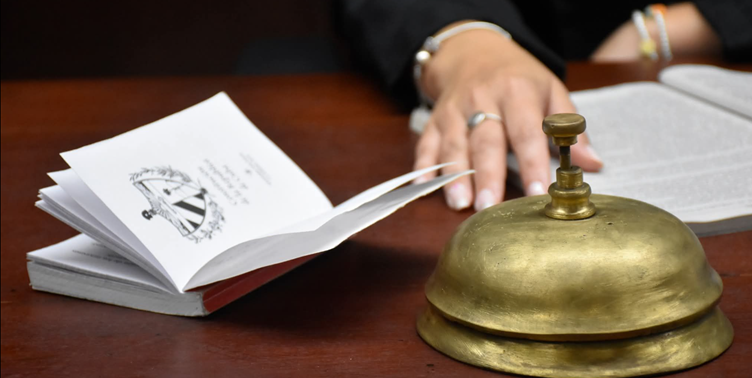
An informative note from the Popular Provincial Court of Havana once again exposes the discrepancies in the judicial system on the Island.
LIMA, Peru – While political prisoners on the Island suffer sentences of 15 or more years in prison, the Popular Provincial Court (TPP) of Havana recently sentenced two child abusers to 8 and 10 years of deprivation of liberty.
A recent informative note published by the TPP once again exposes the discordances of the judicial system on the Island, more dedicated to the service of a political party and its ruling caste than to the protection of citizens.
According to the entity’s statement, on September 29, the Popular Municipal Court of Arroyo Naranjo held the oral and public trial corresponding to case 84 of 2025 against the defendants Daima Rodríguez Núñez and Carlos Díaz González.
The individuals were prosecuted for the alleged crimes of “corruption of minors, other acts contrary to the comprehensive development of minors and sexual abuse.”
The evidence in the case showed that the defendant, the biological mother and legal guardian of four girls (10 years old, seven years old, four years old and one year old), did not take her daughters to school “for prolonged periods of time; she did not feed them adequately”; and did not take them to the doctor when they required specialized care.
“She frequently left the property where she lived and left her daughters alone for long periods of time, including at night and early morning,” the note states.
Daima and her partner Carlos forced the girls to wander the streets, at any time, to ask for food and money from neighbors and strangers. The defendants used the money they obtained to consume alcoholic beverages.
In addition, Carlos sexually abused the seven-year-old girl, an act that the mother allowed.
For all of the above, the Court imposed 8 years of deprivation of liberty on Daima Rodríguez Núñez and 10 years of deprivation of liberty on Carlos Díaz González. Both received accessory sanctions that prohibit them from leaving Cuba and the mother’s parental rights were suspended.
The sentences of both subjects, derived from a long list of aggravating circumstances, contrast with the severity of those applied to peaceful protesters on the Island.
Since the massive protests of July 11 and 12, 2021 (11J), the authorities of the Cuban regime have arrested hundreds of peaceful protesters and even passive witnesses, fabricating crimes that force them to suffer between four and up to 15 or more years of political prison.
Disproportionate and unfair sentences
A clear example was the repression of popular protests that occurred on August 19 and 20, 2022 in Nuevitas, due to blackouts of up to 18 hours, one of the largest recorded against the Cuban authorities after 11J. On that date, the residents of that town, fed up with the blackouts, demonstrated shouting “Freedom” and the conga of “Turn on the current…”.
At the end of April 2024, the sentence of thirteen Nuevitas protesters was announced. The sentences handed down by the regime ranged from eight to 15 years in prison. Mayelín Rodríguez Prado, who received the highest sentence of 15 years, was charged with “continued enemy propaganda” and “sedition.”
It is worth remembering that Mayelín Rodríguez Prador (alias La Chamaca), was the one who broadcast live the popular protests that occurred in Nuevitas and recorded how the repressors During the protests, two eleven-year-old girls were beaten. Rodríguez Prado’s whereabouts were unknown for several days after the demonstrations.
José Armando Torrente Muñoz was sentenced to 14 years in prison for similar crimes, while other protesters face sentences of up to 13 years for charges including “sedition,” “attack,” “resistance” and “sabotage.”
Yennis Artola Del Sol was sentenced to eight years in prison simply for taking a photograph of a sign that said “Patria y Vida.” For this reason, she has been accused of “continued enemy propaganda.” And Wilker Álvarez Ramírez to four for “cover-up.” These types of sentences reflect the Cuban Government’s continued repression against those who seek to exercise their fundamental rights and express their discontent.
Shortly after the decision of the Castro courts became known, the European Union (EU) express their rejection of the “harsh and disproportionate” sentences handed down.
According to statements by Peter Stano, spokesperson for the High Representative of the Union for Foreign Affairs and Security, Josep Borrellthe EU “expresses concern” about the harsh and unfair sentences imposed in relation to the Nuevitas protests.
On the social network
Also the Undersecretary of State for the Western Hemisphere, Brian A. Nichols, denounced the imposed sentences of up to 15 years in prison imposed on the Nuevitas protesters. In doing so, Nichols called the sanctions outrageous and unconscionable.
In their statements The Undersecretary of State also expressed: “The Cuban Government’s continued repression against Cubans who strive to fulfill their basic rights and needs is inconceivable.”