The diplomatic headquarters links the phenomenon with the deterioration of economic conditions on the Island and warns of a crime spike.
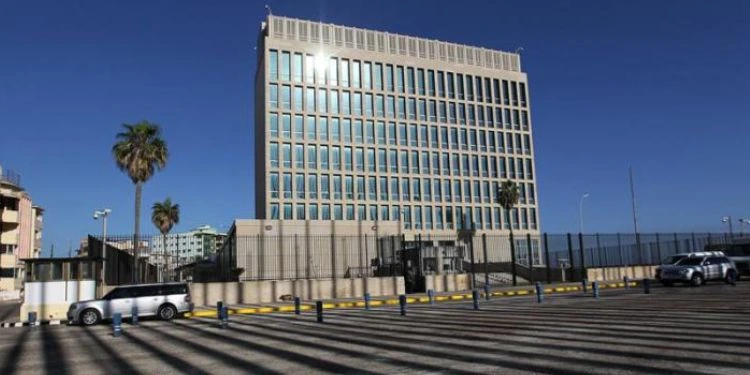
LIMA, Peru – The United States Embassy in Havana launched a security alert to its nationals and residents in Cuba about “the increase in robberies and violent events,” a reality that it assures is related to the deterioration of the country’s economic conditions.
Through a statement on its official websitethe Embassy warned about robberies with knives on the Island, minor attacks on vehicles of its diplomatic mission, as well as home invasions and theft of property.
“Power outages occur frequently and provide cover for criminal activities. Please remain alert,” the official note states.
In this regard, the diplomatic headquarters highlighted several recommendations for residential security that include closing all doors/windows at night, and removing objects that may attract theft from patios (bicycles, hoses, tools).
In relation to personal security, the statement suggests keeping mobile phones charged and with key numbers programmed; keep valuables out of sight and under direct control; carry wallets in front pockets; and in crowded places, keep purses or bags in front.
Likewise, the US Embassy highlighted the importance of not displaying cash in public; limit alcohol consumption; never accept drinks from strangers; always identify an escape route; remove yourself from violent situations; and be a good witness by observing or remembering the appearance, clothing, vehicles, and license plates of parties involved during incidents.
In mid-September, the diplomatic headquarters issued another “national security alert” given the increase in thefts of US travel documents in Cuba, including permanent resident cards (green cards)and reports of extortion to recover them.
“The United States Embassy has noted an increase in the theft of American travel documents in Cuba, including permanent residence cards. Victims have reported cases of extortion, in which large sums of money are demanded to return the stolen documents,” reads the text of the alert.
The diplomatic headquarters also warned then of a crime spike: “Minor crimes, such as theft of bags, purses and vehicle thefts, represent a risk for travelers in Cuba. Violent crimes, such as armed robberies and homicides, are also increasing. All travelers are recommended to exercise caution while in Cuba.”
Crime on the rise within Cuba
The month of September 2025 left a shocking balance of violence in Cuba: at least 11 murders, 4 femicides and 15 robberies documented in different provinces. The cases, compiled from official reports, publications on social networks, independent media and sporadically some state media, show a pattern of growing insecurity that contrasts with the silence of the authorities, who do not publish official crime statistics.
Last month witnessed at least 15 documented robberies in several provinces, some with extreme violence.
In Havana, the theft of hundreds of liters of diesel was reported at the San Agustín bus terminal, in the midst of the serious energy crisis. Also in the capital, a custodian of the Castillo de la Punta was seriously injured after an assault in the early morning. In Guanabacoa, The Hermitage of Potosí suffered a new vandalism attack and the theft of religious objects in what was his seventh looting in recent years.
Also in the capital, a robbery with extortion was reported in which thieves took objects from a home and kidnapped a dog, demanding a ransom in foreign currency. In San Miguel del Padrón a security camera captured a thief trying to steal the fence of a house and other objects.
Matanzas did not escape crime: a warehouse near the pediatric hospital was looted.
Livestock theft continues unabated. In Sancti Spíritus, an inmate on a prison pass was caught stealing and sacrificing a horse, while in Santiago de Cuba neighbors subdued a young man who was trying to steal a cow in Songo-La Maya.
In Santiago de Cuba there were also several episodes of urban robbery: a chain snatcher detained by neighbors, the capture of a gang that dismantled motorcycles, and the arrest of a young man who had stolen a cell phone in the middle of the street. That same month, two men were arrested in Sancti Spíritus after stealing three televisions from an elementary school.
In Las Tunas, two individuals ransacked a home and transported the stolen items in a horse-drawn carriage. While in Pinar del Río, a man accused of being responsible for multiple thefts of electric tricycles was arrested.
These events reveal a climate of growing insecurity, where the Police almost always act after the fact, when the tragedy is already irreversible. The lack of patrolling and the slow response, as well as light sentences generate distrust in the population, who in many cases is forced to act on their own, reducing and exposing thieves in the middle of the street.
The official discourse insists on talking about “citizen tranquility”, but the reality narrated by victims, neighbors and independent platforms reveals an increasingly vulnerable country, where violence has become part of daily life and cannot be hidden under state propaganda.