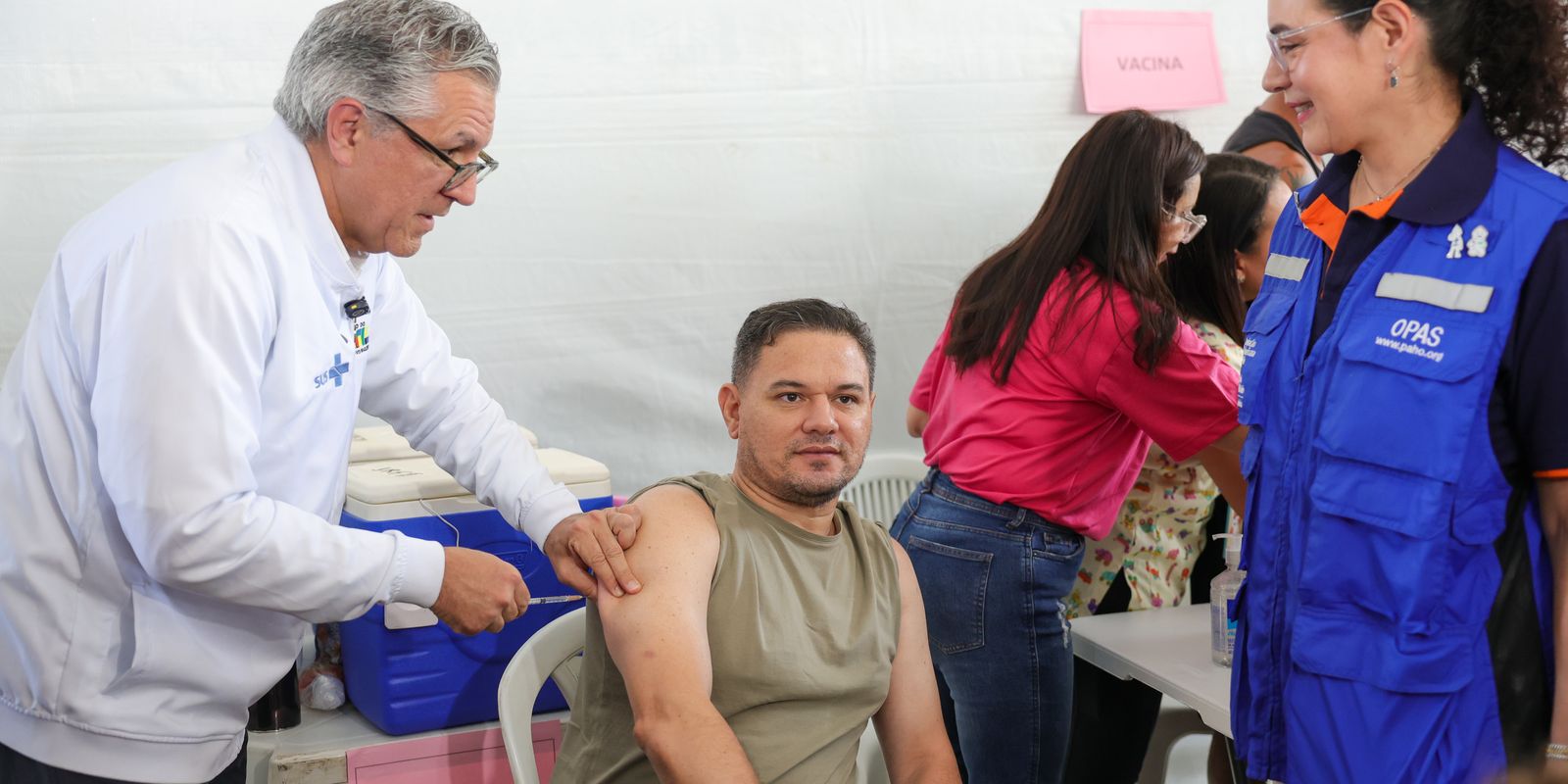
When participating in the D-Day mobilization of the National Multivaccination Campaign this Saturday (18), the Minister of Health, Alexandre Padilha, appealed to fathers and mothers to update their children’s vaccination records. According to him, More than 25 thousand immunization rooms across the country are currently operating with the aim of expanding vaccination coverage.

Alexandre Padilha opens the national multi-vaccination D-Day, in Riacho Fundo II – Fabio Rodrigues-Pozzebom/ Agência Brasil
“There are 16 priority vaccines in the children’s calendar and a great mobilization for updating. It’s that day when fathers and mothers can get their child’s digital health record and check if their son and daughter’s vaccines are up to date”, he said.
Padilha evaluated the D-Day proposal to mobilize for vaccination as a moment “to salute science and the defense of life”.
“Unfortunately, there are still a lot of people spreading lies about vaccines. A lot of people campaigning against vaccines. Countries that are dismantling their vaccination programs, as is happening in North America. And the result is the return of diseases that we had already eliminated.”
“Do not deny your children a right that their parents did not deny them in a very difficult situation, decades ago. I want to emphasize that, if I had any distrust of the vaccine, I would not vaccinate my daughter. And my 10-year-old daughter receives all the vaccines that are on the official SUS vaccination calendar [Sistema Único de Saúde]”, stressed Padilha
Measles
Speaking to the press, the minister highlighted that the day is also dedicated to improving measles vaccination coverage, not only among children, but among adults up to 59 years of age who do not have at least two doses against the disease certified in their vaccination record.
“Brazil is a country that had its measles elimination certificate regained last year – we had lost this certificate due to the drop in vaccinations since 2016,” he said.
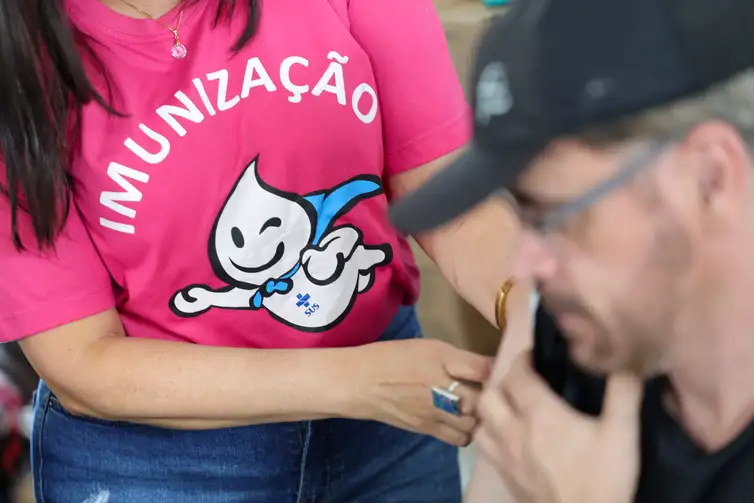
More than 25 thousand vaccination rooms are open across Brazil this Saturday – Fabio Rodrigues-Pozzebom/ Agência Brasil
The minister reinforced that there is a serious measles problem in the world, with most cases in North America. “There is always the risk of bringing imported cases to Brazil”, reinforced the minister.
“I remind today’s parents that they only didn’t have infantile paralysis, they only didn’t have serious diseases like meningitis and measles itself because, one day, your parents went to vaccinate you at a health unit. Sometimes, in a much more difficult situation because the vaccine was only available once a month or only on campaign days.”
According to Padilha, the ministry is actively searching among tourism, port and airport professionals and taxi drivers, who have a lot of contact with foreign visitors, to update measles vaccination in the country.
“But the campaign is open to everyone. Up to 59 years of age, anyone who has not had two confirmed doses against measles should take the opportunity to get the vaccine.”
Yellow fever
Finally, the minister issued a warning to residents of the states of São Paulo, Minas Gerais, Rio de Janeiro and Paraná, where vaccination actions against yellow fever are being reinforced.
“It is very important for people to check and update their yellow fever vaccine. Today, it is just one dose, you no longer need to repeat the dose [a cada 10 anos]. Anyone who does not have a yellow fever vaccine in these states, even adults up to 59 years of age, we are recommending it”, he concluded.
Stories
Francisco Valtenor Araújo, 47 years old, is a psychiatrist and went to the Riacho Fundo 2 vaccination point, about 30 kilometers from the federal capital, to update his own vaccination record. He took three doses in total: against yellow fever, against hepatitis and triple viral, which protects against measles, mumps and rubella.
“It is very gratifying to see actions like this”, he said, referring to the D-Day mobilization.
“The last dose I took was for the flu. Now, my vaccination card is up to date”, he celebrated.
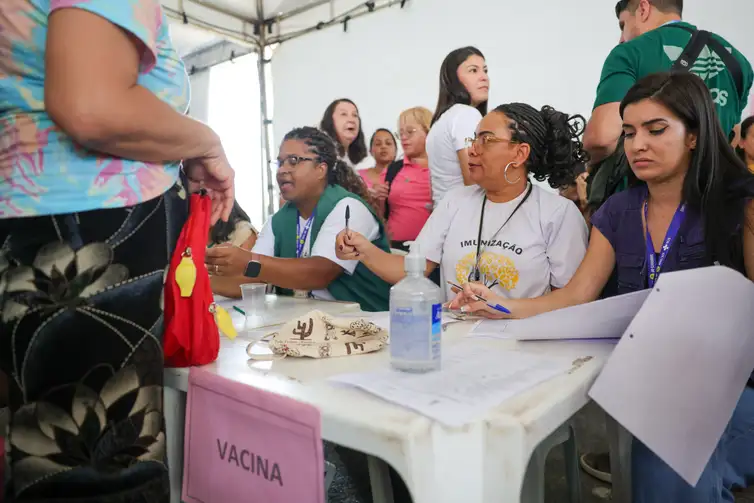
Padilha highlighted the risk of measles returning to Brazil if the population does not take the vaccine – Fabio Rodrigues-Pozzebom/ Agência Brasil
Housewife Gil Sousa, 40, took her daughter Maria Luíza to the same vaccination point. They remained firm in line despite the heat and, in the end, received the good news that the 2-year-old girl’s vaccination record was up to date and that she did not need to receive any new doses.
“Everything is up to date, thank God. I always try to keep her vaccinations up to date. This is very important. We always have to be on top of things to prevent the child from getting sick. I’m always monitoring her.”
Shortly afterwards, another Maria Luíza was treated by the Riacho Fundo nursing team. At the age of 9, she received the first dose against HPV on site. “It hurt a little, but I didn’t cry. I’m very strong”, said the girl. “I think it’s important to prevent diseases.”