While the old Cuban thermoelectric plants collapse again and again, the renewable energiesled by solar photovoltaics, emerge as the only sector with concrete advances, although still without the capacity to substantially reduce blackouts on the island.
With a 9% participation in the national energy matrix – compared to a meager 2% in January – the contribution of the solar parks already synchronized to the National Electric System (SEN) contrasts with the decline and obsolescence of the plants that generate from fossil fuels, as confirmed authorities in the program Round Table.
“Without the 500 MW of solar power at the midday peak, the daytime blackouts would be as serious as the nighttime ones,” admitted engineer Félix Estrada Rodríguez, director of the National Load Dispatch.
During the space broadcast this week, other revealing data were also presented: electricity generation had a deficit of 1,913 MW at peak time last weekend due to failures in critical units such as Felton (210 MW) and Diez de Octubre (160 MW), while photovoltaic panels injected up to 660 MW at key moments.
With Felton under repairs, a block of Nuevitas and Energás Boca de Jaruco are also disconnected
The thermoelectric debacle: a problem with no solution in sight
The official report painted a bleak picture for traditional plants. In 2025 alone, four units have spent months inactive for maintenance, including the two units of the Cienfuegos thermoelectric plant, one of which is already in operation, but the other has not yet been able to return to the SEN.
Although many of the units that go offline come back online shortly afterward — like Felton 1, which returned to service at 6:13 a.m. on Monday, Oct. 13 — officials acknowledged that “a lack of parts and funding limits repairs.” For this reason, breakdowns are repeated and maintenance is unable to stop the shutdowns and subsequent blackouts.
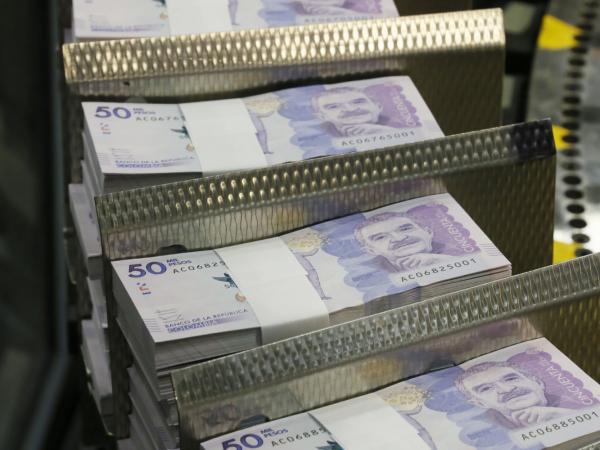
Various independent calculations agree that the Cuban Government would need between 8 billion and 10 billion dollars to revive the electrical system, an amount that Havana does not even remotely have.
The blackouts represent a strong burden on the national economy, which contracted 1.1% in 2024 and adds an accumulated fall of 11% in the last five years, according to official data. ECLAC also expects its gross domestic product (GDP) to be negative this year.
In fact, the Round Table It aired in a context of extremely deficient background, in which the official forecasts – already high in themselves – are often exceeded in reality by new breaks, increases in demand and other problems, which have even caused five general falls in the SEN in about a year.
The electro-energy situation in Cuba “is very hard,” admits the UNE
Solar investments: figures and logistics
Photovoltaics not only cover 9% of the demand according to the authorities, but between 10 am and 3 pm it comes to “replace 20% of conventional generation” and saves the always deficient fuel, necessary for thermal and distributed generations.
José Concepción Díaz, director of Renewable Generation, highlighted the contrast: “The solar parks installed this year have already saved 111,623 tons of fossil fuel.”
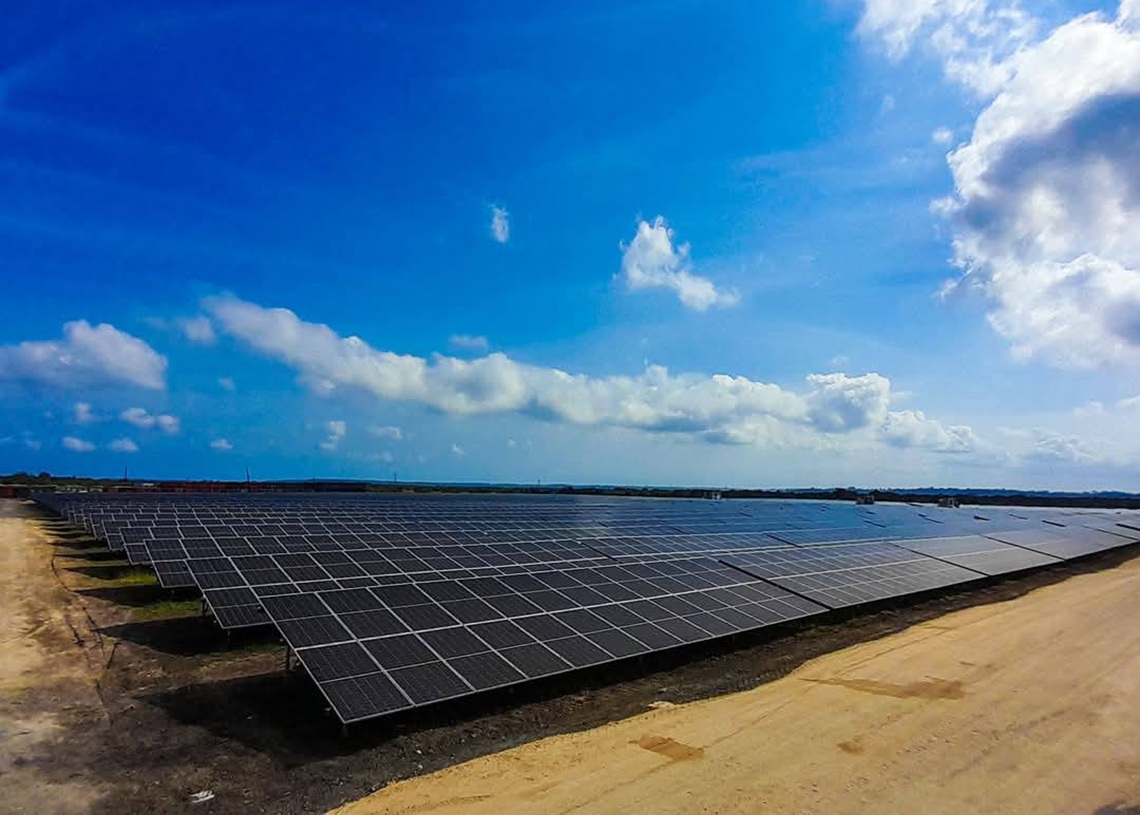
The government plan plans to install 51 solar parks of 21.8 MW in 2025, of which 32 are already operational and synchronized with the national electricity grid. These parks contributed this thursday 2934 MWh, with 536 MW as maximum power delivered in the midday time slot.
In addition, four battery accumulation systems have been contracted to compensate for the intermittency of solar generation.
According to international estimates, on light cloudy days, the effectiveness can be reduced by between 10% and 25%, when they are very cloudy or with light rain, the indicator can drop between 50% and 80%, while with heavy rain or storms, energy production can decrease by up to 90% or more, since sunlight is almost zero.
The logistics to implement these medium-sized parks, according to international standards, are enormous and require a considerable qualified workforce.
Each 21.8 MW project requires 42,588 panels and 16,380 piles, detailed the Vice Minister of Construction, Antonio Mauri Medina, who highlighted the mobilization of 15,000 multisector workers to quickly install these solar farms.
Solar parks vs. blackouts: between illusions and reality (I)
Beijing, wind energy and international donations
China plays a key role in the entire program. The paneling in all the parks is technology from the Asian giant, a pioneer in the world in this sector.
Beijing has also donated a group of 5 MW parks to the island, of which seven must be connected this year. The program includes a total of 20 parks of that capacity and two of 10 MW.
In parallel, there is talk of the completion of the civil construction of the Herradura 1 Wind Farm, of 33 MW, in the north of the province of Las Tunas.
The director of Renewable Generation highlighted the fact that wind power “works longer hours too”, until approximately 10 at night, so its contribution will be important.
He also referred to the small Alacranes hydroelectric plant, in Villa Clara, whose work is progressing with 26% completion and more than 50% of the supplies already in Cuba. Its completion is scheduled for 2026, according to the official plan.
In the field of rural electrification, one of the lagging subjects of the program, the specialist stopped to highlight the discrete advances in isolated homes.
This year, a donation of 5 thousand photovoltaic systems was completed, which improved the service in many homes. There is another European Union program to electrify six mountain communities, where a small photovoltaic park will be installed in each one, in addition to 90 systems in the Ciénaga de Zapata.
In Holguín, a donation from Canada is being executed for 502 systems, with more than 50% executed and completion scheduled for the remainder of the year.
Energy crisis in Cuba: new solar parks, same megawatt deficit
Logistical challenges and a persistent blackout
Despite the optimism, officials admitted obstacles, including logistics.
“We received 7 thousand containers this year alone,” said Concepción Díaz, who clarified that a single park can require more than 130 containers and highlighted that the transportation of structures up to 12 meters must be carried out on deteriorated roads.
At the same time, there is the problem of intermittency. “Without batteries, solar energy does not solve the night,” Estrada Rodríguez acknowledged in this regard. Currently, four storage systems (50 MW each) are in the testing phase.
The director of the National Cargo Dispatch explained that this should “allow the stabilization of the system”, resolving the power variability of the parks. In addition, it will contribute to correcting frequency effects and reducing fluctuations in the circuits.
The Government insists that in 2025, solar energy will reach 10% of the national energy mix, but is much less emphatic about the fate of thermal power plants, whose useful life expired years ago, despite being the backbone of the island’s electro-energy system.
This generating architecture suffers from capital repairs, and has been benefited only by partial rehabilitations, which do not guarantee sustained operation, which explains the thousand and one failures that the Electrical Union’s statements report week after week.
Meanwhile, the population suffers cuts of 20 hours a day or more in most of the island’s provinces, where many protests have been registered, with a balance of arrests and trials.
“When there is will, there are results,” concluded Estrada Rodríguez, for whom solar parks are an example of the Government’s energy program. However, even with them, uncertainty continues to arise about the present and future of electricity generation in Cuba.