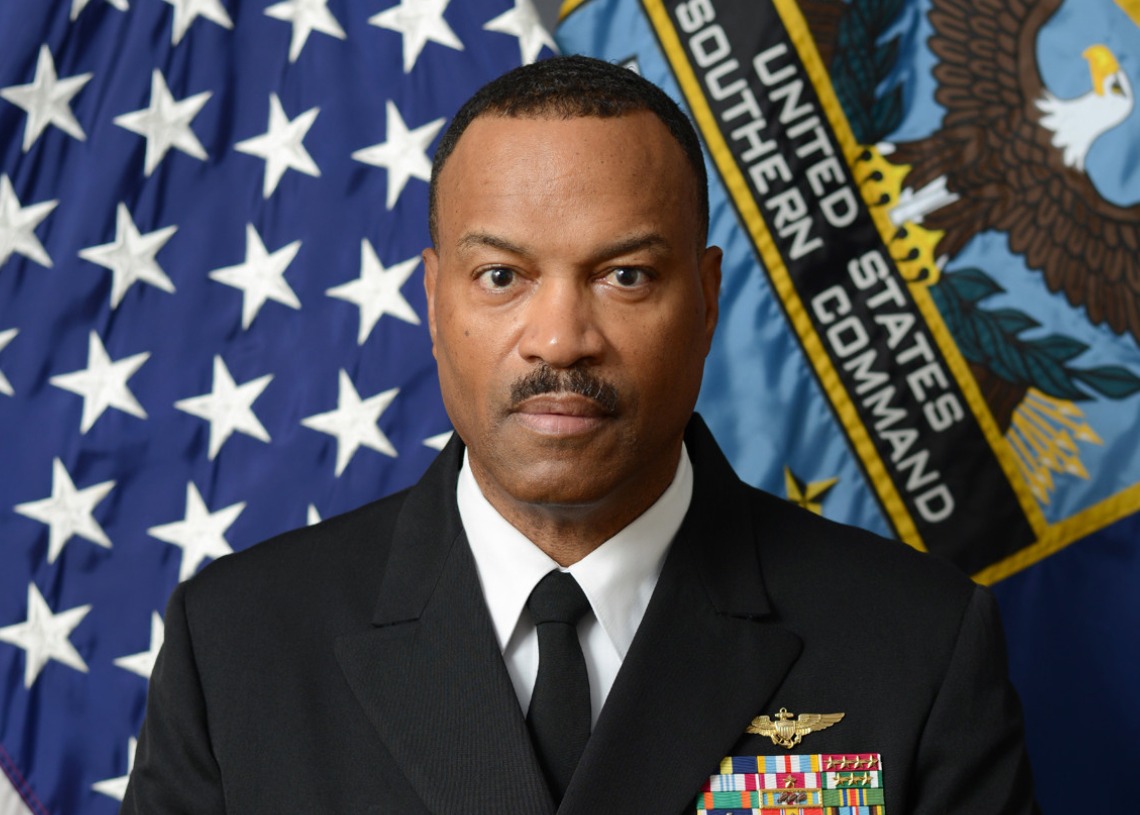
The head of the US Southern Command, Admiral Alvin Holsey, abruptly resigned after less than a year on the job, an unusually short tenure for that position, which typically spans several years.
Although officially the Pentagon only thanked him for his 37 years of service and mentioned his upcoming retirement, reports from US media such as The New York Times and statements from anonymous officials indicate that Holsey would have expressed reservations about the legality, focus and intensity of military operations led by the US in the Caribbean, particularly the bombings against vessels suspected of drug trafficking and the military campaign against Venezuela.
“Before Trump, I can’t think of any commander-in-chief who left his post early,” said Adam Smith, Congressman from Washington, the highest-ranking Democrat on the House Armed Services Committee, quoted by the New York newspaper.
Some other sources indicate that Holsey expressed doubts about the mission and its legitimacy, as well as US efforts to force regime change in Venezuela.
However, neither Holsey nor the Secretary of Defense have given public explanations about the cause and have kept the resignation in a protocol tone in their official statements.
Senator Jack Reed, the ranking Democrat on the Senate Armed Services Committee, has issued a statement on the subject: “At a time when US forces are being reinforced throughout the Caribbean and tensions with Venezuela are at their peak, the departure of our top military commander in the region sends an alarming signal of instability in the chain of command.”
“Admiral Holsey’s resignation only accentuates my concern that this Administration is ignoring the lessons learned with so much effort in previous US military campaigns and the advice of our most experienced combatants,” he stated in a message in which he described as “reckless and dangerous” the possibility of carrying out “any operation to intervene militarily in Venezuela, especially without the authorization of Congress.”
The President’s authorities under Article II are limited to responding to an armed attack or the threat of an imminent armed attack and do not apply here.
These continued strikes — 27 killed to date — risk getting the US into a full fledged war.@SenTimKaine and I forced a… pic.twitter.com/oURa5NMf9f
— Adam Schiff (@SenAdamSchiff) October 14, 2025
Operations in the Caribbean
The Trump administration has carried out a series of direct military operations against vessels suspected of drug trafficking, known as “narcolanchas,” primarily in the Caribbean, since September 2025.
So far, there have been six bombings carried out by US naval and air means, under the argument of combating drug trafficking and “narcoterrorism” linked to organizations such as the Tren de Aragua and the so-called Cartel of the Suns.
In all cases, President Trump himself has publicly claimed responsibility for each attack, disseminating videos of the operations on his Truth Social network.
At least 27 people have died in these operations that official US sources classify as “narcoterrorists”, although independent media and humanitarian organizations have identified civilian victims, including Venezuelan, Colombian and Trinidadian fishermen. At the same time, no US casualties have been reported in these attacks.