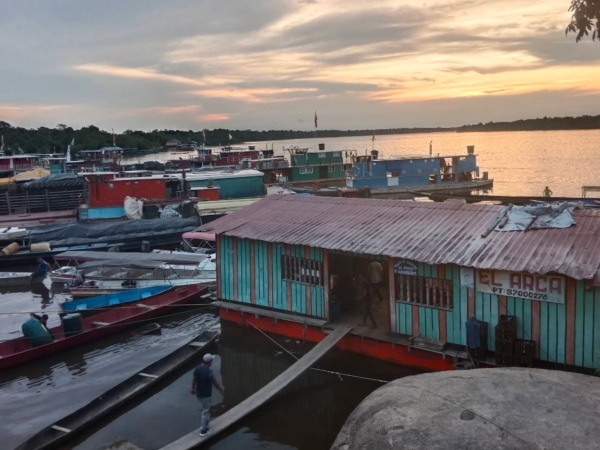

Although they share a great natural and cultural wealth, they stand out for their unique territorial organization and the large non-municipalized areas that preserve their indigenous and jungle essence.
News Colombia.
Colombia is a country of contrasts, where each region seems to tell its own story. With its 32 departments and a Capital District, the Colombian territory reflects a natural, ethnic and cultural wealth that few countries can match. From the snow-capped peaks of the Sierra Nevada to the mighty rivers that wind through the Amazon, each area has a particular charm that defines the country’s identity.
However, within this broad territorial division there is a detail that draws attention: two departments in the south of the country only have two municipalities each. These are Guainía and Amazonas, extensive, jungle regions largely inhabited by indigenous communities, where nature and local culture set the pace of life.
Guainía: two municipalities and six non-municipalized areas
Located on the border with Venezuela and Brazil, Guainía is a vast and sparsely populated department, where the jungle, rivers and indigenous communities are protagonists. Its capital, Inírida, was founded in 1963 and stands on the banks of the river of the same name, serving as the administrative and economic center of the region.

The other municipality of Guainía is Barrancominas, considered the youngest in the Colombian Amazon. Its creation, on December 1, 2019, was the result of an administrative process that sought to strengthen the presence of the State in remote areas. With an area of more than 14,200 square kilometers and nearly 11,000 inhabitants, the majority belonging to the Piapoco and Sikuani ethnic groups, Barrancominas represents an effort to recognize the identity and autonomy of the communities that inhabit this area.
In addition to these two municipalities, Guainía has six departmental townships that play an essential role in local social and economic life: Cacahual, La Guadalupe, Morichal Nuevo, Pana Pana, Puerto Colombia and San Felipe. These non-municipalized areas are administered directly by the government, given the geographical dispersion of their inhabitants and the difficulty of access to various areas of the territory.
Amazonas: the green giant of Colombia with only two municipalities and nine non-municipalized areas
The other unique case is that of the department of Amazonas, the largest in Colombia and one of the most biodiverse in the world. Despite its immensity, its territory only has two municipalities: Leticia, the border capital with Peru and Brazil, and Puerto Nariño, known as “the natural manger of Colombia” for its ecological beauty and sustainable community management.

These two municipalities, however, represent less than 7% of the total surface of the Amazon. The rest of the territory is made up of nine non-municipalized areas, where indigenous communities predominate that have preserved their language, traditions and connection with nature. Among the non-municipalized areas are La Chorrera, La Pedrera, Mirití-Paraná, Puerto Arica, Puerto Santander, Tarapacá, La Victoria, El Encanto and Puerto Alegría.
You can also read: