The night protests in Baire this Thursday also broke out due to the lack of drinking water and an outbreak of arbovirus that worsens the health crisis in the area.
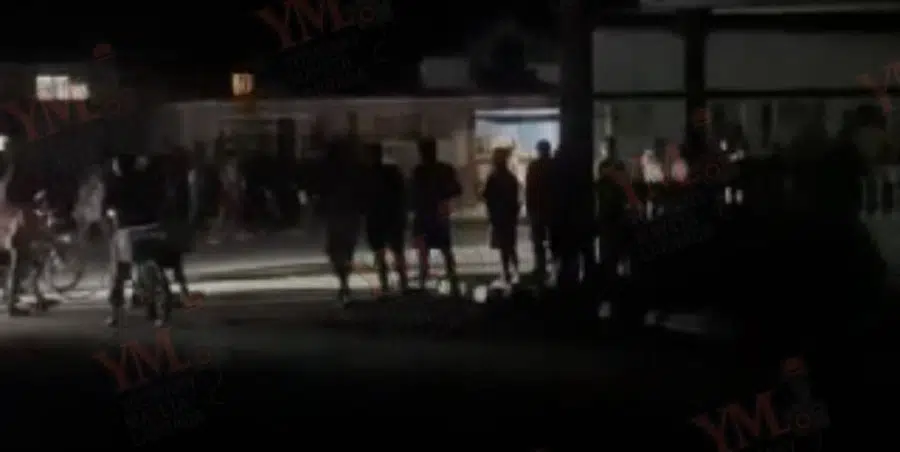
MADRID, Spain.- The inhabitants of Baire, in the Contramaestre municipality, Santiago de Cuba, took to the streets on Thursday night to protest against prolonged blackouts, the lack of drinking water and the deterioration of living conditions in the town.
“More than 30 hours without electricity or drinking water, several infected by the arbovirus,” the activist denounced on social networks. Lara Crofs, stating that the protesters were heading towards the town’s police station.
In the numerous videos spread on social networks, neighbors can be seen hitting cauldrons and slogans such as “Freedom!” and “We are not afraid!”
The protest began around 7:40 p.m., according to reports from residents cited by the independent journalist Yosmany Mayeta Labrada, who was one of the first to report the incident.
“Tonight, around 7:40 pm, the people of Baire in the Contramaestre Municipality broke the silence and took to the streets to the sound of cauldrons and shouts of protest,” Mayeta wrote in your Facebook page.
According to the report, the demonstrations began in the La Salada, El Transformador and Avicinia neighborhoods, where dozens of people spontaneously joined together to demand responses to the economic crisis, power outages and lack of food.
“People came out tired, with their cauldrons, shouting. They arrived at the park, where the police and State Security were already there with motorcycles and the fire truck,” said a neighbor who asked to remain anonymous.
During the first minutes of the protest, Internet access was cut off throughout the municipality, a common measure by the regime to prevent the dissemination of images and testimonies. The connection was reestablished about 30 minutes later, allowing several residents to document part of what happened.
The protesters avoided taking the main road, moving through interior streets to evade police checkpoints. They walked along Avenida 8, shouted in front of the Police unit—where the president of the Popular Council lives—and continued along Avenida Central (Avenida 4) to the bust of José Martí, in the Central Park of Baire.
After midnight, the area remained under heavy police surveillance. Patrols, uniformed agents and plainclothes officers surrounded the park and its surroundings, while neighbors observed the repressive deployment from their homes.
These demonstrations are not an isolated event. Since the historic 11J protests in Cuba, similar episodes have become frequent in different provinces of the country, driven by crippling blackouts, food shortages and the general deterioration of living conditions, despite the strong repressive presence deployed by the regime.