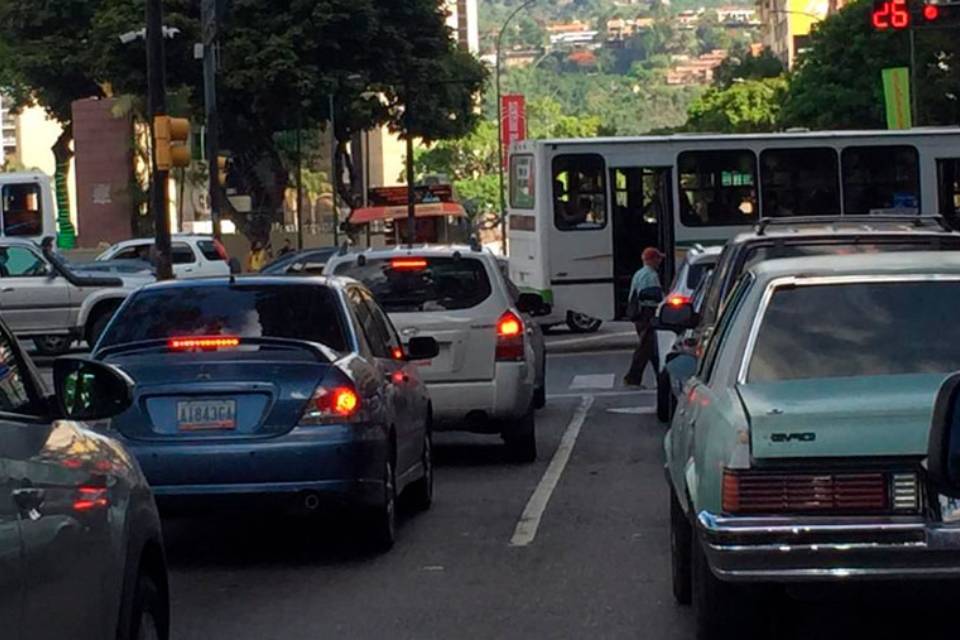
After more than a decade of industrial paralysis and import restrictions, used cars in Venezuela reach unusual prices. Cars more than 10 years old are sold at the same price as new models, in a country where having your own transportation has become a luxury.
In Venezuela, a 2008 Toyota Yaris can cost the same as a new vehicle from a dealer. The phenomenon, as absurd as it is real, reflects the distortion of the automotive market in the midst of an economic crisis that has been going on for more than a decade and that has left the country with one of the oldest fleets in Latin America.
As happened in Cuba with the American cars of the 1950s, Venezuela was trapped in its own automotive freeze. The vehicles that flooded its streets during the oil boom of the 2000s—Toyota, Ford, Chevrolet, Mitsubishi—became a kind of rolling heritage. Two decades later, those cars continue to circulate as witnesses of the industrial collapse, the closure of assembly plants and the long paralysis of imports that petrified the country in an era that no longer exists.
An audiovisual report from the German network DW explains that the collapse of the Venezuelan economy began during the mandate of Hugo Chávez and deepened under Nicolás Maduro. Oil production fell from almost 2.7 million barrels per day in 2013 to less than one million in 2025. Hyperinflation, shortages and the loss of purchasing power turned mobility into an everyday challenge. With public transportation collapsed, those who can afford it are looking to have their own vehicle.
But buying a car, even an old one, has become a feat. The prices of used cars skyrocketed to the point of matching or exceeding those of new models imported from China. “If the car is worth $1,000, but the owner needs $6,000 to solve a problem, that will be the price,” explains to DW the mechanic and influencer Reny Rangel, known for his series Cafecitoin which he ironizes the inflated prices of the market.
Cars without renewal
The root of the problem is industrial collapse. Since 2007, local production and imports have been drastically reduced. The last shipments of new cars arrived in 2012 and 2013. For the next 12 or 13 years, the country practically stopped receiving new vehicles.
The consequence is a fleet of about four million units, most with more than a decade in circulation. “80% of the cars on the streets are between 10 and 30 years old,” explains a dealer in Caracas. In Venezuela, a 2015 model can be considered “new”, while in other countries it would already be on its way to scrapping.
With the lack of renovation, well-maintained vehicles retained or even increased in value. “The few cars that are still in good condition have turned into gold,” summarizes Rangel.
Luis, a young man from Caracas, is looking for a reliable used car for less than $5,500. But in an inflated market, the task is almost impossible. Appraisals are based on the seller’s financial need rather than the condition of the vehicle. That subjectivity generates prices without logic.
Businessman Isaac Delgado lived that experience when trying to sell his 2008 Toyota Yaris car. Despite its mechanical failures, it was valued at $6,000 and he hopes to resell it between $7,000 and $8,000. With that sale and some savings, he hopes to put down $15,000 for a used SUV, although he admits that the prices are “exaggerated.”
At dealerships, a new model can cost between $23,000 and $27,000, the same as a used 2008 SUV. “It’s crazy, but people trust the brand so much that they pay whatever for a Toyota,” a salesman tells DW.
Chinese brands are not convincing
Since 2019, Chinese brands such as MG, Chery or Venusia have been trying to gain space in the Venezuelan market. They offer financing plans and vehicles with modern technology. However, mistrust persists.
“You could buy a used Toyota for the same price as a new Chinese car, and at least you know that there are spare parts and mechanics to repair it,” says José Bonia, a customer interviewed by DW. Many consumers fear being left without service or parts due to new manufacturing technologies.
Financing options don’t help either. In a context of hyperinflation and depressed salaries, monthly payments of $500 or $1,000 are unaffordable for most middle-class families.
Although the administration of Nicolás Maduro relaxed the rules and allows the import of cars up to five years old, the so-called “nationalization costs” make final prices between 60% and 70% higher than the international average.
These tariffs, taxes and administrative fees were created to protect a national automotive industry that does not exist today. “People continue paying for protection that no longer makes sense,” criticizes Rangel.
A pending reform
Experts agree that the solution is to open car imports and reduce tariffs to a minimum. “There is no longer an industry to protect,” says Rangel. Renewing the vehicle fleet, he assures, would not only alleviate the transportation crisis, but could boost economic growth and generate employment.
However, the Executive has chosen to focus on short-term stabilization, based on the sale of oil and the search for foreign investments. Until now, there are no known specific plans for the automotive sector or incentives to make vehicles cheaper or encourage their renewal.
Meanwhile, Venezuelans continue driving aging and expensive cars, clinging to vehicles that in other countries would already be junk. In a country where public transportation barely works, a used car remains a symbol of independence… and survival.
*Read also: Maduro assures that the people have “the way to overthrow the US conspiracy”
*Journalism in Venezuela is carried out in a hostile environment for the press with dozens of legal instruments in place to punish the word, especially the laws “against hate”, “against fascism” and “against the blockade.” This content was written taking into consideration the threats and limits that, consequently, have been imposed on the dissemination of information from within the country.
Post Views: 267