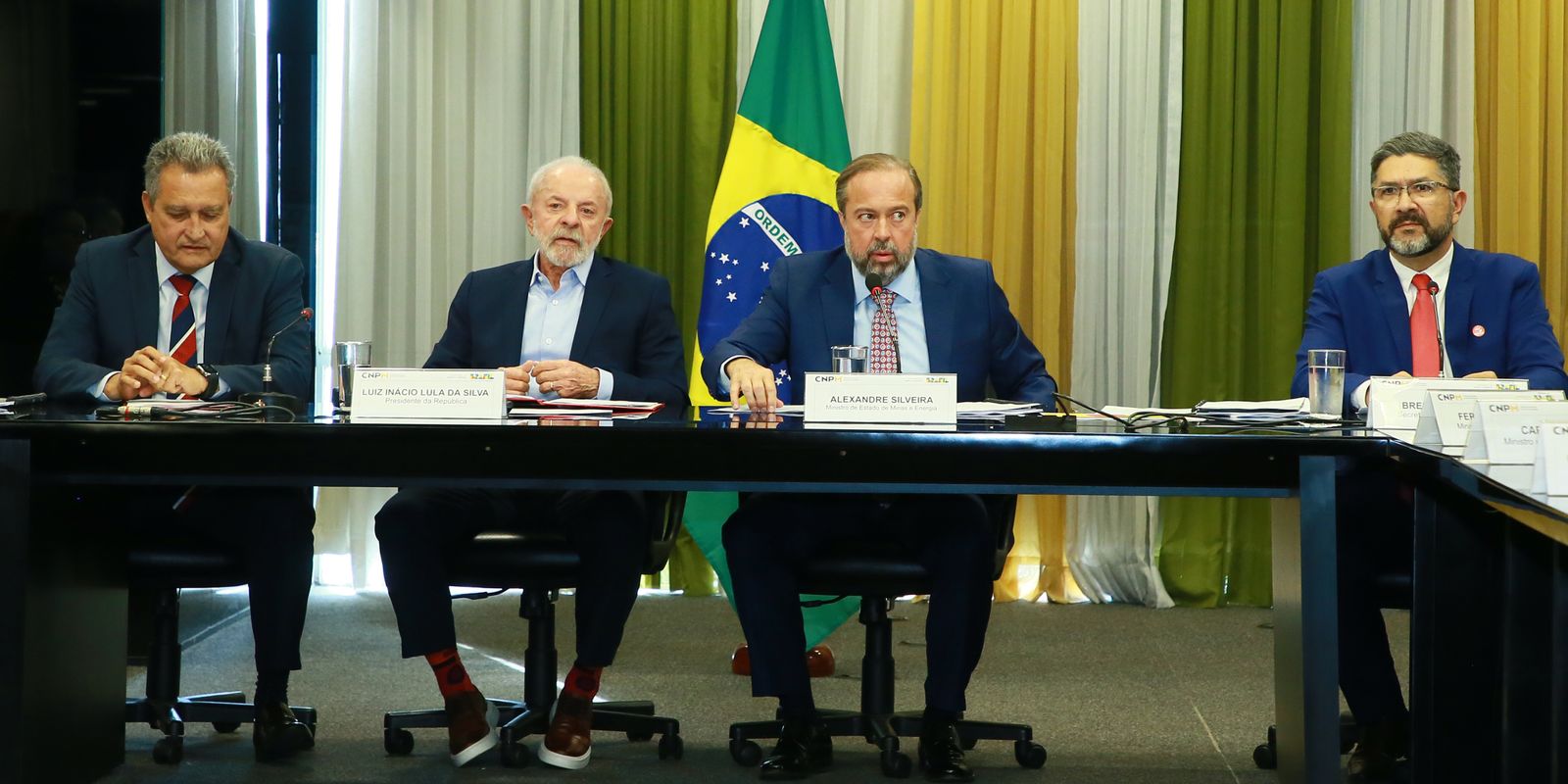
President Luiz Inácio Lula da Silva participated this Thursday (16) in the first meeting of the National Council for Mineral Policy (CNPM), which was created in 2022, but had not yet been installed. The body was created to plan mineral exploration policies, including so-called critical minerals and rare earths, which are currently a source of tension between China and the United States.
The Council will be made up of representatives from 18 ministries under the presidency of the Minister of Mines and Energy, Alexandre Silveira. At the opening meeting, alongside Lula, Silveira highlighted the role of the council, which will be equivalent to the role played by the National Energy Policy Council (CNPE).
“This council has exactly the same responsibilities as the CNPE, and will deliberate on the guidance of public policies regarding the country’s mineral sector, providing conditions for the regulatory agency [Agência Nacional da Mineração]. From then on, it will implement these public policies, especially at this time, when the world is debating with such vigor the importance of critical and strategic minerals for decarbonization, for the energy transition, food security, in short, for national sovereignty”, he stated.
The entire meeting was closed to the press and the president left the headquarters of the Ministry of Mines and Energy (MME) without speaking to journalists.
The CNPM must approve the National Mining Plan for the years 2025 to 2050. According to the MME, the collegiate will discuss critical and strategic minerals, sustainable mining, energy and food security.
>> Follow the channel Brazil Agency on WhatsApp
Critical Minerals
Critical minerals are essential resources for strategic sectors, such as technology, defense and energy transition, whose supply is subject to risks of scarcity or dependence on few suppliers. They include elements such as lithium, cobalt, nickel and rare earths, which are key to electric vehicle batteries, wind turbines, solar panels and semiconductors.
According to the Brazilian Mining Institute (Ibram), an entity that represents the private sector, Brazil has around 10% of the world’s reserves of these elements.
In a public hearing in the Chamber of Deputies, this Wednesday (15), minister Alexandre Silveira stated that he had been invited to discuss the exploration of critical minerals with the United States Secretary of Energy, Chris Wright.
After Lula’s meeting with US President Donald Trumpthe countries have been talking to overcome the taxation imposed by the United States against Brazil and the exploration of minerals could be part of a negotiation between the countries.