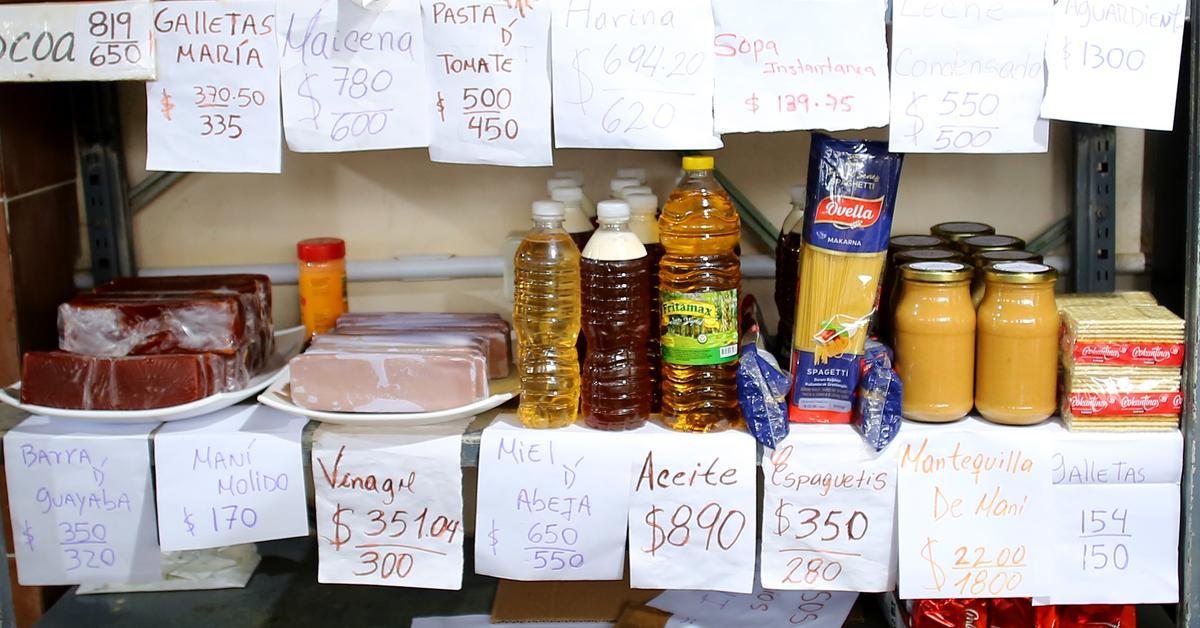
Havana/The tour taken through Havana markets by Cubadebate to nourish a report published this Thursday about the price regulation established by the capital government just two and a half weeks ago offers an unappealable conclusion: the measure is now a “dead letter.” In very few businesses it is being fulfilled.
Thus, for example, at the Palatine Popular Council fair, in Old Havana, where, according to the text of the state media, “the value of the products showed a direct relationship with inflation and with the price of the dollar in the informal market”, that is, they were more expensive than what was established by the authorities. Specifically, doubled: fruitbomba, at 80 pesos per pound compared to the stipulated 40; pumpkin, at 50 pesos when it should have been at 25, or malanga at 150 when it has a fixed cost of 75 pesos.
“No, we don’t have the table today, but you can ask, I don’t charge for that,” was the response of one of the sellers to the reporter who wrote the chronicle when inquiring about the official price list. Despite complaints from buyers, the majority were realistic about the measure. “Hitting prices is like putting a band-aid on a wound. Nobody complies with what is established and the inspectors are conspicuous by their absence in the best of cases; in the worst of cases, they buy them with a string of onions, which are very expensive,” declared a woman identified as Mónica.
“Price capping is like putting a band-aid on a sore. Nobody complies with what is established and inspectors are conspicuous by their absence”
The author of the report recognizes that “this situation had already been experienced,” when, last yearthe Government established capped prices for several essential products and they also failed. The MSMEs and self-employed workers, he explains, “then alleged a specific argument: the value of the dollar in the informal market is growing dramatically, the State does not guarantee them access to foreign currency and these items are imported.”
The problems now are similar. “All the inputs to make the land produce are still scarce and sky-high. In addition, every day it is more difficult to find workers who accept less than 10,000 pesos a month, and that makes everything more expensive. How am I going to sell the malanga at the price they say, if just putting it on the land costs me a fortune?” said Herminio, a farmer from La Salud, in Quivicán, Havana.
For all links in the commercial chain it is impossible to sell at the imposed rate. “The problem is that we continue buying at the same prices. Fuel is in USD and, to get to the countryside and buy from the farmers, how do we do it?”, reasoned Pedro, another seller. “The government lowers prices without taking those things into account.”
A comprehensive strategy, he proposes, would require “measures that attack these root causes.”
The situation is inexorable, despite the inspections that the official press assures that have been reinforced and that, as listed Cubadebatehas led to the imposition of thousands and thousands of pesos in fines. The solution, the text asserts, “transcends simple control”: “Although inspection is necessary, the testimonies of farmers and sellers point to a structural problem: high production costs, intermediation and access to inputs.”
A comprehensive strategy, he proposes, would require “measures that attack these root causes”, such as “facilitating access to fertilizers and fuel at affordable prices, directly supporting producers to shorten the distribution chain and promoting a stable supply that, in the long run, regulates prices naturally.”
The text goes so far as to assert that the “divergence between the decree and reality in the Havana markets reveals that the current mechanism is insufficient.” The population is “trapped in an impossible dilemma,” he continues: “obey regulations that are not met or access abusive prices to be able to feed themselves.”
“The resolution, well-intentioned on paper, seems to have been trapped in a limbo between the decree and the earth,” says the report, with a sense of reality unprecedented in the official press. “As long as the prices of inputs and logistics remain sky-high, the order to descend seems an imposition disconnected from the root of the problem: production that does not take off and a chain of intermediation that the resolution fails to stop.”