Santo Domingo.– More than 370,000 undocumented haitiansyes have been deported from the Dominican Republic in the last year, after the tightening of immigration policies of the Government of Luis Abinader, amid reports of human rights violations and massive raids.
At the beginning of October By 2024, the Government announced the goal of repatriating up to 10,000 undocumented immigrants per week to reduce the excess migrant population that is perceived in Dominican communities, a measure that especially affects Haitians, whose country faces an acute and prolonged crisis that this year alone forced 1.4 million people to leave their homes.
Since then the operations have not beenn stopped and the trucks Full of Haitians continue to arrive at the migrant reception center in Haina, about 20 kilometers from Santo Domingo, before being transferred to the border for deportation.
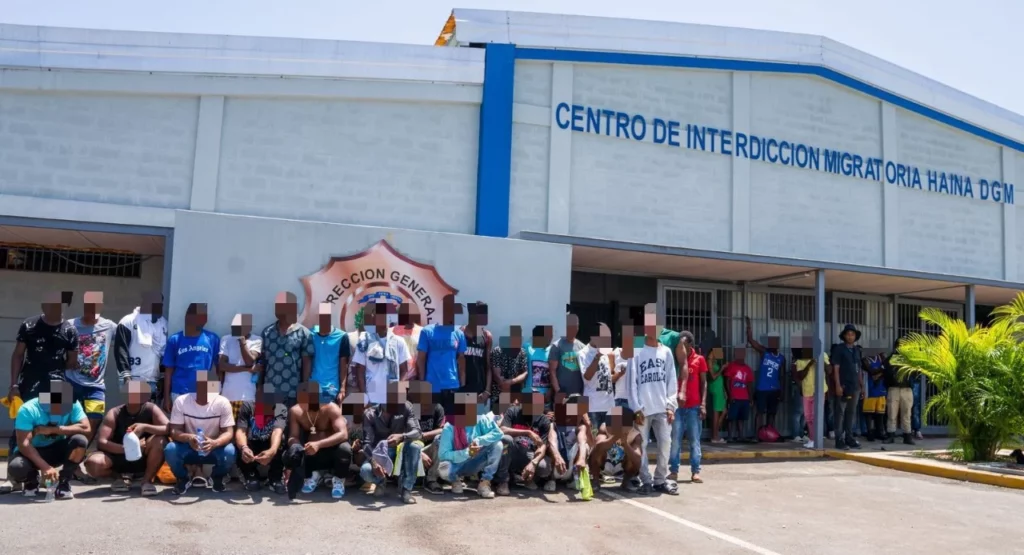
Twelve months later, it seems that the objective has been met- 370,240 Haitians were deported in the last year, while those repatriated in the first nine months total 285,614 citizens.
Also read: Paraison: 1.3 million Haitians displaced by armed gangs live in makeshift stadiums and camps
Mass deportations amid complaints
Haitian Madalena Jean arrivedlike many Haitians, on the outskirts of the center of Haina in search of his granddaughter 15 years old, who was taken to that facility after giving birth in the municipality of Higüey, about 165 kilometers from Santo Domingo, and despite stating that he was born in the Dominican Republic where, however, the principle of ius sanguinis (nationality by filiation) applies.
The 53-year-old woman, who also says she was born in the Dominican Republic, although of Haitian origin, told EFE that her granddaughter “he has health problems” Therefore, he called for her prompt return to her family “because she is not from there (Haiti).”
Since last April, a protocol has also been in force in the country 33 hospitals that link access to health services with deportation and which is criticized by the UN and Amnesty International (AI).
The immigration authorities assure, however, that the human rights of undocumented immigrants are respected in all operations.
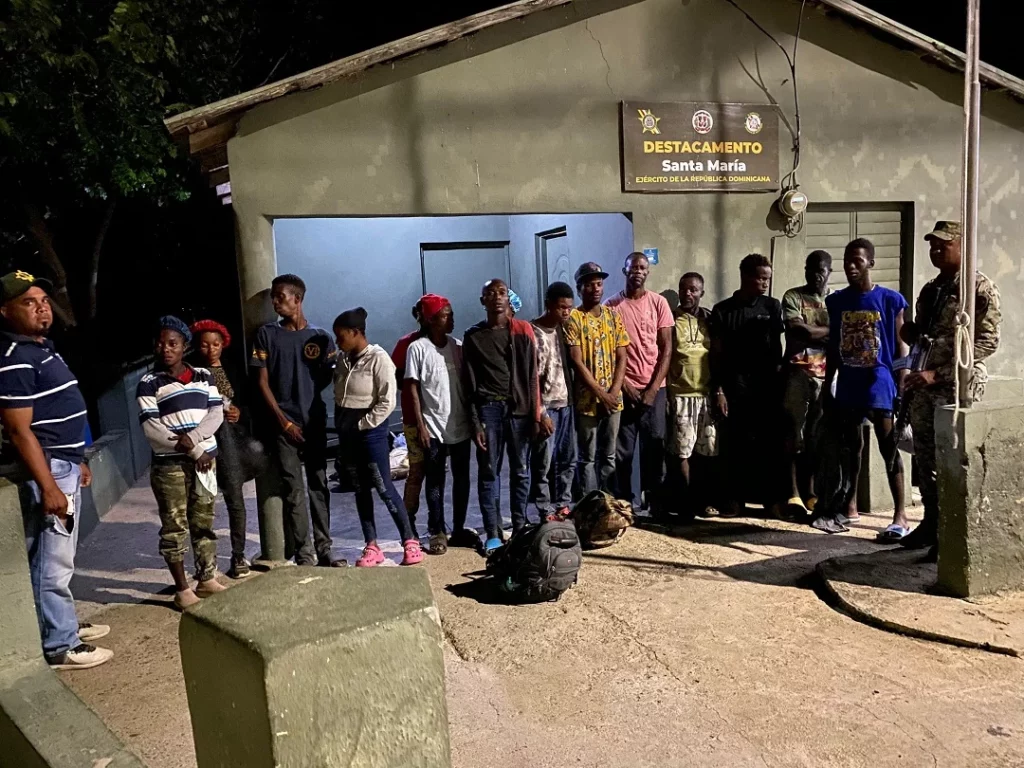
Abinader warned during his speech in the recent UN Assembly that your country, that builds a wall in the border with Haiti“will continue to protect its territorial integrity and enforce its national immigration regime.”
In statements to EFE, Simón Pérez, co-author of the report “Mass deportations and state of emergency in the Dominican Republic”published recently, said that Dominican immigration policy also “affects Haitians who have their immigration documentation in order.”
These “They are subjected to the so-called purification processes, in which they are detained and sent to a detention center for the review of documentation that the same Dominican State gave them, such as, for example, the foreigner’s ID,” he explained.
Another aspect that Pérez denounces in the study is discrimination against Haitians compared to other nationalities such as Venezuelans.
“The number of deportations does not correspond to the number of immigrants of different nationalities who are in an irregular immigration situation, but rather there is a very large overrepresentation of Haitian immigrants,” said Pérez.
In addition, it is also suggested that this situation is generating a boom in human trafficking.
On the other hand, the study also shows the death of 54 people “in the context of immigration repression”, which mostly “have not been investigated, clarified and no criminal responsibilities have been established,” Pérez indicated.