If communism falls, Cuba will not be even remotely the Haiti that Pablo Iglesias predicts, that oaf of the most rancid Hispanic left-handedness.
HAVANA, Cuba. – I am convinced – I have said it many times – that, when the dictatorship ends, the psychological-social and ethical recomposition of the Cuban population will be more difficult and will take much longer than the material recovery of the country.
You cannot expect miracles with this human material. In less than eight years, more than one and a half million Cubans have emigrated, mainly young people. Added to this is the decline in the birth rate. Thus, there is an increasingly older population, which does not live longer because it lives in better conditions, but quite the opposite.
The replacement generation suffers a serious crisis of ethical values. And it’s no wonder. Just think about what life has been like for people who are under 40 today, those who were born or spent their childhood and adolescence in the 1990s, during the so-called Special Period.
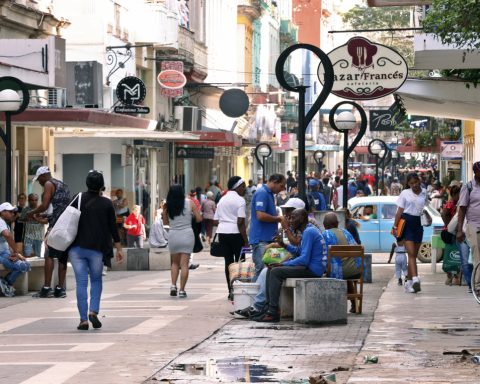
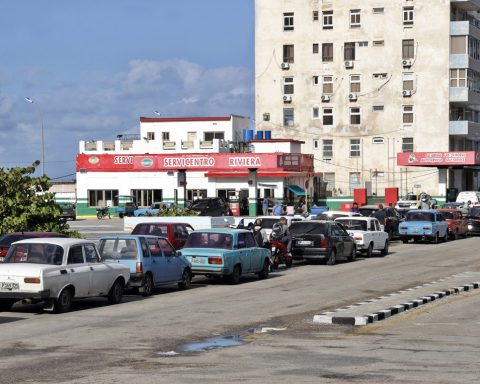
His first years of life were spent in lines to get food, blackouts that lasted many hours, buses that did not pass, sex workers of both genders who were looking for a “yuma” to take them out of the country, and people who jumped into the sea in any device that floated.
Many saw their parents leave their jobs because what they were paid was not even enough to eat badly, and look for another job where there was “search”, that pious euphemism for theft from the State. And while they looked for a way to support their family at any cost, they evaded the sector chief and the CDR snitches, they played numbers on the ball, they cursed their luck and sought refuge in saints who did not listen to them and in the alcohol that little by little was killing them.
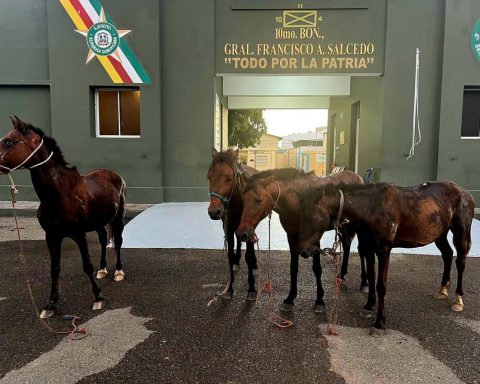
Some had to turn away when they saw their mothers or brothers and sisters prostituting themselves. They understood the wisdom of never asking where what was on the table came from and the jeanthe tennis pair or the walkman that they gave them on their birthdays, because it is very hard to accept that they had to ride horses to survive.
But bitching stopped being that and became “fighting,” which could also be synonymous with pickpocketing, swindling in the game of badges, or selling marijuana. And so many, turned into all-terrain scoundrels, were spared all kinds of complexes and remorse.
These depressing stories were repeated among the less fortunate, who were the majority. The children of the elite suffered fewer unpleasant experiences. To them, if anything, only the anecdotes of their school classmates reached them, those they saw with broken shoes or having a snack, at recess time, bread with oil (if there was oil) and water with sugar.
As they lived surrounded by various morals, the boys finally decided to do the same as their mothers and fathers: live without any morals. Thus, they learned early to pretend and lose their scruples. They had no choice but to join the “every man for himself” and the national confusion.
It was natural to do what they observed since childhood. But they did it without the limitations that held their parents back, who had to listen to so much and so many appearances to keep. Today’s young people, cynical and disbelieving as they are, cannot be approached with teques: they are repulsed, they slip away…
The new generation is increasingly diverse and complex. A part of it is educated and qualified. The other lives on the edge of marginality or is headlong into it. But everyone has higher expectations than their elders and demands new rights – public freedoms, better paid jobs, better quality of life, more communication with the world – that the regime is incapable of granting them because it would go against their own survival.
To meet these expectations, those with more preparation and the smart ones who believe they have it, if they do not emigrate, look for foreign lovers, a job in a mixed capital company or in tourism, self-employment, a relative abroad who supports them with their remittances. If they have a talent for art – a little, just a little, it is no longer necessary to have a lot of talent these days – they paint a painting or record a delivery reggaeton album, always with their eyes fixed on the bill and avoiding colliding head-on with the regime, because they are more afraid of the safe than the sharks of the Florida Strait.
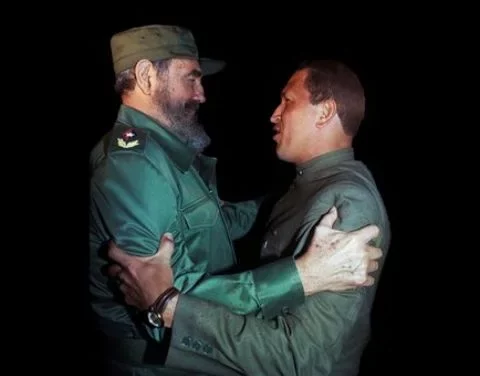
These children, grandchildren and great-grandchildren of Fidel Castro’s revolution will star in the post-totalitarian transformation of Cuban society. In fact, they have been doing it for years. But the way they do it, according to their experiences and those of their elders – almost all negative, flawed, distant from civility – the omens for the first years after the end of the dictatorship are not the best. There will be problems, instability, disappointments. But, if communism falls, Cuba will not be even remotely the Haiti that it predicts to us. Pablo Iglesiasthat idiot of the most rancid Hispanic left-handedness who claims to know more about Cuba’s problems than the Cubans themselves.
It will probably take us several years, perhaps decades, learning, by dint of stumbles, to build, in democracy, the decent, inclusive and better country that we want and deserve. But I’m sure we’ll get it.