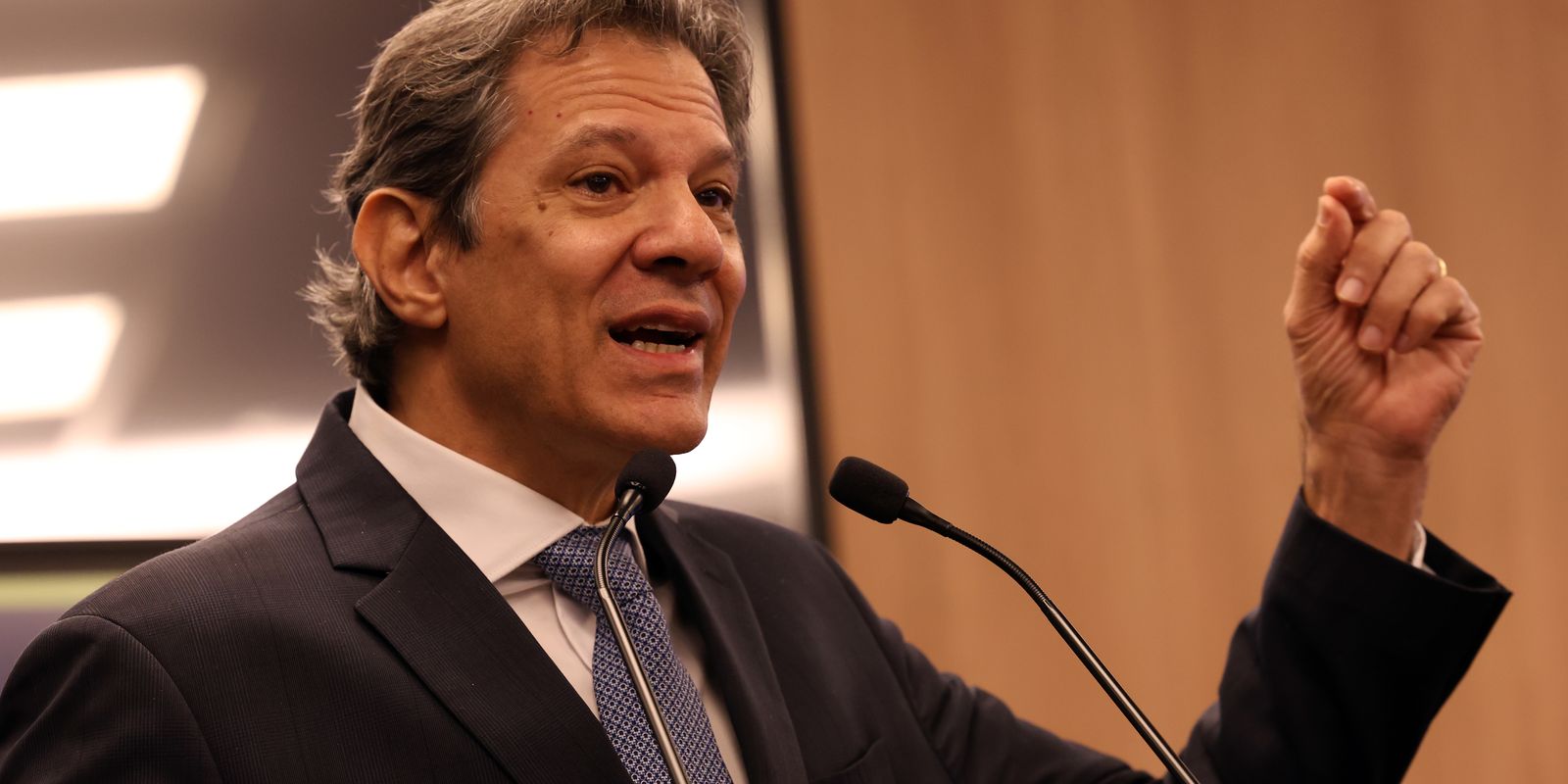
The Minister of Finance, Fernando Haddad, emphatically defended the global taxation of the super rich as an instrument for finance the fight against the climate crisis and reduce social inequality. The position was presented by the minister in a letter to 2025 annual meeting of the International Monetary Fund (IMF) and the World Bankin Washington.
Represented by the Secretary of International Affairs, Tatiana Rosito, Haddad released a letter proposing a progressive international tax reform and a “new globalization” guided by socio-environmental criteria. The document, according to the ministry, summarizes the Brazilian view that “now is the time for the super-rich to pay their fair share of taxes”.
“The global tax system remains inadequate, allowing an unprecedented concentration of wealth and facilitating large-scale tax evasion and avoidance,” the document highlighted.
The letter classifies the inequality and tax evasion as structural flaws in the global economy, which threaten economic stability and social cohesion. The text denounces the current system as “inadequate” and responsible for allowing an “unprecedented concentration of wealth”.
Tax justice
The letter presented in Washington also details the axis of domestic economic policy, centered on fiscal consolidation with social justice. The Brazilian government reaffirms the commitment to a progressive income and wealth taxation agendarAvoidance of inefficient tax exemptions and integration of environmental sustainability goals at the center of fiscal policythrough the Ecological Transformation Plan.
Haddad, who would travel to the annual meeting, remained in Brasília to negotiate budgetary solutions after the fall of the provisional measure which provided for an increase in taxes on financial investments, fintechs and virtual betting companies. In the letter, the minister highlighted that the balance of public accounts must occur “without giving up equity”.
Defense of multilateralism
In the international field, Brazil expressed concern about the advancement of unilateral and protectionist measureswhich, according to the text, “feed uncertainty and threaten global growth”. The country proposed to “redouble efforts to build a new globalization”, guided by environmental goals and social inclusion, with the restoration of predictable structures based on multilateral rules.
“The global economy is navigating uncharted waters,” says the document, pointing out structural risks such as persistent inflation, high interest rates, an aging population and an imminent climate crisis. The Brazilian government advocates that the IMF and the World Bank lead a transition to a more stable and inclusive economic system.
Internal politics
The letter also reaffirms the Central Bank’s “unwavering commitment” to controlling inflationrecognizing that the interest rate still remains at a contractionary level. The text highlights the resilience of the Brazilian economy, with projected growth of 2.4% for 2025, falling unemployment and inequality and balanced external accounts.
In the tax field, the government forecasts a primary surplus of 0.25% of the Gross Domestic Product (GDP) in 2026, with gradual increase to 1.25% in 2029the year in which it plans to stabilize public debt.
IMF reform
Finally, Brazil defends structural reforms in IMF governanceincluding greater representation for developing countries and the preservation of the institution’s analytical independence. The document describes the fund as a “highly valued beacon” and calls for the body to act more transparently in assessing the impacts of trade restrictions and cuts in international aid.
For Haddad, strengthening multilateralism and tax justice are indispensable conditions for a “greener, more stable and inclusive” global economy.