Havana/The lack of production in Cuba is not easy to solve, but it usually finds compensation in a corresponding display of voluntarism. This is what happens with the riceof which the Government has proposed to plant 200,000 hectares next year.
According to a note published this Wednesday in Granmathe task, “indicated by the highest leadership of the country” is “of the first order”, and is scheduled to be launched next November. The program, reported the newspaper of the Communist Party of Cuba based on the statements of Orlando Linares Morel, president of the Agricultural Group of the Ministry of Agriculture, aims to cover almost the entire country – 14 provinces –, 133 municipalities and 23,000 producers.
Of the planned figure, half – 100,000 hectares – will be in charge of “large companies and specialized centers” in Pinar del Río, Villa Clara, Sancti Spíritus, Camagüey and Granma. The rest will be allocated to the cultivation of so-called “popular rice”, highly criticized by experts for being inefficient, although the official note says nothing about this.
“Anyone who wishes can join “this second modality,” says the official, “both for self-consumption purposes and with the intention of contributing to the industry and the national balance.” The planting, he continues, “will have the support of national seed, while the Vietnamese side, which will participate in the program, will provide its own seeds.”
The planting, he continues, “will have the support of national seed, while the Vietnamese side, which will participate in the program, will provide its own seeds.”
This refers to the Pinar del Río projects (in Los Palacios and Consolación del Sur) and Artemisa, where the Vietnamese company Agri VMA It works usufruct lands whose yields are much higher than state yields: seven tons per hectare compared to the country’s average of 1.5 tons.
The interventions of officials on October 7 in a Round Table dedicated to the topic made it clear that the private sector has become the main rice producer of the Island, although right there they recognized that, even with the extra-state contribution, the future was ominous. According to the authorities, the current campaign would not be good, even with help from abroad.
In 2024, Cuba produced 80,000 tons on 79,000 hectares, just over 10% needed for domestic consumption and with a yield of just over one ton per hectare. By 2025, according to a note from Granma published last March, the objective was plant 100,000 tons and obtain 100,000 tons of grain.
The latter would imply a growth of 20% compared to 2024, something complicated with the energy deficit. As for the other 100,000 hectares of self-consumption and small production by 2026, the objective seems unattainable under current conditions.
Last March, the Agricultural Group already insisted on the need to develop, in some 70 municipalities, the cultivation of “popular rice”, a modality that “already demonstrated its effectiveness during the hard years of the special period, in the 1990s.” The aspiration of the authorities is to return to agriculture with oxen because there is no fuel and no “technological package” to improve yields.
However, that note recognized the insufficiency of national production to cover national demand and the need to import the product. “Last year, the rice harvested in the country only had participation in the markets, in fairs and in some destinations of the Ministry of Domestic Trade. But the rice in the basket was 100% imported, and in 2025 it is also expected to be like this,” Orlando Linares himself said then.
Hence, the fanciful purposes expressed in the note in Granma this Tuesday. It also ensures that the State will provide the necessary fuel to producers “in direct shot” up to 70%, in cards 10% and in dollars the rest, “in order to achieve deliveries and sales to the industry, and that they can have the liquid money to cover the high expenses demanded by the cultivation and the remuneration of temporary workers.”
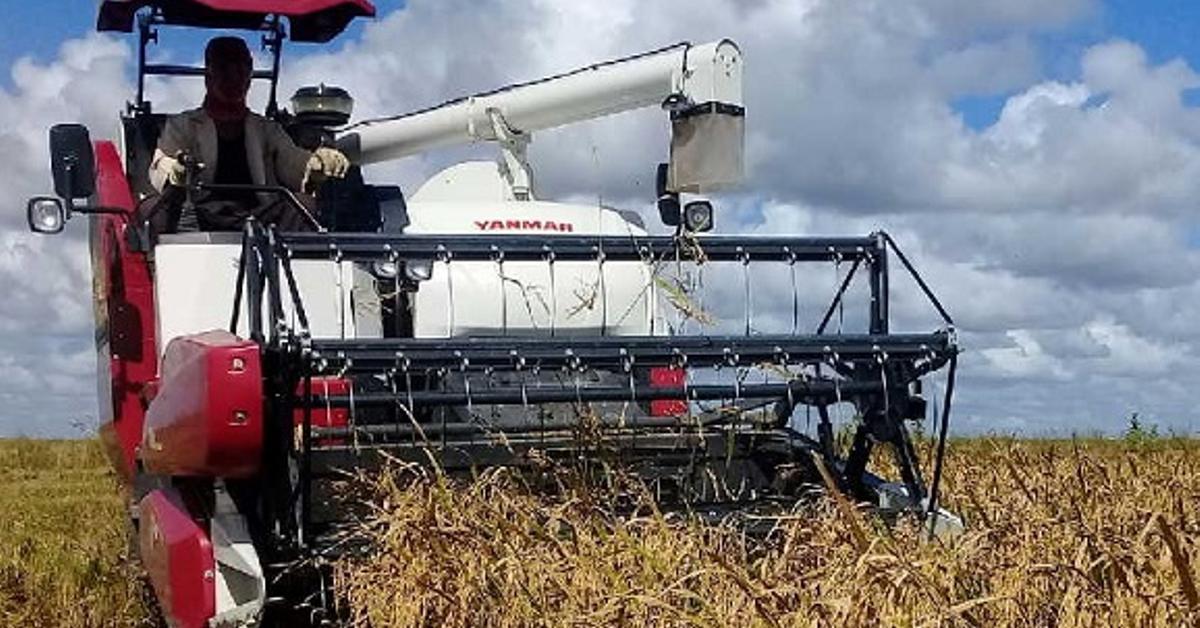
Within the plan they even foresee the “accelerated introduction” of drones, to increase performance and reduce water consumption. To “support” the objective they plan to use “the return of financing from sales in USD to tourism and other sectors, which could help the rice program under current conditions, basically in the acquisition of tires, parts and accessories for tractors, harvesters, industrial inputs and other resources.”
Today, the rice distributed in the basic basket comes from outside. On September 20, they arrived at the port of Havana 19,000 tons of grainwithout national television revealing the origin, to distribute throughout the country.