Colombia’s fiscal outlook fails to clear the clouds that have been accumulating for several years and according to the most recent Fedesarrollo Economic Prospective report, the country will maintain a high fiscal deficit in 2026, close to 7% of GDP, which confirms the trend of structural deterioration in public finances and the urgency of applying a fundamental adjustment to return to the path of sustainability.
The think tank estimates that the deficit of the Central National Government will close 2025 at 7.5% of GDP, compared to the 6.7% recorded the previous year, and which next year, far from being corrected, will remain at similar levels; in a diagnosis that leaves no room for optimistic interpretations, since public spending continues to grow at a faster rate than income, while tax revenues lose momentum and debt obligations expand.
Check here: The survivors of employment will be the ones who master artificial intelligence
Fedesarrollo warns that the combination of rigid spending, low liquidity and political pressures has led the Government to operate with increasingly narrow margins; given that the liquidity of the National Treasury is at historic lows, reflecting the cash shortage and the growing need to resort to internal debt through short-term TES issues.
For them, this phenomenon has distorted the yield curve, making financing more expensive and putting pressure on debt service; Therefore, the report also indicates that the country’s debt level will continue to increase during 2026, fueled by consecutive deficits and the lack of fiscal space to cover existing commitments.
Colombian economy
iStock
In this context, they highlight that public debt is consolidated as one of the main macroeconomic risks, both due to its weight on the budget and its impact on investor confidence.
Review the deficit
With all of the above, Fedesarrollo maintains that the challenge does not lie solely in the size of the deficit, but in its composition and they explain that a good part of the spending is concentrated in transfers, subsidies and operation, items that are difficult to reduce without a comprehensive reform. Meanwhile, public investment, key to boosting growth, continues to lag behind infrastructure and competitiveness needs.
More information: Credit will grow 5.5% in 2025 and 6.3% in 2026, says Anif
Given this panorama, the study center proposes a fiscal adjustment equivalent to about 3% of GDP, which combines spending efficiency and a more equitable tax reform; through a package of measures that include a reduction in the income tax for legal entities and the elimination of the wealth tax.
Among the tax paths to take, they also mention the expansion of the tax bases of VAT and income tax to individuals, and stricter control of public spending. However, it recognizes that any attempt Reform will require broad political consensus and careful management of the social climate.

The financing law is the Petro government’s big fiscal bet for 2026.
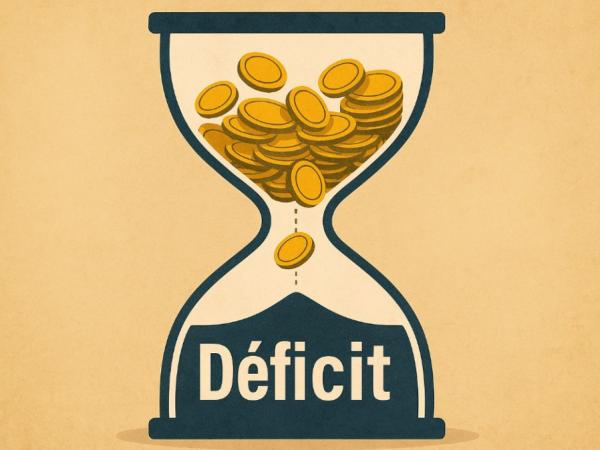
Image from ChatGPT
Likewise, on the macroeconomic front, the report warns that the fiscal deterioration limits the State’s ability to respond to external shocks and to sustain social programs without compromising stability, since although the economy would grow around 2.6% in 2025 and 2026, driven by private consumption, the Government’s room for maneuver will continue to be reduced.
The risk, according to Fedesarrollo, is entering a vicious circle in which there is more deficit, more debt and less confidence; while investors could demand higher returns to finance the State, which would further increase debt costs. In this scenario, recovering fiscal credibility becomes an immediate priority.
Also read: Dollar opened the week higher amid trade tensions between the US and China
Thus, the report concludes that the sustainability of public finances will depend on the country’s ability to execute a credible and gradual structural adjustment, which balances the accounts without slowing down the economic recovery. If not, he warns, Colombia will face a year of moderate growth in 2026, but under the persistent shadow of a high deficit, expanding debt and fiscal confidence in question.
DANIEL HERNÁNDEZ NARANJO
Portfolio Journalist