The Venezuelan government has maintained a firm and sustained stance throughout the years it has resisted continued aggression by the United States. The strategies to move forward have varied, depending on the context, but maintaining the climate of peace, openness to dialogue with all instances under the sole premise of the defense of sovereignty, non-interference and respect for the freedom of the people.
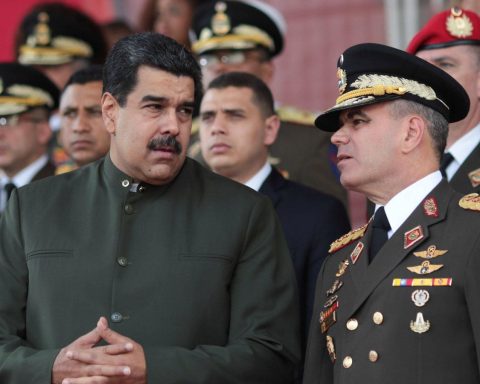
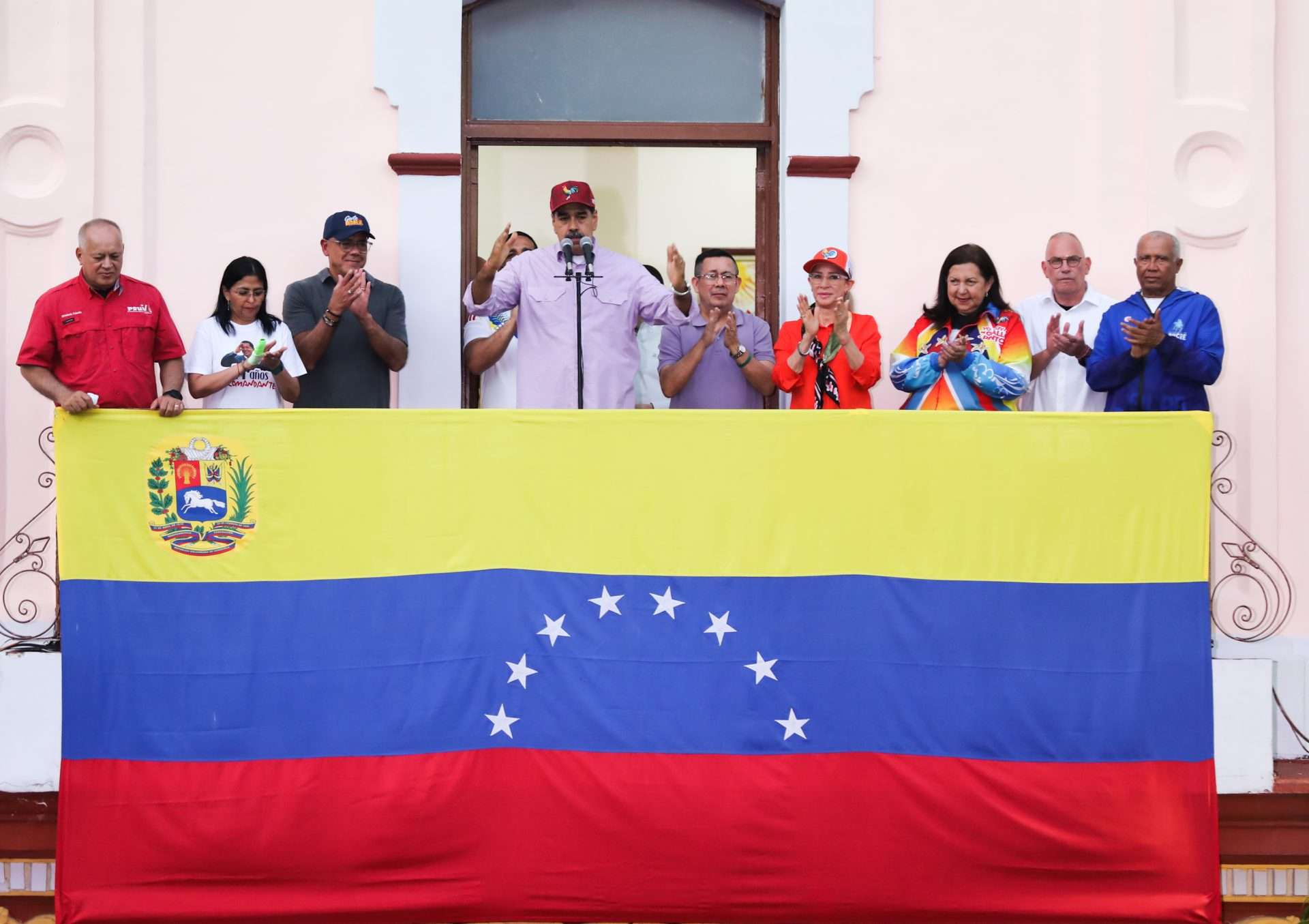
President Nicolas Maduro has assured that in these last eight weeks of threat by the Trump government, the people are stronger on a moral, political, psychological and military level, prepared to defend the peace, sovereignty and wealth of the country.
During his speech at the extraordinary meeting requested by Venezuela in the UN Security Council, held this October 10, the Permanent Ambassador of Venezuela to the UN, Samuel Moncada, carried the message of President Maduro’s government, which has been sustained over time, even since tensions with the United States government began to worsen in 2014, after the signing of Obama’s decree, where the country was declared a threat. “unusual and extraordinary.”
Of the three concrete actions presented at the UN by Moncada, the third summarizes what the government’s discourse has been in all these years: the demand for respect for the sovereignty and non-interference, the independence and territorial integrity of the Republic, and that being a country characterized by its tradition of peace, open to dialogue, Venezuela has never been immersed in an international conflict.
The Venezuelan government, through the spokespersons of the highest representatives of public powers, has maintained its position in the face of the attacks received by the United States, which is why the population is openly alerted about the threats that the United States makes towards Venezuela and the deployment of troops and weapons in the Caribbean, which also puts the peace of the entire Latin American region at risk and about the need to be prepared, including in arms, in conjunction with the armed forces. and police of the country to defend the country.
The US and the drug trafficking thesis
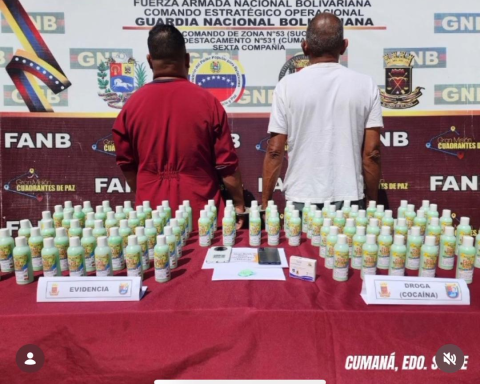
Under the declaration of strengthening its fight against drug trafficking, at the end of August 2025, the United States began an increase in naval troops in the southern Caribbean. It should be noted that military sources recalled that every year, around this time, the United States carries out this patrol in the Caribbean, but this year’s patrol was towards a specific objective: to dethrone President Maduro, whom it classifies (without presenting evidence) as the head of a drug trafficking cartel.
The Trump government has shown videos on social networks of the attacks that show motor boats exploding in flames. However, to date, it has not shown evidence that these boats were carrying drugs and criminals, a thesis on which the Minister for the Interior, Justice and Peace, Diosdado Cabello, as well as the Minister for Defense, Padrino López, have repeatedly insisted.
Some international spokespersons, such as the president of Colombia, Gustavo Petro, to mention a few, supported the Venezuelan government that the US military is summarily and illegally killing suspected members of Latin American drug cartels, designated as foreign “terrorist” groups. More than 60 NGOs even asked the US Congress to stop US President Donald Trump’s military campaign in the Caribbean, and warned that it could lead to “a regional war.”
Added to this is the accusation that the US makes of the President of being the leader of the imaginary Cartel of the Suns and they even point him out as responsible for the actions of the criminal gang called El Tren de Aragua.
The UN points out that Venezuela is not a key country in global cocaine trafficking, most of the production and transit occurs in Colombia and other routes, and only a minor fraction passes through Venezuela and that the country does not have relevant illicit crops, according to data reflected in the World Drug Report 2025.
Get hold of oil and promote regime change

The Venezuelan executive has insisted on its position that it is a multi-million dollar deployment in the Caribbean Sea, with which they seek, with the excuse of the war on drug trafficking, to bring about a change of regime and take over the country’s resources, mainly oil and mines.
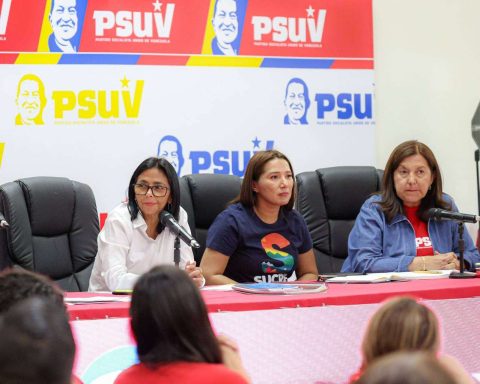
The executive vice president and rector of the country’s economy, Delcy Rodríguez, has repeatedly denounced that North American imperialism only seeks to appropriate the country’s wealth.
He assured at the XIV Saint Petersburg International Gas Forum 2025
that if the proven oil and gas reserves of Venezuela and Russia are added, both countries are holders of the 24% of global energya relevant fact that could explain the US’s interest in “appropriating the planet’s hydrocarbons, especially from Venezuela, Russia and Iran in order to sustain its hegemonic dominance.”

Rodríguez has given as an example what happened in Ukraine and the expansionism that NATO proposed towards Russia’s borders “had precisely an energy objective which was to displace Russia from the gas market in Europe,” he highlighted.
It is important to highlight that Venezuela has the highest hydrocarbon reserves on the planet. According to different data, the nation has fossil energy for another 4 or 5 decades.
Maduro’s “perfect” civic-military-police union strategy
Faced with this North American military deployment in Caribbean waters, Venezuela called for a militia enlistment day, where the popular power, voluntarily, subscribed, to prepare for the defense of the country, even, if necessary, with the use of weapons. The objective has been to consolidate the civic-military-police union, backbone of the country’s comprehensive defense.
On the other hand, it began a series of days of military exercises for the comprehensive defense of the country, which extend from the Caribbean Sea to the Orinoco and the south of the border with Brazil, under the so-called Operation Independence 200.

The Minister for Defense, Vladimir Padrino López, explained that the military exercises prepare the people for the hypothesis that a foreign military aggression against Venezuela occurs, under the premise of the fight against drug trafficking.
The Executive has prepared to confront the United States after the promulgation on January 8 of a presidential decree by which the so-called Management Bodies for Comprehensive Defense (Oddi) are activatedas instances of planning, coordination, integration and execution of all powers of the State at all levels, thus officially incorporating the population.

“The purpose of this integration is to comply with the constitutional principle of co-responsibility between the State and society to safeguard the independence, freedom, democracy, sovereignty, security and comprehensive defense of the nation from any internal or external threat,” according to the decree.
Maduro assured that the Comprehensive Defense Organs (ODDI) together with the Comprehensive Defense Zones (ZODI) they will be activated in a surprising way, for the defense of peace and protection of the Venezuelan people, a strategy that began this Monday, October 6 in all border and coastal states.
«We do not mess with anyone, but we are increasingly prepared to defend the sacred soil of Venezuela, the gringo empire is not right (…) what they want is a war in the Caribbean and South America, for a regime change, to impose a puppet government and steal the oil, gas, gold. But we have news for the North American empire; That oil, that gas, that gold, this land and this people will continue to belong to the Venezuelans. “We will never allow our homeland to be violated! It is an entire country, it is not a man, it is a people, a historical project,” he stated.
The Venezuelan writer and historian, Luis Britto García, in an interview with RT, recalled that from several countries, including RussiaChina, Mexico and Brazilhave declared that “it cannot continue to be tolerated if the sovereignty of countries is attacked at will by imperial powers”, and highlighted that the large alternative organizations, such as BRICS and Celachave also issued their condemnation of those actions, he added.
“The emerging powers, which are playing a decisive role, say that at some point we must put a stop to this idea that a power can annihilate nations whose Government they do not find satisfactory,” Britto García stressed.
Shielding the country with a Shock Decree
After the White House rejected a letter from the president, Nicolás Maduro, in which he urged the preservation of peace through dialogue, the president indicated on September 23 that he could declare, by decree, “the “state of external commotion throughout the national territory.”
The “decree of commotion” is one of the four states of exception contemplated in the Venezuelan Constitution, which can be decreed in the event of a conflict that puts the security of the nation or its institutions at risk.
This is another strategy of the Executive to activate the support, protection and activation of all the forces of Venezuelan society to respond to threats or, if applicable, to any attack carried out against the country.
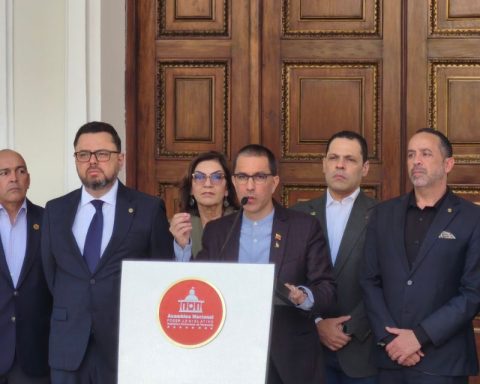
Despite the announcement that Maduro had signed said decree, it has not yet been presented to the National Assembly, but was raised to a body called the National Council for Sovereignty and Peace, coordinated by the president of the National Assembly and plenipotentiary head of the dialogue, Jorge Rodriguezthus giving a deadline for it to be submitted to discussion by all sectors of the country.
End of dialogue?
After the episode of the attack with explosives, thwarted by Caracas, on the North American embassy, Caracas reports to the US the data of the people responsible, who from North America prepared that attack. The person in charge of the dialogues, Jorge Rodríguez, contacted John MacNamara, current chargé d’affaires of the North American embassy in Venezuela, denouncing that those responsible are in US territory. However, no response was obtained.
Maduro warned that if this attack had materialized, it would have been considered a serious incident to initiate what the US government has called phase 2, “aggression.”
According to information from the newspaper The New York Times, the president of the United States, Donald Trump, would have suspended efforts to reach a diplomatic agreement with Venezuela, since Trump would have ordered Richard Grenell, his special envoy to lead negotiations with the president, Maduro and other important officials of the Government of Caracas, “to paralyze any diplomatic contact, including talks with Maduro” a decision that could pave the way for a potential military escalation against the country.
Faced with this turn, President Maduro gave a forceful response: “life does not depend on you, gringos… We are every day dismantling the escalations of psychological warfare mounted by the gringo press from the world’s press portals. “In these last eight weeks of criminal threat from the US empire, our people have been able to stand up. It is stronger on a moral, political, psychological and military level. We want peace, that’s why our plan is to exercise our sovereignty”, insisting on the premise of defense in a civil-military-police union.