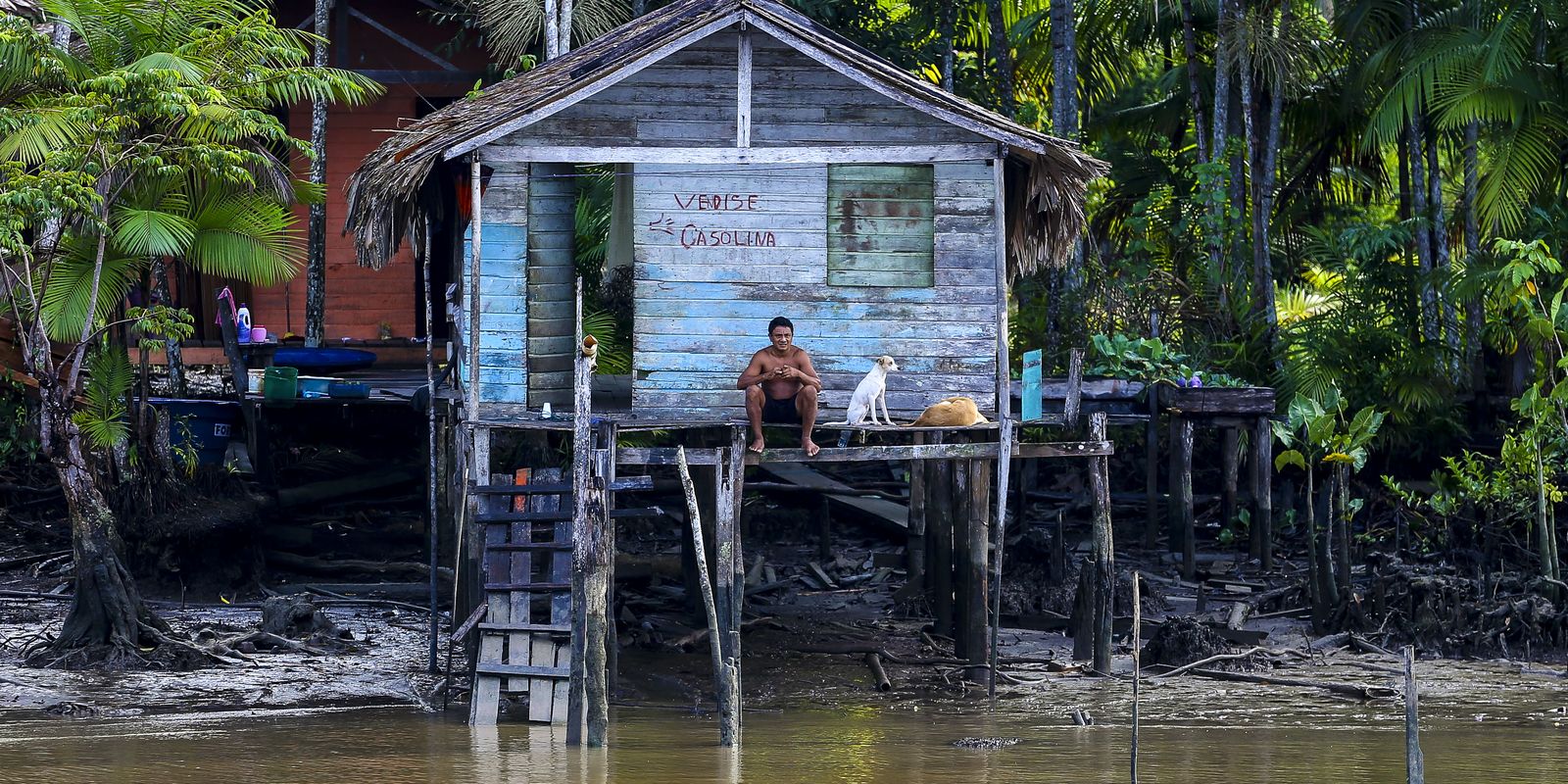
The president of the National Council of Extractive Populations (CNS), Julio Barbosa de Aquino, defended, this Tuesday (14), that the next Climate Conference (in Belém, in November) will be the opportunity to bring forest peoples into the climate debate.
He participated in the event Pre-COP of Traditional Peoples and Communitiesthe first in a series of four meetings to discuss socio-environmental issues involving the six Brazilian biomes. The results of the discussions will be taken to COP30.
“No one suffers more from the climate issue than the people who live in the forest and who live off family farming. These are the people who produce to bring food to the city”, he stated.
Impacts
Aquino exemplified that, when the biome suffers, the river can become impassable. “Not even the boats get there with food. Not even production leaves these territories for commerce. Not even school meals or school transport arrive.”
For the president of the CNS, this is the most important debate because it is concrete. “We don’t have extractive activities if we don’t have our river protected. That’s the biggest challenge we have.”
New reservations
Coconut breaker Maria Nice Machado Aires, who lives in Baixada Maranhense, understands that COP30 will be a time to defend extractive reserves, both those that exist and those that can be created.
“We have been examples of strengthening the forest. Especially because we have a different policy that defends the environment, and social and cultural policy”, he stated.
Government agenda
The national secretary of traditional peoples and communities, Edel Moraes, from the Ministry of the Environment, argued that the demands of quilombolas, indigenous people and extractivists are on the federal government’s agenda for the COP. In fact, she mentioned that one of the novelties of the COP presidency was to create the Peoples’ Circle.
“The Ministry of the Environment managed to reduce deforestation, which also directly affected extractive communities, peoples and traditional communities”, stated the federal government secretary.
Territorial justice
President of the Chico Mendes Committee, environmentalist Ângela Mendes, daughter of the rubber tapper leader, argued that the event in Belém needs to look at the legacy of the struggle of people and extractivist communities.
“It is not possible to do climate justice without doing territorial justice, without recognizing the rights and importance of these peoples,” he stated. She considers the participation of younger people and those who work to protect the environment to be essential. Ângela Mendes believes that the potential for communication by young people can be fundamental to progress.
Changing themes
Director of the non-governmental organization The Nature Conservancy, José Otávio Passos considered that, historically, climate conferences have focused more on the debate for developed countries about energy and fuels.
For him, the needs of forest people should be prioritized. “We need to look at two other crises, biodiversity and social. Having the COP in the Amazon is an opportunity for us to put people and communities at the center of the climate debate.”














