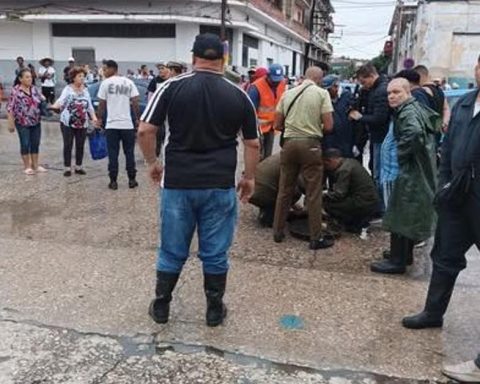
Havana/Two of those arrested in the neighborhood protest last Wednesday, October 7 in the municipality of Marianao, in Havana, were accused of “public disorder” and sent to preventive detention in the Valle Grande prison. At least 15 citizens they had been arrested in relation to that peaceful demonstration and taken to the detention center known as El Vivac, in Arroyo Naranjo.
According to confirmed This Monday Martí Noticias, one of those transferred to Valle Grande is Yuniel Serrano Batista, accused of allegedly setting fire to a garbage container. The name of the other person, who was arrested for trying to prevent Serrano’s arrest, is still unknown. Both are residents of the Pogolotti neighborhood.
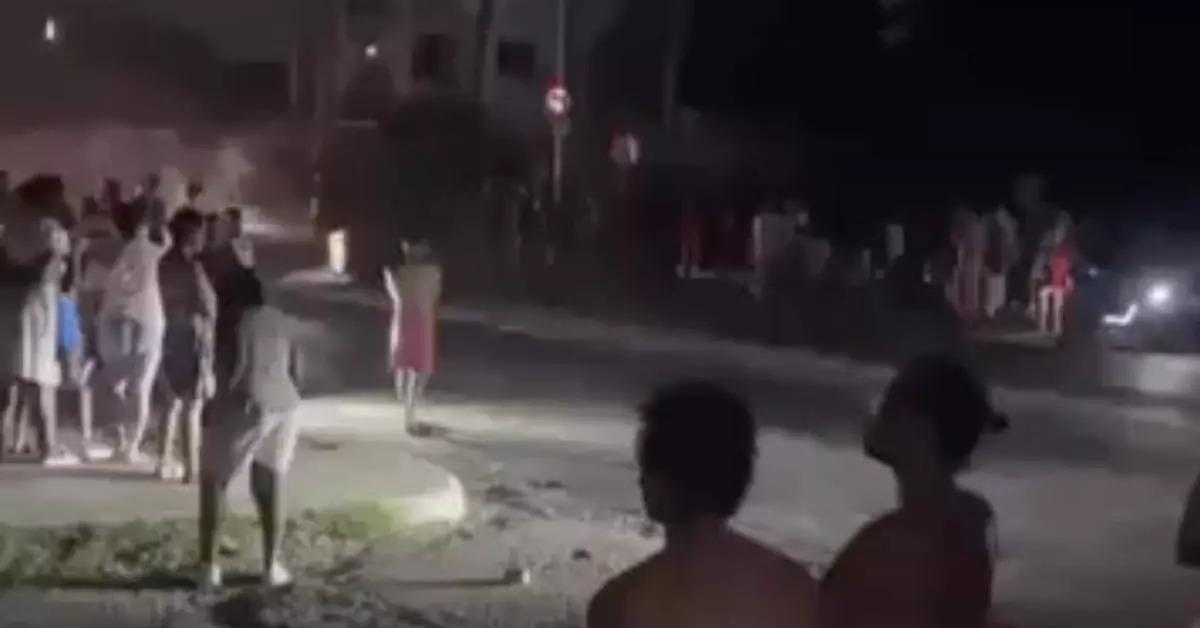
The manifestationwhich occurred at night on 51st Avenue, brought together dozens of neighbors who came out to demand the restoration of the electrical service, which had been intermittent for four days, and to denounce the lack of water and freedoms. Shouting “We want light!” and banging cauldrons, residents partially blocked the road using containers and burning objects to illuminate themselves in the middle of the blackout.
At least 15 citizens had been arrested in relation to that peaceful demonstration and taken to the detention center known as El Vivac.
The Police intervened within minutes. Some witnesses reported that several patrol cars and plainclothes officers forcibly dispersed the protesters, arresting more than a dozen people.
The Cubalex organization denounces that the Cuban regime “has repressed the protest participants and has criminalized a legitimate act of dissent as a mechanism to silence citizen discontent in Cuba.”
Among those detained was activist Liván Gómez, coordinator in Havana of the Union for Free Cuba party. Gómez was arrested a day after the demonstration and accused of leading the protest, even though, as was later proven in recordings, he was not present at the scene.
After reviewing the images, the authorities decided to release him on Friday, October 11. However, Gómez was warned that he could be imprisoned if he is linked to anti-government graffiti that appeared in the area. “During the interrogation they also accused me of being behind some posters. They made it clear to me that they are watching me,” declared the activist.
The transfer from El Vivac to Valle Grande usually indicates that the Prosecutor’s Office has formalized the accusation and that the detainees could face a trial. This step toughens their legal and personal situation, since it implies more isolation, greater state control and difficulties in accessing defense and family visits. In political or protest cases, it also works as a deterrent message for the rest of the community.
The month of October has been marked by greater social tension in Cuba
Although most of the detainees have been released in the last few hours – some with fines and others with warnings – the fact that two protesters have been sent under preventive detention to Valle Grande, one of the most used prisons in the capital for opponents and protesters, shows that “social protest is treated as a crime, not as an expression of a citizen’s right,” Cubalex has noted.
In recent weeks, this newspaper has documented an increase in spontaneous demonstrations in neighborhoods of Havana and other provinces, motivated by the energy crisis, water scarcity and lack of official responses.
The previous week, a group of residents in the neighborhood of Sports Casino He made a pot-bang during a blackout, in an area historically privileged for not suffering prolonged power outages. Days before, women with children and empty buckets blocked the Mount Street to demand water. Although they were confronted by police officers, a tanker truck arrived at the scene shortly after.
The month of October has been marked by greater social tension in Cuba. The daily blackouts, which in many areas exceed 12 hours without electricity service, have exacerbated the frustration of the population. Added to this is inflation, food and medicine shortages, the proliferation of epidemics and political repression.