The EU eliminates passport stamping and activates an electronic entry and exit system.
MADRID, Spain.- Since October 12, the European Union (EU) began to apply a new electronic system to register border crossings of travelers from non-EU countries, which progressively puts an end to the traditional stamping of passports at airports and external borders of the Schengen area.
The mechanism, known as the Entry and Exit System (SES), is aimed at people traveling to the EU for short-term stays – up to 90 days within a 180-day period – and will replace the way arrivals and departures of third-country nationals are documented. Instead of stamping a stamp, the data will be automatically recorded in a common digital database, which represents a substantial change for many travelers, including Cubans entering the Schengen area with tourist or short-stay visas.
During first entry, the SES will take each traveler’s facial photograph and fingerprints, as well as scan passport information. These data will be stored in a system shared between all the countries that make up Schengen and will allow the process to be faster at subsequent crossings by verifying identity biometrically, without the need for new registrations, except in exceptional cases.
The implementation of the SES will be progressive: for six months it will coexist with manual sealing, while each Member State decides at which border points it begins to apply it.
The European authorities assure that this modernization will reduce waiting times and strengthen security, by facilitating the detection of people who exceed the authorized time of stay or use false documents. However, this new scenario also raises questions that have not been precisely clarified in official communications.
For those traveling from Cuba, this change means that the physical stamp in the passport will no longer be visible proof of entry and exit from Europe, something that until now has been common at each border crossing. From now on, all this information will be stored electronically in the SES, which reinforces control over the length of stay and could have direct consequences for those who exceed the authorized 90 days.
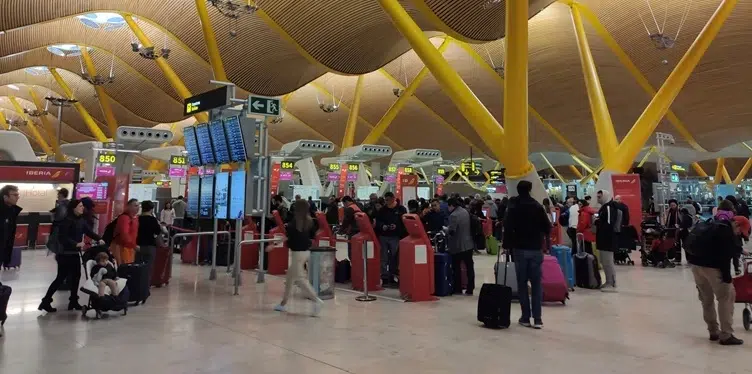
The transition will not be uniform and the traveler’s experience will depend on the country of entry. Self-service terminals have already been installed at some airports to speed up check-in, while others will still use traditional procedures in the coming months. This inequality in implementation could generate confusion among those arriving from third countries, including Cubans, who could encounter different procedures depending on the airport or border through which they enter.
For many travelers, the change also means a loss of control over their own information, as proof of their border movements will no longer be physically in their passport, but in a digital system that only authorities will be able to access.
The SES marks one of the most significant changes to European border controls in decades. For Cubans traveling to Europe, this new system will not only transform the way they cross borders, but also the way their stays in the Schengen area are documented and verified.