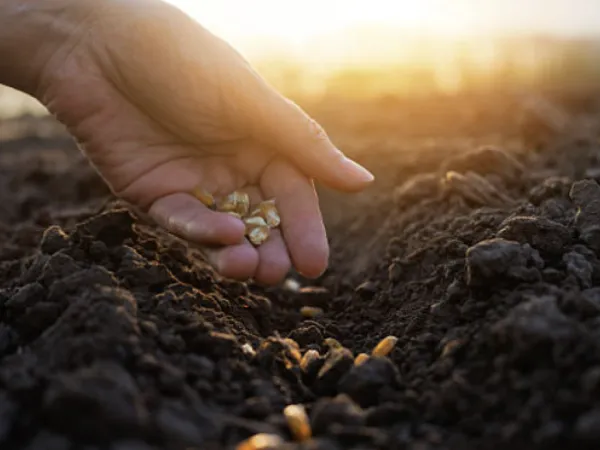
In Colombia, strengthening the use of certified seeds has become a priority to face the challenges of food security, sustainability and agricultural productivity.
This was stated by the Colombian Association of Seeds and Biotechnology (Acosemillas), noting that the country is advancing in the consolidation of a national seed industry, although it still faces problems of illegality and technological gaps.
(Read: Hydrangea drives transition towards regenerative agriculture in floriculture)
Leonardo Ariza Ramírez, general manager of Acosemillas, stated that “Without legal and quality seeds, adapted to our regional realities, there is no sustainable production or food security.“In a context marked by climate change, pressure on natural resources and the appearance of new pests, the leader stressed that the basis of agricultural competitiveness begins with the seed.
According to data from the Colombian Agricultural Institute (ICA), In 2024, more than 460,000 hectares of corn, 500,000 of rice and 50,000 of soybeans will be plantedwith a production of more than six million tons. Certified seed is used in these strategic crops, demonstrating the potential of this practice to increase yields. However, not all agricultural sectors have achieved equal progress.
In potatoes, for example, only 10% of the 109,000 hectares planted use certified seeds. In soybeans, the figure reaches only 12% of the 93,200 hectares, while rice uses this type of seed in 22% of the 631,071 hectares cultivated. In contrast, corn and cotton have higher percentages, with 87.5% and 80% respectively.
(See also: Banana, avocado and lemon drive the growth of fruit exports)
Only 10% of the 109,000 hectares of potatoes use certified seed, while in corn the percentage reaches 87.5%.
iStock
According to the Ministry of Agriculture, 85% of the certified seeds used in the country are produced by national companies, while the remaining 15% correspond to imports. The latter, Ariza explained, are usually specialized varieties or hybrids with technologies that have not yet been developed locally. This balance, he added, is fundamental for food sovereignty, adaptation to climate change and the competitiveness of the sector.
Despite the progress, Acosemillas warns that illegality in the seed trade continues to be an obstacle to agricultural development. “Piracy in the use of seeds, often of dubious origin, compromises plant health, reduces yields and exposes the producer to irreversible losses. Informality cannot continue to be the norm“Warned Ariza Ramírez.
The union also noted that a structural gap persists in access to innovation. Many smallholder farmers remain excluded from improved technologies and seeds, limiting their productivity. “Closing that gap is a political decision,” added the manager, while calling for strengthening intellectual property protection and research incentives.
The ICA, for its part, has insisted on the importance of purchasing seeds from establishments with official registration and respecting the authorized sales and sowing dates. These measures seek to guarantee traceability, health and optimal performance. “With authorized seeds, significantly higher yields, better resistance to diseases and pests, and greater efficiency in the use of resources such as water or inputs can be achieved.“explained the manager of Acosemillas.
(Read more: Producers warn that a new decree would put an end to cotton cultivation in Colombia)

“Without legal and quality seeds there is no sustainable production or food security,” said Leonardo Ariza Ramírez, general manager of Acosemillas.
iStock
For the union, the goal is to consolidate a model of seed coexistence, which integrates native and creole varieties, improved by conventional methods and others with biotechnology. This diversity, said Ariza Ramírez, It will allow each farmer to choose the type of seed most appropriate to their productive conditions, without compromising the sustainability of the crops.
With the adoption of improved seeds, it is expected to exceed the production levels achieved in 2024 and move towards more resilient agriculture in the face of climate change. Acosemillas also proposes a roadmap aimed at strengthening legality, democratizing access to innovation and promoting coordination between the State, academia and the private sector. “We intend to strengthen legality and transparency, combat piracy, dignify the seed trade and protect the producer with clear information and traceability.”, pointed out Ariza Ramírez.
Colombia, with more than 1,000 species classified as selected seeds —among vegetables, flowers, aromatics and forestry—, has the potential to become a regional benchmark in sustainable agricultural production if it manages to consolidate a modern, legal and competitive seed system.
(Read: Colombia emerges as the main supplier of coffee to the US due to tariffs)
DIANA K. RODRÍGUEZ T.
Portfolio Journalist