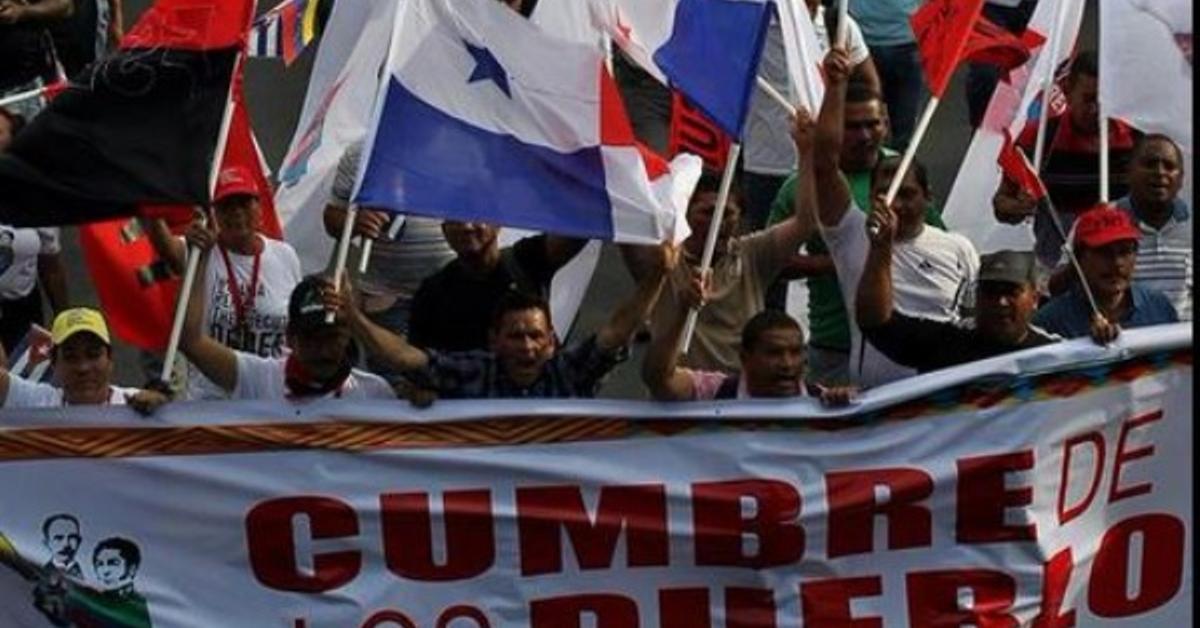
Madrid/Between December 4 and 6, Santo Domingo will host a new edition of the People’s Summit, an event that brings together representatives of left-wing political organizations and social movements from Latin America and the Caribbean occasionally, and which in recent editions has been convened in parallel to the Summit of the Americas. This year’s event arises as a “redress” for the exclusion of Venezuela, Nicaragua and Cuba from this meeting, which is also held in the Dominican Republic, in Punta Cana, the first week of the same month.
“The exclusion of these three sister nations constitutes a surrender by the government of the host country in the face of the brutal unilateral pressures of the United States that is trying to reimpose the Monroe Doctrine, threatening peace, security and stability in the area,” Roberto Payano Pantaleón, president of the Dominican campaign of solidarity with Cuba, said this Sunday in a speech this Sunday during the IX Continental and Caribbean Meeting of Solidarity with the Island, which was celebrated in Mexico.
Payano Pantaleón stated “Cuba is not alone” and regretted that the Dominican president, Luis Abinader, failed to fulfill the commitment he made when his country was named host of the 10th Summit of the Americas, when he said that it would be “an inclusive space.” The leftist leader said that the exclusion of those “three sister nations constitutes a surrender by the government of the host country to the brutal unilateral pressures of the United States.”
Payano Pantaleón stated “Cuba is not alone” and regretted that the Dominican president, Luis Abinader, failed to fulfill the commitment he made
Dominican announced on September 30 that Venezuela, Nicaragua and Cuba were left out to “prioritize the success of the meeting”, in the face of “the current context of political polarization” and although he claims to have sought the inclusion to which he committed from the beginning, he believes that it is necessary to seek “the conditions that ensure the broadest political dialogue, with the highest level of hemispheric representation” leaving out these “countries that, for various reasons, have decided not to be part of the OAS (Organization of American States) and who did not participate in the last edition of the Summit of the Americas.”
Havana reacted immediately without attacking the organizer, a country with which it has a good understanding, and seeking to consider him a victim of alleged US pressures. The message aims, above all, to involve stronger countries such as Mexico, Colombia or Brazil in a narrative of resistance to imperialism. Payano Pantaleón followed that line by pointing out that “in the face of a Summit of the Americas built on coercion and exclusion, and in the face of the imperialist offensive, let us promote solidarity, unity and peace in our region.”
“The world is certain,” he continued, “of the bravery of Martí’s children in defending their right to self-determination, and in raising their voices to denounce crimes and injustice. That is what the empire fears, the example of nobility and decorum.”
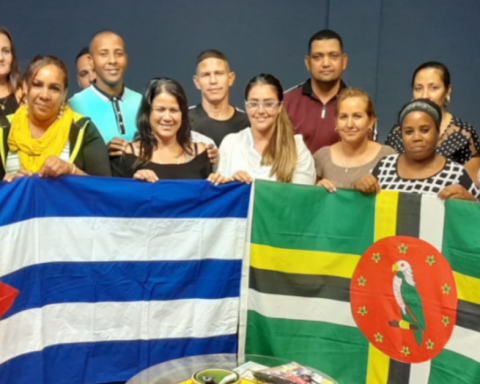
The Cuban ambassador to Mexico, Marcos Rodríguez Costa, thanked the call for “a legitimate space for meeting, dialogue and articulation between movements in solidarity with Cuba and just causes,” he said. The diplomat expressed that the People’s Summit “will echo the voices that are intended to be silenced by excluding Cuba, Nicaragua and Venezuela from the 10th Summit of the Americas and as an expression of a Latin America and the Caribbean that does not accept impositions or exclusions.”
The Government decided to deny the 23 requested visas, provoking a furious reaction from Havana and its allies.
The People’s Summit, whose origins date back to the early 2000s, has coincided with that of the Americas on several occasions, including the last three: Panama 2015, Lima 2018 and Los Angeles 2022, when a strong controversy arose when the Cuban delegation was denied a visa to attend the latter.
On that occasion, the Joe Biden Administration had chosen not to invite Cuba, which had been exceptionally present at the two previous Summits of the Americas – Panama and Lima – to the continental event, but a Cuban delegation did plan to attend the parallel meeting. The Government decided denying the 23 requested visas, provoking a furious reaction from Havana and its allies.
“Biden is not only not interested in having a dialogue with Cuba, Nicaragua and Venezuela or with other countries, but he does not allow us, from the people, to dialogue and communicate,” said then Manolo de los Santos, co-director of The People’s Forum, one of the American organizations that coordinated the event.