The return of the hostages is part of the first phase of the ceasefire agreement forged by US President Donald Trump. In exchange, almost 2,000 Palestinian prisoners will be released from Israeli prisons
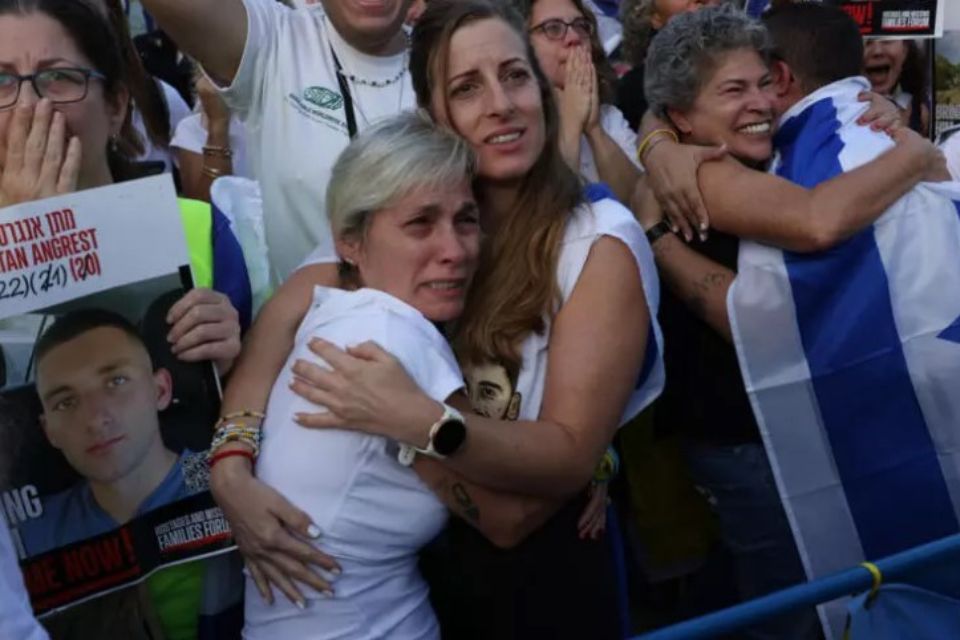
With hugs and shouts of joy, but also with tears and pangs of pain, hundreds of people celebrated in Tel Aviv’s Hostage Square the releases of the last Israelis held in Gaza for more than two years by the terrorist group Hamas.
Many have been there since dawn, carrying photographs of the hostages and Israeli flags with a yellow ribbon, a symbol of the movement calling for the release of those kidnapped by the Palestinian Islamist movement Hamas.
“We were waiting for this moment, but there is sadness for those who do not return and for the almost 2,000 dead from the war, two years of madness that are ending,” Ronny Edry, a 54-year-old teacher, explains to AFP.
“But it’s a nice day, it’s what we’ve been waiting for for two years,” he says from the so-called Plaza de los Rehenes.
Hamas and its allied militias took 251 people hostage during their unprecedented attack on southern Israel on October 7, 2023 that sparked the war in the Gaza Strip.
Many returned to Israel in previous truces, but 47 remained held in Palestinian territory. Only 20 were still alive.
Since then, Noga has always worn a badge on which he counted the days of captivity.
This Monday, before the expected release of the hostages within the framework of the truce between Israel and Hamas, a new message appears: “Last day.”
“I am torn between emotion and sadness for those who will not return,” she explains to AFP in the Plaza de los Rehenes.
During the last two years of conflict, this square in Tel Aviv has been the scene of frequent demonstrations and gatherings of family members of hostages and people who supported them.
Over the months, it became the epicenter of the campaign to demand the return of the captives.
When the release of the first seven hostages was announced this Monday, the square erupted in shouts and songs of joy.
*Also read: More than 20 world leaders meet in Egypt to monitor ceasefire in Gaza
«Back home»
The Forum of the Families of Hostages and Missing Persons, the main organization that represents the relatives of the captives, asked the population to gather in that square wearing yellow ribbons.
With the war, these ties have become omnipresent in Israel’s public spaces. They are seen on roundabouts, on car door handles or on baby stroller handles.
«Our suffering is not over. It will not end until the last hostage has been located and returned for a proper burial. It is our moral obligation,” the Families Forum stated in a statement.
Emilie Moatti, a former parliamentarian and one of the organisation’s founders, told AFP she was “very excited”. Fighting back tears, the woman pointed to the crowd gathered in the square.
On the giant screens installed, Israeli television broadcast images of former rallies held in that same place.
The song Habayta (“Back home” in Hebrew) that played on a loop over the speakers resonated differently with the crowd this Monday.
The song, composed in the 1980s in reference to Israeli soldiers fighting in Lebanon, resurfaced after the October 7 attack.
This Monday, for the first time in months, the song’s wish was about to come true.
The return of the hostages is part of the first phase of the ceasefire agreement forged by US President Donald Trump. In exchange, almost 2,000 Palestinian prisoners will be released from Israeli jails.
*Journalism in Venezuela is carried out in a hostile environment for the press with dozens of legal instruments in place to punish the word, especially the laws “against hate”, “against fascism” and “against the blockade.” This content was written taking into consideration the threats and limits that, consequently, have been imposed on the dissemination of information from within the country.
Post Views: 101