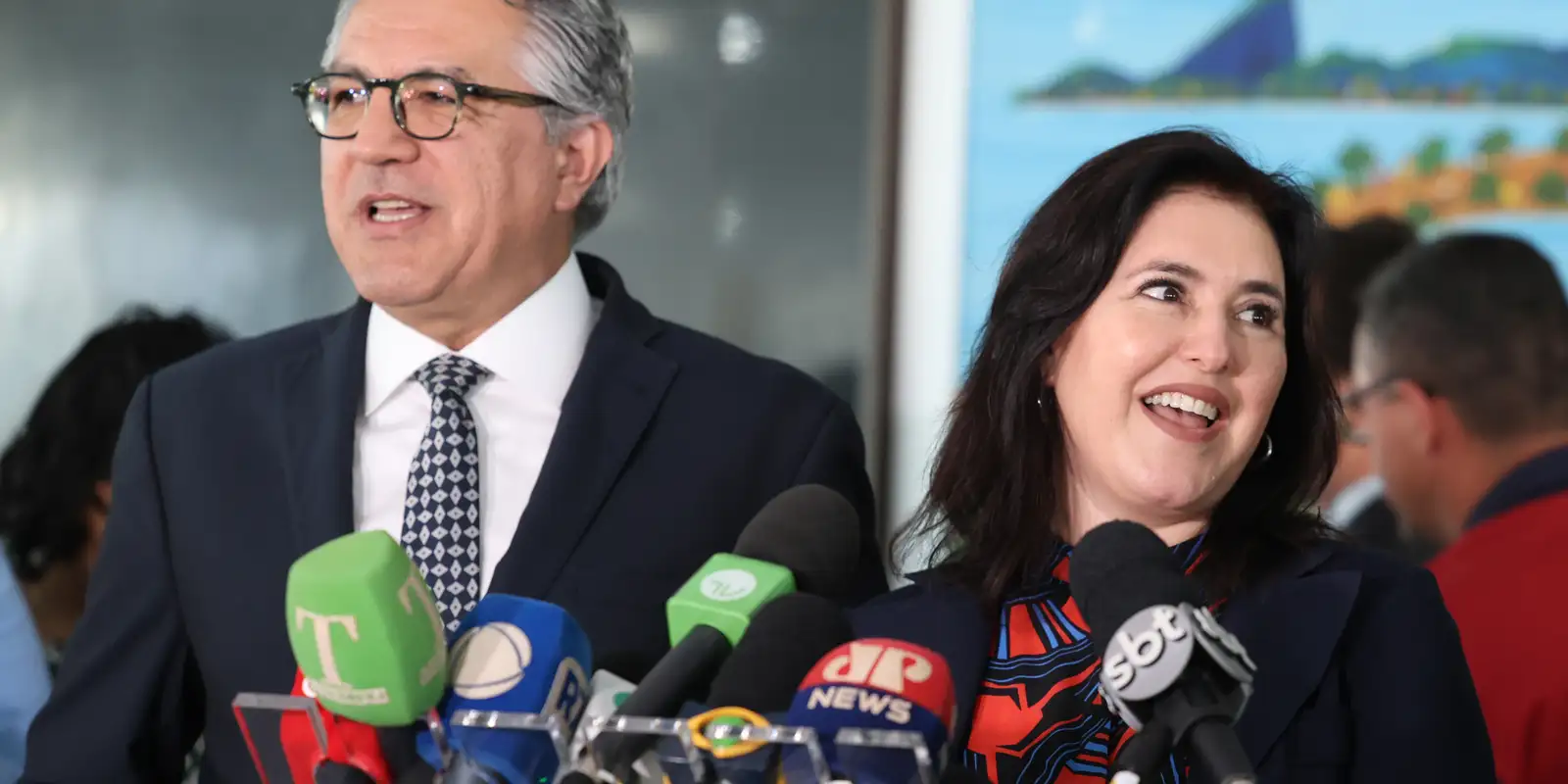
The Minister of Planning and Budget, Simone Tebet, will lead a mission to China starting this Monday (13) to discuss investments for Brazil and the integration between South America and Asia across the Pacific. The Minister of Health, Alexandre Padilha, is also part of the delegation to visit the smart hospital in Zhejiang province, the model of which will be replicated in Brazil.
The mission ends on Thursday, the 17th. The agenda includes a visit to the Port of Shanghai, a strategic point for the project South American Integration Routes. Structured into five routes, the Brazilian government’s program aims to optimize logistics and strengthen trade with neighboring countries and Asia, connecting different regions of Brazil through projects in highways, railways, waterways, ports and airports.
Operated by Shanghai International Port Group, the Port of Shanghai connects to more than 700 ports in more than 200 countries and is the Asian connection with the Port of Chancay, in Peru, which is part of the Brazilian integration project.
“The Chancay route is advantageous not only because it is faster, but also because it avoids channels with high tolls, such as those in Suez and Panama. Therefore, despite requiring integration between road and rail transport, the bioceanic route offers substantial logistical savings”, explained the Ministry of Planning and Budget (MPO), in a statement.
When comparing maritime export routes between Brazil and Shanghai, the ministry highlights that the Pacific route (Chancay route) is the most efficient. This route has the shortest sea distance (17,230 kilometers), the shortest navigation time (27 days), the lowest cost per ton (US$80) and the lowest estimated carbon dioxide emissions (1.45 kilos per ton of fuel).
The ministers will also have meetings with businesspeople and investors.
Smart hospital
The visit to the Chinese hospital will help authorities in the preparation phase of the Brazilian project. Zhejiang Hospital is a public hospital in China that stands out for its advanced hospital technology, especially in artificial intelligence, telehealth and automation. Brazil seeks to replicate the Chinese model to build a smart hospital that serves the Unified Health System (SUS).
The US$320 million financing project was approved by the External Financing Committee (Cofiex) of the New Development Bank (NDB), known as the BRICS bank. Resources will be mobilized to build physical infrastructure, acquire medical equipment and train labor.
Proposed by the Ministry of Health, in coordination with the Ministry of Planning and Budget, the project aims to develop a national smart, scalable and replicable hospital model, and implement the first hospital unit of its type in the country. “This impactful initiative will combine not only the NDB’s financial capacity, but also significant expertise and technological cooperation, also relying on China’s successful experiences in the sector,” explained the MPO.
Following the procedures determined by Cofiex, the project is now in the preparation phase. It will then be sent to the NDB for approval and will then enter the negotiation stage.
The negotiation is coordinated by the MPO Secretariat for International Affairs and Development, which presides over Cofiex, together with the National Treasury Secretariat (STN) and the National Treasury Attorney General’s Office (PGFN) and the Ministry of Health, which will be the executing body.
THE Technological Institute of Smart Medicine (ITMI-Brazil) will be in São Paulo, in the Hospital das Clínicas complex of the Faculty of Medicine of the University of São Paulo, and will integrate medical and technological advances from Brazil, China and other BRICS member countries and the international community.