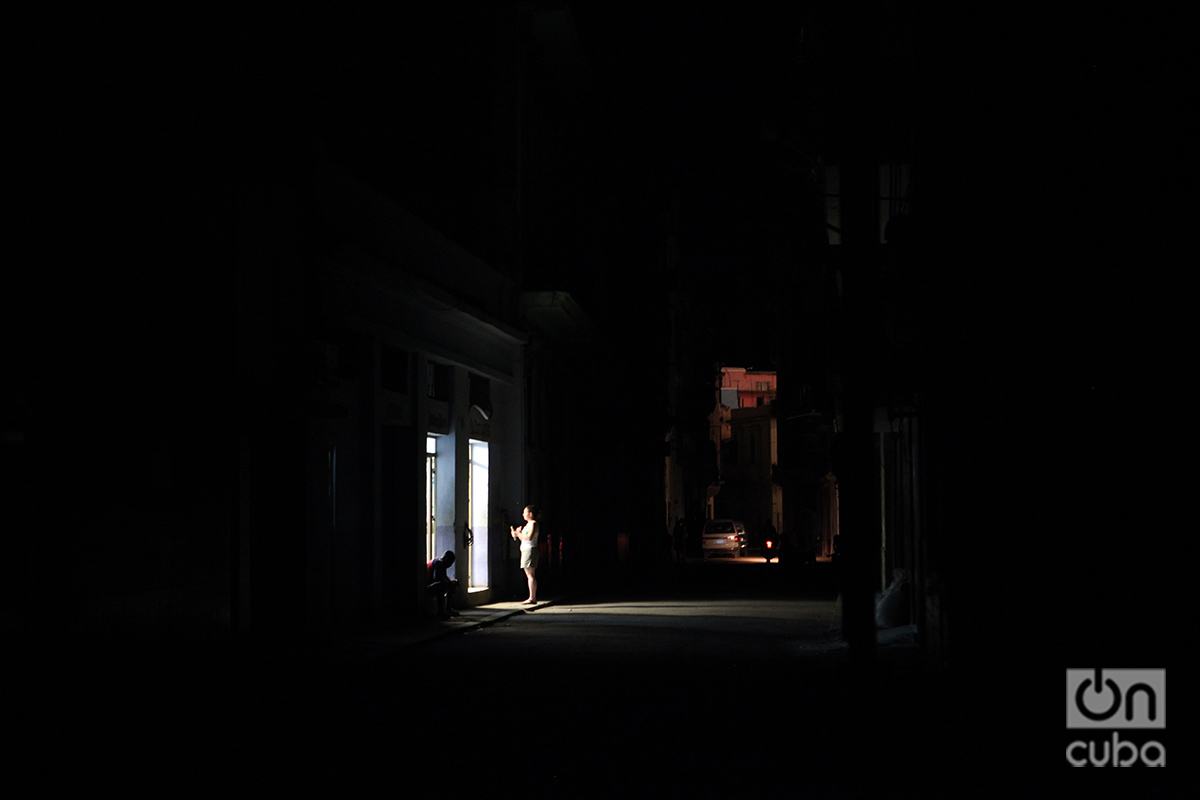
Approximately half of Cuba will suffer simultaneous blackouts this Sunday in the afternoon-night hours, the period of maximum consumption on the island, according to the forecasts of the Electrical Union published in the newspaper Granma.
“During peak hours, an availability of 1,570 MW is estimated and a maximum demand of 3,250 MW, for a deficit of 1,680 MW, so if the expected conditions continue, an impact of 1,750 MW is forecast during this time,” reported the company’s daily statement.
With that value, 49.3% of the country will suffer simultaneous power outages this Sunday.
On Saturday, the 24-hour service was affected and remained impacted throughout the early hours of this Sunday. The maximum impact due to a deficit in generation capacity yesterday was 1,584 MW at 7:00 p.m. (7 p.m.), the UNE stated.
For its part, the energy production of the 32 new photovoltaic solar parks was 2,443 MWh. Of that total, 318 MW were delivered as maximum power during the average generation source schedule, which does not have batteries to store energy and is exposed to climatic fluctuations.
According to international estimates, on light cloudy days, effectiveness can be reduced by 10% to 25%; When it is very cloudy or with light rain, the indicator can drop between 50% and 80%, while with heavy rain or storms, energy production can decrease by up to 90% or more, since sunlight is almost zero.
Current status of the SEN
The Sunday report from the UNE specified that the availability of the SEN already at 6 in the morning was 1,480 MW and the demand was 2,520 MW with 1,029 MW affected by capacity deficit. During the average time, an impact of 1,300 MW is estimated.
The range of setbacks includes breakdowns in units 1 and 2 of the CTE Felton, in Holguín, Unit 8 of the CTE Mariel, in Artemisa, and unit 3 of the CTE Renté, in Santiago de Cuba.
Unit 2 of the CTE Santa Cruz, in Mayabeque, and unit 4 of the CTE Carlos Manuel de Céspedes, in Cienfuegos, are in a maintenance plan.
This scenario of limitations in thermal generation shows a deficit of 422 MW, while 47 distributed generation plants are paralyzed due to lack of fuel, totaling 285 MW. At the same time, due to a lack of lubricants, 327 MW will no longer be produced by the generating sets. Between one cause and another, there are 612 megawatts that cannot be delivered to the SEN this Sunday.
Energy crisis: September leaves with another peak in the generation deficit
Tensions that do not relax
Electrical management in Cuba continues to be trapped in a web of problems and technological surprises from which it has not been able to escape, after years of disinvestment and poor maintenance practices due to lack of foreign currency, a critical situation that the government explains, fundamentally, from the financial persecution it suffers due to US sanctions.
On the other hand, a corrosive national oil with high sulfur content has eroded, among other causes, the capacities of thermoelectric plants, leading them to continuous dysfunctional events in their twenty generation units.
At the beginning of October, a synchronicity of technical failures and fuel unavailability triggered generation limitations and shut down much of the island.
With the failure, the maximum extinguishable limit was reached in all provinces, even above those figures. “Circuits that are protected, had to be unprotected,” he told the press Vicente de la O Levy, Minister of Energy and Mines.
The official admitted the state of fragility of the SEN and advanced in that appearance that “fuel doesn’t last much” and confessed that “we don’t have fuel for the entire month of October”, but only “for a few days”, exposing a bankrupt economy, which no longer even has the funds to support monthly planning of its current spending.
A crisis without remission with collateral effects
Various independent calculations agree that the Cuban Government would need between 8 billion and 10 billion dollars to revive the electrical system, an amount that Havana does not even remotely have.
The blackouts represent a strong burden on the national economy, which contracted 1.1% in 2024 and adds an accumulated fall of 11% in the last five years, according to official data. ECLAC also expects its gross domestic product (GDP) to be negative this year.
The energy crisis is seriously affecting daily life in Cuba, causing interruptions in essential activities such as cooking food, using household appliances and preserving food, in addition to medical care and basic water services and cargo and passenger transportation.
The prolonged blackouts, which in some locations have exceeded 24 hours a day, are a constant flow of unrest and discontent among the population, with no clear prospects for improvement in the short term, and have been directly connected to the main protests that have been registered in the country in recent years, such as the massive ones in July 2021 and the smaller ones registered in recent days in Havana and Gibara, not without criminal consequences for hundreds of people.