The exhibition Flávio Cerqueira – A Sculptor of Meanings It is the artist’s debut in Rio de Janeiro in a major solo exhibition. Open to the public until January 18, 2026, with free entry and free classification, the exhibition is set up at the Centro Cultural Banco do Brasil Rio de Janeiro (CCBB RJ), in the city center. The exhibition ends the tour already seen by more than 216 thousand people at the CCBBs in São Paulo, Belo Horizonte and Brasília.
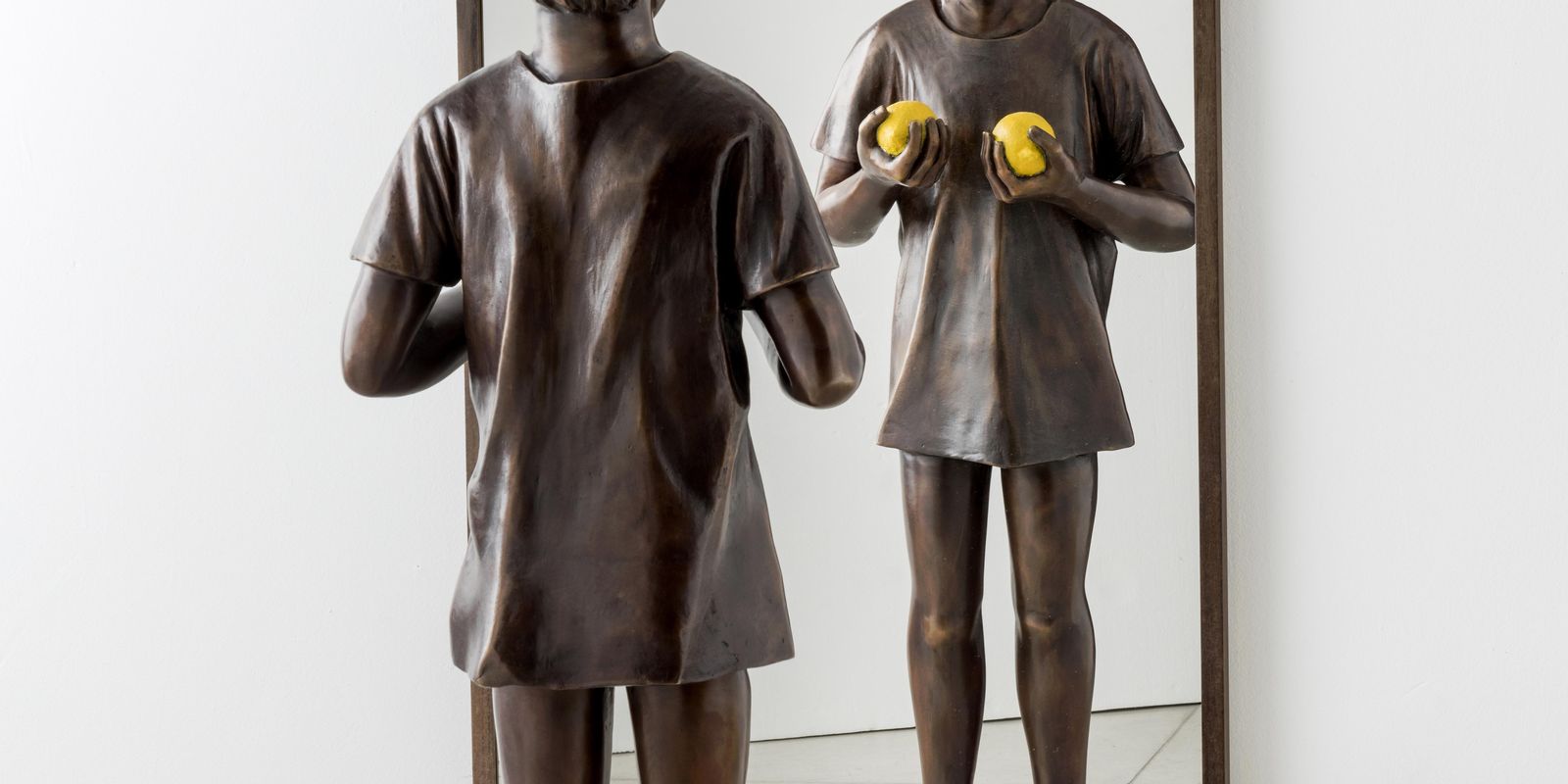
The presentation celebrates 16 years of Flávio Cerqueira’s career and brings together more than 40 works, including three new onesproduced after the season in São Paulo. A characteristic of the artist’s work is that the works are made in bronze, a material generally used for sculptures of public figures, but which, in Flávio’s art, is used to portray ordinary people in society.
“I use this material that is noble and perennial to portray ordinary citizens and everyday situations”, said Flávio Cerqueira in an interview with Brazil Agency.
Flávio’s family, who grew up in São Paulo, was not in the habit of attending exhibitions and it was through observing people’s daily lives that he identified the source of inspiration for his work. For the artist, his work talks about several things, such as humanity, love and feelings in different narratives. “The exhibition is a panorama of situations that are identified by any ordinary person, because bronze sculpture was used to portray kings, queens, historical moments and I am talking about everyday situations”, he said.
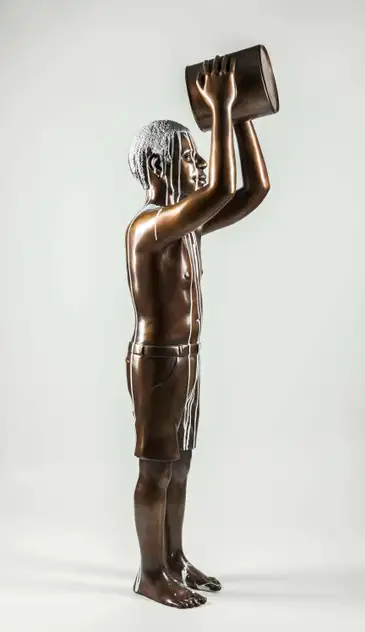
Exhibition Flávio Cerqueira – A Sculptor of Meaningsat CCBB RJ – Photo: Rômulo Fialdini/CCBB/Disclosure
“It’s a chronicle of the society I live in, developed from 2009, when I started producing sculptures, until 2025, I’m observing the behavior of society in each period. I portray everyday Brazilians, not portraits, kings, presidents, personalities. As I deal with everyday situations, people see themselves in each one and identify with the work, so much so that in this CCBB exhibition, more than 216 thousand people have visited, always with this characteristic of incorporate society into the exhibition and not exclude the population from art places”, he added.
For the anthropologist, historian and curator of the exhibition, Lilia Schwarcz, the works are very democratic, in the sense that they make the public identify from very different angles. “They are very human works that bring the subjectivity of each and every one of us, with Hawaiian sandals, the crease of the shorts, the fold of the shirt…”, he quotes. “He is an artist who uses many resources to make the public identify with him. Above all, it is a generous work”, he highlighted in an interview with Agência Brasil.
The public that arrives at CCBB RJ can begin to admire the sculptor’s work right from the start. hall entrance, where there is a garden with some of Flávio’s works. With this, the artist intends to attract visitors who, because they are not used to going to free cultural spaces like this place, end up not coming to see the exhibitions.
“People don’t always have the idea that it’s free, and free art spaces are meant to be occupied. I have a job at hall entrance that is a garden, to create this relationship between the passerby, the passerby who is circulating in the city and has never entered. I could see this during the assembly, people asking what was there. Do I have to pay? Is it free? We need to build a bridge between society and the art space. The attempt to do this is with the garden that is right at the entrance to the CCBB”, he informed.
“The idea with the work is that it is open and penetrable. That people who do not have artistic education can enter and understand the exhibition, which is to see and feel. There is no need for a prior repertoire for this to happen. So, it is the common citizen who is passing by and relating to the work in this way”, he stated.
The sculptor sees a similarity in the public of São Paulo, Belo Horizonte and Brasília. “It’s a work that doesn’t have a leaflet, a self-explanation. The exhibition is called Flávio Cerqueira – A Sculptor of Meanings. These meanings are created by me, the artist, and by everyone else. There is no correct reading of my work, there could be several. Each person who visits will create their own meaning of the work they are seeing. The meaning is in the plural, because the meanings are mine and those of the people who visit the exhibition”, he pointed out.
Award
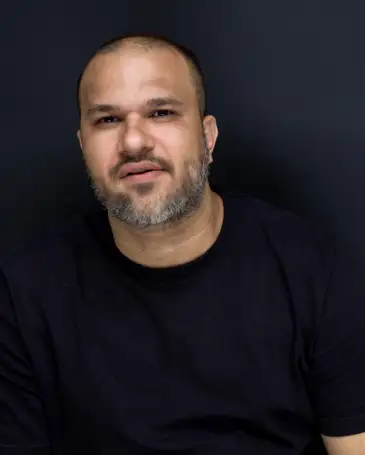
Flávio Cerqueira celebrates 16 years of career with exhibition at CCBB – Photo: Rômulo Fialdini/CCBB/Disclosure
In Brasília, according to the artist, the Minister of Education, Camilo Santana, went to visit the exhibition and invited him to create the sculpture for the MEC Prize for Brazilian Education. “The minister happened to go to the exhibition and they [no MEC] They were going to create a project for the prize and they didn’t know who was going to make the sculpture. He said ‘a sculptor makes a trophy’. They contacted me, talked and I developed the work for the award”, he said.
According to Lilia Schwarcz, working with Flávio Cerqueira is a partnership that lasted more than 11 years. “We thought of the exhibition together, so much so that it carries a specificity. If the opening curatorial text is mine, and the title Escultores e Significados, too, the texts in the different sections are all by Flávio. It’s a very different, more democratic conception of curation done together with the artist.”
In the curator’s view, what stands out most about Flávio’s work is the originality of him being a black artist who comes from the outskirts of São Paulo and who chose to work with a material like bronze. “An expensive and difficult material too. Bronze is very malleable in the process of creating works, but then it becomes very rigid. It is very rare for an artist like Flávio to dedicate himself to making sculptures, especially in bronze”, he said.
“Flávio is a young artist and this is already a 16-year retrospective. I think Flávio is an artist who will go down in the history of Brazilian art, it’s too early to say, but he has already shown that there are no limits. Flávio always says that he decided he would work with bronze sculptures after seeing a Rodin exhibition [escultor francês Auguste Rodin]. As Flávio always says, he plays for the universe, to see what happens, and he has played very well for the universe”, added Lilia Schwarcz.
Service:
Exhibition Flávio Cerqueira – A Sculptor of Meanings
From Wednesday to Monday, from 9am to 8pm.
Free entry
For more information, call (21) 3808-2020, by e-mail at [email protected], or at website from CCBB.