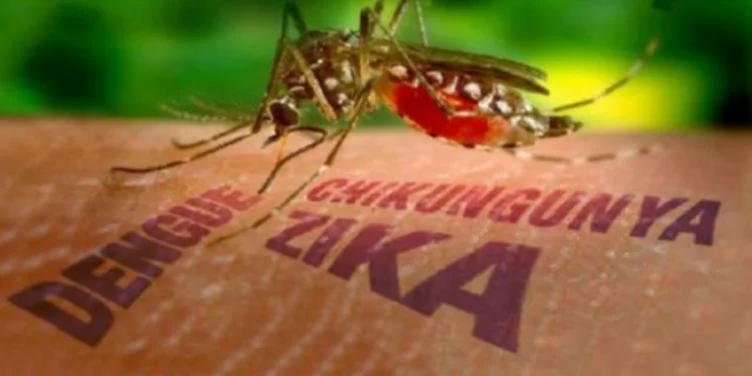
The province maintains circulation of Chikungunya with low incidence, as well as Oropouche fever and dengue outbreaks.
LIMA, Peru – Health authorities in Santiago de Cuba warned about the increased risk in the province due to the appearance of cases of arbovirosis, Acute Diarrheal Diseases (ADD) and others of digestive transmission, such as Hepatitis A and Typhoid Fever.
A report from the state media Sierra Maestra He pointed out that the increase is related to the weather and environmental conditions of recent weeks, characterized by high temperatures and intense rains, especially after a prolonged dry period.
Dr. Yaimara Gutiérrez de la Cruz, director of the Provincial Center for Hygiene, Epidemiology and Microbiology (CPHEM), recognized that three diseases circulate in the country. The province maintains circulation of Chikungunya with low incidence, as does Oropouche fever, while dengue fever presents outbreaks in some territories.
“This last disease continues to be complex in the municipalities of Palma Soriano and Santiago de Cuba, but the risk of increasing cases is present in the rest of the territories due to the Aedes aegypti infestation rates,” the directive warned.
Gutiérrez de la Cruz assured that “the current health situation is very negative.” The authority points out that the recent rains and the deficit in water supply in many urban centers cause an increase in tanks with poor storage conditions, which favors the appearance of outbreaks.
The symptoms are very similar in all three cases: fever, headache, bone and muscle pain, weakness, lack of appetite, retro-orbital pain and rash are the most common.
“Doctors must diagnose whether it is dengue, Oropouche fever or Chikungunya, which is why the recommendation is, in the presence of these conditions, to go to the doctor. Their importance should not be minimized,” said the doctor.
In relation to EDA and the rest of the digestive diseases, the directive highlighted that the more frequent transmission It is due to the consumption of food or water contaminated with feces, so washing your hands well is the main line of defense.
In this regard, he recommended doing it frequently, with treated water and soap, before and after eating, cooking or feeding children; after using the bathroom or changing diapers and breastfeeding, sneezing or coughing.
“It is also very important to boil drinking water and treat it. Other measures are washing vegetables and fruits; food must be cooked sufficiently, as well as keeping raw foods refrigerated and separated from cooked foods,” he commented.
In addition, Gutiérrez de la Cruz stressed the importance of using disinfectant substances to clean the house, correctly covering the baskets with food waste and other waste, which must be eliminated daily. If you have animals (pigs, horses, dogs, birds…), keep the pens clean.
“When symptoms appear such as vomiting, fever, abdominal pain and watery stools, whether with blood or not, it is essential to have oral rehydration salts, or to know how to prepare them at home,” he stated.
The website of the Ministry of Public Health teaches that to prepare homemade rehydration salts, add to a liter of water a tablespoon of sugar, half of salt, half or a small amount of baking soda and lemon juice (optional). They should be ingested within 24 hours after being made and drunk in small sips, not in large quantities.
“But the most important thing, when diarrhea or other symptoms appear, is to go to the doctor to be evaluated by the doctor, especially if it concerns pregnant women, the elderly and children,” the doctor recommended.
Vulnerability in Cuba to arboviruses
Last Wednesday, Dr. Francisco Durán García, national director of Epidemiology of the Ministry of Public Health (MINSAP), offered a new report on the epidemiological situation of Cuba, marked by the simultaneous circulation of three arboviruses. The official denied rumors of mass deaths in Matanzas and insisted that the health system “responds” to the emergency. However, the context that the population lives is radically different from that official version.
“No deaths have been reported,” Durán said, referring to versions that spoke of “11 deaths in one night” in Matanzas. The epidemiologist added that “the health system is working in an organized manner and with reinforcements in the most affected territories,” and that “despite the difficulties, services have not collapsed.”
The official’s words contrast with the reality that patients and families face: hospitals without hygiene, with a lack of beds, a shortage of basic supplies and medicines, while infections spread in areas where Garbage accumulates uncontrollably.
According to Durán, “dengue, chikungunya and Oropouche are circulating in the country.” Dengue maintains active transmission in 12 provinces, 36 municipalities and 44 health areas. Chikungunya was initially detected in Matanzas and is expanding in that province. The Oropouche, for its part, is present in 12 provinces, 26 municipalities and 31 health areas, although with a tendency towards a decrease in cases.
The epidemiologist specified that “so far four patients hospitalized for dengue have been reported: three in serious condition and one in critical condition.” Regarding the advance of chikungunya, he pointed out that “it does not cause highly lethal conditions, but its expansion requires constant surveillance.”
The problem lies not only in the circulation of viruses, but in the real inability of the health system to confront them. Most of the country’s hospitals are in deplorable conditions: dirty, without running water, with unusable bathrooms and overcrowded wards. Many patients must sleep in hallways or bring their own sheets and syringes.
Added to this is the chronic shortage of medicines. Painkillers, serums or antibiotics are absent from state pharmacies and are only available in the informal market at very high prices. A box of paracetamol can cost several days’ wages.