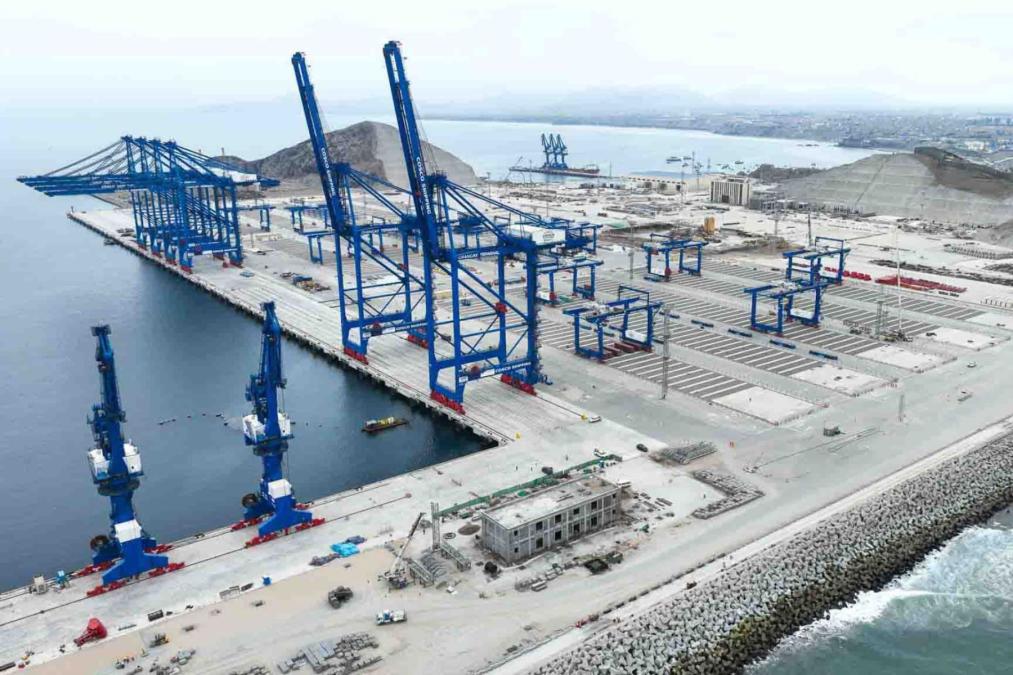
By Alberto Pascó Font
Since Indecopi believed that the services of the Chancay port are not provided in competition, the National Port Authority (APN) presented Ositran with a tariff proposal. What did APN propose?
On December 27, 2024, in accordance with the Regulations of the National Port System Law, Ositran requested Indecopi to rule on the conditions of competition of the port of Chancay.
On April 2, 2025, the National Directorate for Research and Promotion of Free Competition of Indecopi, despite the fact that the start of operations reveals that the port of Chancay generates competition to the port of Callao, concluded that the services in the port of Chancay would not be provided under conditions of competition.
On April 10, 2025, Indecopi notified the APN of its report, which had 70 business days to communicate a tariff proposal to Ositran. This deadline expired on July 24, 2025.
Since then, Ositran has a maximum period of 90 business days to publish its tariff proposal (renewable for a similar period). Given that Indecopi is not going to reconsider the conclusions of its report, Ositran must evaluate imposing maximum rates on the cargo and ship services provided by the port of Chancay.
What maximum rates does APN suggest imposing on the port of Chancay? In accordance with the General Tariff Regulations (RETA), Ositran is responsible for establishing one of the seven methodologies applicable in the tariff setting and review procedures. Not all RETA methodologies are suitable for new port infrastructure. The APN report concludes that the applicable methodology is comparative pricing or benchmarking and mentions that Ositran has recently used this methodology both in the Multipurpose North Terminal of the port of Callao and in the New Port Terminal of Yurimaguas-Nueva Reforma. In fact, since 2013, Ositran has used the comparative pricing methodology to set rates for 14 port services.
The benchmarking methodology consists of setting rates as an average of the rates of other similar ports that in some way compete or could compete with the new infrastructure. APN’s analysis uses three Peruvian terminals to set rates for having specialized infrastructure and equipment for container cargo similar to the port of Chancay. These are the New Container Terminal of the Port of Callao — South Zone, the Multipurpose North Terminal of Callao and the Paita Port Terminal.
After eliminating extreme values, the APN report concludes that the rates currently charged by COSCO, operator of the port of Chancay, are below the average rates that would emerge from a benchmarking exercise with national ports. Although as previously stated, the port of Chancay does compete with the port of Callao and, therefore, it is unnecessary to set rates; APN’s analysis is consistent with the entry of a new competitor into the market that is starting from scratch and, therefore, has lower rates to compete for customers. COSCO has invested US$1.3 billion, but can still invest an additional US$1.7 billion. Regulatory signals must be very clear so as not to discourage this future investment.