Grandparents say that on October 4, with the cordonazo of San Francisco, the rainy season. Meteorologists say that the hydrological year ends on September 30, but this year, as in recent years, In the middle of October it is still raining in much of the country and the damage continues to accumulate.
So far in 2025, 12 tropical storms and 14 hurricanes have been recorded in Mexico, which have left more than 158,000 people affected. Only until September 1, the federal government had reported spending more than 5,576 million pesos to support affected people.
According to information from the federal government, this year there is a budget of 19,430 million pesos for attend to emergencies.
Although this year there has been 3.8% more rain than in the annual average from 1991 to 2020, the Official Gazette of the Federation It does not record that disaster declarations have been issued. In 2024, two emergency declarations and one disaster declaration due to rain were issued, and the losses were estimated at more than 14,000 million pesos.
Until last October 7, on the coast of the Pacific Ocean, the tropical storms Alvin, Mario, Cosme, Dalila, Ivo and Juliette; hurricanes Barbara, Octave, Gil, Henriette and Lorena, which were category 1 and Narda and Priscilla, which were category 2; Flossie which was category three and Erick and Kiko, category four. according to the General Coordinator of the National Meteorological Service, Fabian Vázquez Romaña.
Meanwhile, on the Atlantic side, tropical storms Andrea, Barry, Chantal, Fernand and Jerry, Hurricane Imelda, which was category two, as well as hurricanes Gabrielle, category four, as well as Erin and Humberto, category five, formed.
The statistics of National Weather Service indicate that from January 1 to October 5, 2025, 653.6 millimeters of precipitation were recorded, which represents 3.8% above the annual average for the same period recorded between 1991 and 2020, according to the deputy manager of the National Meteorological Service, Alejandro Jair García Jiménez.
According to the specialist, most of the rains have fallen in the territories of Veracruz, Tabasco, Chiapas, Guerrero, as well as in some regions of Michoacán and Colima and Nayarit.
The hydrological year 2024-2025 has already ended (which was from October 1, 2024 to September 30, 2025) and 742.2 millimeters of precipitation have accumulated which, if compared with the climatology records from 1991 to 2020, which is 747.6, “this is normal behavior,” according to the expert.
Records indicate that in September 2025 it rained 12.6% more than the historical average in that month.
The problem for those who have been affected by the severe floods that have been recorded in different regions of the country is that in certain areas it has rained more than in other years.
It is what experts call anomalies and this year they have been concentrated in the central and north-central portions of the country, specifically in Mexico City, eastern Mexico State, southern Hidalgo, Morelos, Puebla, northern Oaxaca, Zacatecas, some strips of San Luis Potosí and southern Tamaulipas.
According to the federal government, from October to August 2025, until August four relevant natural phenomena occurred which left a balance of 158,586 people affected by disasters caused by natural phenomena.
According to information from the Secretary of National DefenseFrom October 1, 2024 to July 13, 2025, this agency applied the DN-III-E Plan in 992 events, through the deployment of 51,368 soldiers and 4,002 vehicles for the benefit of 169,123 people.
Affectations in March in Tamaulipas
Due to the heavy rains recorded in the municipalities of Reynosa, Río Bravo and Matamoros, in the state of Tamaulipas, on March 27 and 28, 2025, the Secretariat of National Defense (Sedena) deployed 599 soldiers, 40 from the National Guard, 310 vehicles and a community kitchen that distributed 4,079 hot rations.
690 food supplies were distributed; 1,975 people were evacuated to safe areas; 2,043 cubic meters of mud, debris, garbage and earth were removed from streets and avenues, along with 32 trees and eight light poles; 37 homes were cleared, and 12,316 packages of household goods were distributed, in coordination with the Ministry of Welfare.
For its part, the Navy sent 110 sailors with specialized equipment in six vehicles to the area from March 28 to April 3, providing assistance to 158 homes, collecting 1.5 tons of garbage and providing medical care to 22 people.
In June Hurricane Erick hits Oaxaca and Guerrero
In mid-June the hurricane erick in the Pacific Ocean, which made landfall at dawn on June 19 in Pinotepa Nacional, Oaxaca, generating floods and landslides.
From June 19 to 30, 2025, Sedena deployed 3,641 soldiers and 5,991 National Guard troops, a mobile kitchen, and three quartermaster cells to the Oaxacan coastal region for the distribution of 14,826 hot rations; 1,321 food supplies and 1,544 liters of bottled water; a water treatment plant with which 13,380 liters of water were distributed; units of heavy machinery, used in the clearing of 567 homes, four schools, removal of 713 trees, 84 light poles and 1,353 square meters of debris; 26 stretches of road were repaired, in addition to the establishment of seven shelters where 210 people were housed.
In Guerrero, 4,590 soldiers and 7,286 National Guard troops were deployed to distribute 17,336 hot rations, 1,600 food supplies and 6,400 liters of bottled water; 527 homes and 58 schools were cleared; With the use of heavy machinery, the removal of 870 trees, 933 square meters of debris and 72 light poles was carried out; 11 stretches of road were repaired and 29 shelters were established, providing accommodation to 1,591 people.
On the other hand, the Mexican Navy launched the Marine Plan to care for and assist the affected population in Guerrero and Oaxaca. From June 18 to 30, 2025, 6,229 naval elements were deployed, three emergency response brigades with 14 specialized teams in 114 vehicles, 28 boats and three aircraft.
They distributed 6,754 food supplies and 157,228 liters of water to benefit 11,285 families in 36 locations. They provided 833 medical services; They helped 234 people, and coordinated a medical evacuation and 105 transfers to shelters. They cleared 371 roads; they removed 228 trees; They supported 57 affected homes; They collected 32 tons of garbage and delivered 800 tarps.
The government of Guerrero requested the federal government to declare a disaster for eight municipalities with severe damage on the Costa Chica. In that region, Erick left 1,428 homes damaged, 107 landslides, three bridges collapsed and 176,000 users without electricity on the Costa Chica.
He government of Oaxaca He also proposed requesting a disaster declaration from the federal government. The rains damaged more than 11,600 homes and businesses in 16 municipalities in the Costa region, where 1,650 hectares have been reported damaged, of which 750 are papaya, 150 banana, 300 lemon, 350 coconut and 100 mango. In papaya alone, the damage is quantified at more than 200 million pesos.
Floods in Quintana Roo, Tamaulipas and Veracruz in June and July
In Quintana Roo, from June 22 to 30, 2025, the Navy deployed 4,145 elements that served the population affected by Tropical Wave 7; They provided 25 medical services and delivered 731 food supplies, transported an emergency response brigade, 89 vehicles, 23 boats, three aircraft and six specialized teams.
From June 29 to July 12, 2025, in Tamaulipas and Veracruz, 4,372 naval elements provided support to 756 families in six locations affected by Tropical Storm Barry by delivering 3,902 food supplies, 2,676 liters of water, 329 medical care, and aid to 2,174 people; 30 transfers to shelters and the clearing of 71 roads with the support of two emergency response brigades, 61 vehicles, 18 boats, six aircraft and six specialized teams.
Valley of Mexico
The Valley of Mexico area It is one of the most affected by the heavy downpours that have occurred so far this year. Several different neighborhoods have reported flooding, mainly in the east of the Mexican capital.
The floods that occurred on September 27 stand out, when the most intense rainfall in 34 years was recorded, with 91 millimeters of rain, equivalent to 31 million cubic meters of water.
The Floods affected more than 2,000 homes in the Iztapalapa and Tláhuac municipalities, in colonies such as the Army of the East Zona Peñón, Desarrollo Urbano Quetzalcóatl, La Colmena, Santa María Aztahuacán, the Vicente Guerrero housing unit and San José.
At the beginning of that same month, around 47 floods had been recorded that affected around 270 homes in Tláhuac.
Until August, the government of Mexico City had dispersed 2,651 economic supports, with an investment of 43 million pesos, for families affected by floods in the municipalities of Iztapalapa, Iztacalco, Gustavo A. Madero, Magdalena Contreras, Cuauhtémoc, Venustiano Carranza and Tláhuac.
In June, the Hidalgo government asked the federation to declare an emergency to access resources to care for more than 600 people who were affected by the heavy rains that occurred in Mineral de la Reforma.
Last week, heavy rains were recorded in practically everything, mainly in Veracruz, Puebla, Querétaro, San Luis Potosí, Hidalgo and Guerrero. In Veracruz alone, 38 municipalities were affected. In Álamo 5,000 homes are affected.
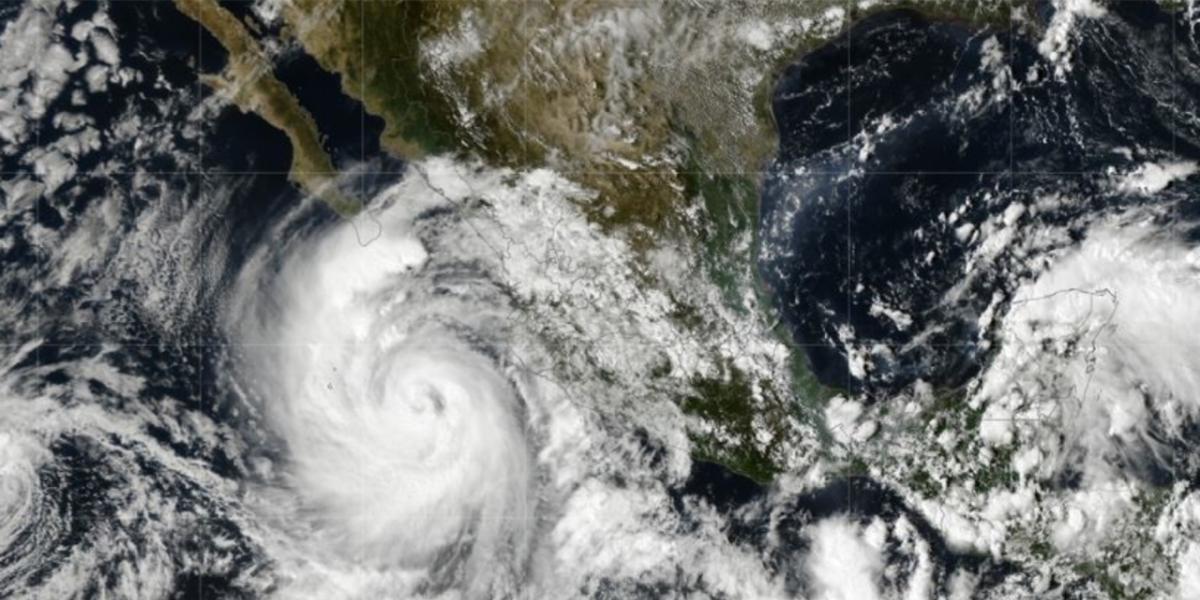
During the last hours, tropical storm Raymond affected Baja California Sur.
They spend 5,500 million pesos from Fonden
Until last June, Natural Disaster Fundauthorized federal spending totaled 8,896.9 million pesos, of which 3,321 million were allocated to cover public infrastructure; 2,192 million for roads and transportation, 1,127 for educational infrastructure, 103 million for emergency response and 2,151 million for contracting risk transfer schemes.
Of the 3,321 million pesos allocated to cover public infrastructure, they were distributed among 10 states: Veracruz, 1,475.7 million; Guerrero, 960.9 million; Baja California 286.2 million; Michoacán, 171.8; Oaxaca, 142.9; Baja California Sur 117.0 million; Chiapas, 66.9; Colima, 65.2; Nuevo León, 30.1 and Puebla, 4.9.
Of the resources for social programs dispersed through the Welfare Bank, 241 million were for the Program for the Welfare of People in Social or Natural Emergency.