Cell phone? Video game? Electronic toys? In one of the flooded areas in the municipality of Soure, on Marajó Island, children have fun swimming with buffaloes. They have the mission of training the animals, but the work becomes a detail between jumping and diving, which help to alleviate the intense heat of the region..
The buffalo is the main symbol of Marajó, which has the largest herd in the country: estimates vary between 650,000 and 800,000 animals. The majority are in the municipalities of Soure, Chaves and Cachoeira do Arari. They are represented in statues on the street, are used for transport, policing and in gastronomy, such as the famous filet mignon with cheese.
The centrality of the animal made the family that owns the Mironga Farm and Empório plan the creation of a “buffalo university”: the Bubalinoculture Studies Center. There is still no forecast for implementing the project, but it would be the first in the country dedicated to research into genetics, management and full use of the mammal.
“We need people to better study the buffalo: genetic improvement, how to add value to milk, leather, meat, management, health issues. We need to study and publicize. This center would not be the privilege of the veterinarian or the agronomist, zootechnician and biologist. It would involve other areas such as a food technologist, tourism, medicine”, says farmer Carlos Augusto Gouvêa, known as Tonga.
While the project does not get off the ground, the family organizes “Vivência Mironga”, an educational tourism started in 2017 that allows visitors to learn about the daily life of the property, the production of artisanal buffalo milk cheese and agroecological practices.
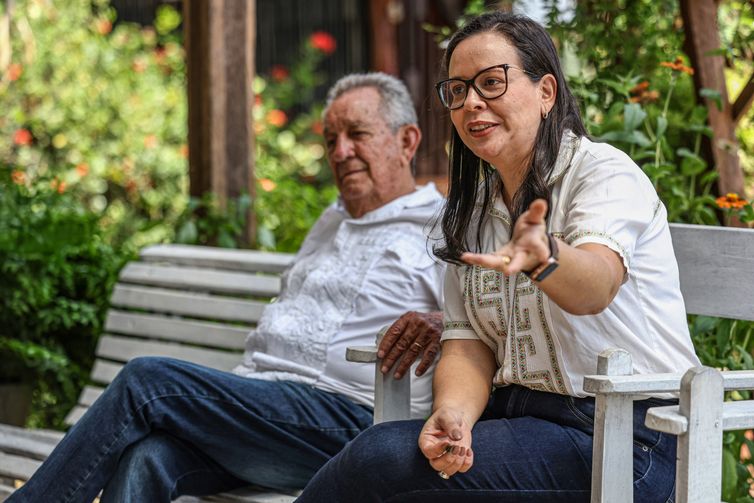
Soure (PA), 10/10/2025 – Carlos Augusto Gouvea, known as Tonga, and his daughter, Gabriela Gouvea, are the entrepreneurs of Fazenda Mironga. The farm produces cheese from buffalo milk and promotes experience tourism with the animal symbol of Marajó Island. Photo: Marcelo Camargo/Agência Brasil – Marcelo Camargo/Agência Brasil
“We produced a lot of cheese and sweets, and there was the possibility of increasing business. But we have an unlimited area, of 90 hectares. And the idea was not to produce on a larger scale. That’s when tourism came in and we stopped trying to expand production. Today, tourism accounts for two thirds of the farm. In September, we had a record of 400 visitors”, says Gabriela Gouvêa, daughter of Tonga and president of the Association of Milk and Cheese Producers do Marajó (APLQM).
Marajó cheese has centuries-old origins and is made from raw milk, using techniques passed down from generation to generation. The fight for the legalization of this production was long and involved the active participation of the family, who helped to create specific health legislation for artisanal cheese.
In 2013, the Mironga cheese factory was the first to obtain official inspection and, years later, the product received the Geographical Indication from the National Institute of Industrial Property (INPI). The Brazilian Micro and Small Business Support Service (Sebrae) participated in the diagnosis, legalization and collective organization process.
Affective cuisine
Café Dona Bila, in Soure, has become a meeting point between affective memory and regional gastronomy. At the head of the business is Lana Correia, an entrepreneur from Ceará who combined northeastern cuisine — with couscous and tapioca — with typical ingredients from Pará, with emphasis on marajoara cheese and buffalo meat.
“I started with delivery in 2023 and demand increased. That’s why I opened my physical space. I wanted the coffee to have the flavor and atmosphere of home,” says Lana. “
People say that when they eat here they remember their childhood, their grandmother’s house, the times when they came to Praia do Amor [em frente ao estabelecimento]. This emotional connection is what makes coffee special.”

In front of Café Dona Bila Lana Correia. Photo: Marcelo Camargo/Agência Brasil
The welcoming atmosphere and the menu full of familiar references won over residents and tourists. The most popular dishes are wet tapioca (with cheese and meat fillings), creamy corn cake and stuffed couscous.
With an eye on the 30th United Nations Conference on Climate Change (COP30), which will be held in Belém, in November, the entrepreneur created two new dishes that highlight local ingredients: Couscuz de Murrá, made with buffalo fillet, and Cuscuz Praia do Amor, with regional shrimp and Marajó cheese.
Lana has lived in Soure for four years and spent two years running Café Dona Bila. Previously, he worked in the area of higher education, in Fortaleza and Belém, and it was in Marajó that he discovered his passion for gastronomy.
“I only cooked for friends. Here, I discovered a talent that I didn’t even know I had”, says Lana.
She had the support of Sebrae in local training and coordination, and has established herself as a symbol of the new generation of Marajoara entrepreneurs, more attentive to the appreciation of local culture.
Environmental concerns
Despite the historical cultural and economic relations of the buffalo in Marajó, the production and consumption of buffalo derivatives have environmental challenges to face. Reducing greenhouse gas emissions is the main theme of COP30. The latest survey by the Greenhouse Gas Emissions and Removals Estimation System (SEEG), from 2023, indicates livestock farming as the second largest emitter in the country, behind only land use changes.
Cattle, a category of which the buffalo is a part, were responsible for emitting 405 million tons of carbon dioxide equivalent (MTCO2e) during this period. This occurs due to the release of methane gas (CH4) during the animal’s digestion process. Perhaps these are one of the main puzzles to be studied by the future Center for Buffalo Studies Studies.
*The reporting team at Brazil Agency traveled at the invitation of Sebrae.