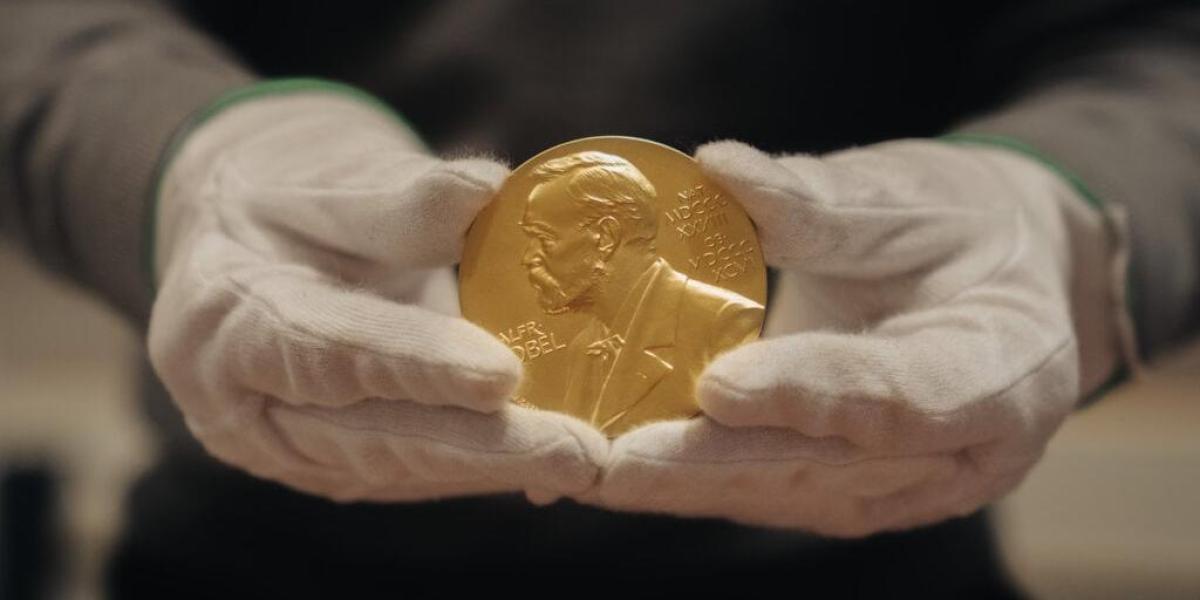
This week, the Nobel Prize of Literature 2025 was awarded to the Hungarian writer Laszlo Krasznahorkai, one of the most important in the country, known for exploring themes such as the communist past and melancholy in his work, with a neat style; The jury explained that the 71-year-old author was awarded “for his fascinating and visionary work that, in the midst of apocalyptic terror, reaffirms the power of art.”
Born in Gyulain southeastern Hungary, is “a great epic writer in the Central European tradition that extends from Kafka to Thomas Bernhard, and is characterized by absurdity and grotesque excess (…), but he is more resourceful, and also looks to the East by adopting a more contemplative and finely calibrated tone,” the Swedish Academy added.
His first novel, “Satanic Tango”written in 1985 and published in Spanish by the Acantilado publishing house, explores the themes of postmodern dystopia and melancholy, and was made known in Hungary and remains his most famous work; tells the story of life in a decaying town in communist Hungary through 12 chapters, each one made up of a single long paragraph.
Krasznahorkai, who grew up in a middle-class Jewish family, was in the running for the Literature award, the fourth of Nobel week: “I am very happy, calm and very nervous at the same time,” he reacted on Swedish radio SR after receiving the distinction.
Who were the last 10 winners?
The Nobel Prize in Literature has been awarded 118 times to 122 Nobel Prize winners between 1901 and 2025 and, now that it is known that the Hungarian writer Laszlo Krasznahorkai was awarded this year, it is worth remembering the passage of the 10 previous winners and the Swedish Academy’s reasons for awarding the distinction:
1. Han Kang, South Korea / 2024
Prize Motivation: “For its intense poetic prose that confronts historical traumas and exposes the fragility of human life.”
2. Jon Fosse, Norway / 2023
Prize Motivation: “For its intense poetic prose that confronts historical traumas and exposes the fragility of human life.”
3. Annie Ernaux, France / 2022
Prize Motivation: “For the courage and clinical acuity with which he discovers the roots, distances and collective restrictions of personal memory.”
4. Abdulrazak Gurnah, Tanzania – United Kingdom / 2021
Prize Motivation: “For its uncompromising and compassionate insight into the effects of colonialism and the fate of refugees in the abyss between cultures and continents.”
5. Louise Glück, United States / 2020
Prize Motivation: “For its unmistakable poetic voice that with austere beauty universalizes individual existence.”
6. Peter Handke, Austria / 2019
Prize Motivation: “For an influential work that with linguistic ingenuity has explored the periphery and specificity of human experience.”
7. Olga Tokarczuk, Poland / 2018
Prize Motivation: “For a narrative imagination that with encyclopedic passion represents the crossing of borders as a way of life.”
8. Kazuo Ishiguro, United Kingdom / 2017
Prize Motivation: “Who, in novels of great emotional force, has discovered the abyss beneath our illusory sense of connection with the world.”
9. Bob Dylan, United States / 2016
Prize Motivation: “For having created new poetic expressions within the great tradition of American song.”
10. Svetlana Alexievich, Belarus nationalized in Ukraine / 2015
Prize Motivation: “For his polyphonic writings, a monument to suffering and courage in our time.”