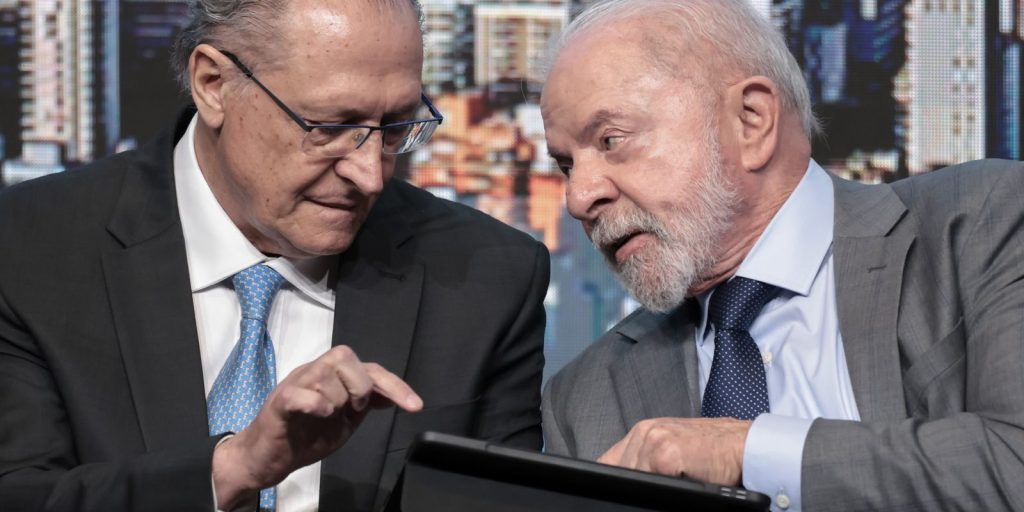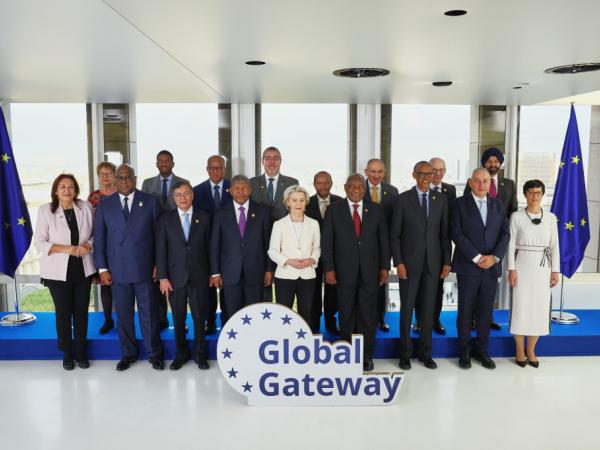
The European Union (EU) and Colombia strengthened their strategic alliance during the Global Gateway Forum, in a meeting between the president of the European Commission, Ursula von der Leyen, and president Gustavo Petro.
The meeting reaffirmed the shared agenda regarding digital transformation, clean energy, sustainable transportation, security cooperation and the fight against drugswithin the framework of a relationship that seeks to consolidate long-term investments between Europe and Latin America.
(See: They ratify the annulment of the appointment of Armando Benedetti as ambassador to the FAO)
“The Global Gateway Forum promotes a shared vision that creates opportunities in Colombia and promotes joint prosperity between Europe and Latin America“said both leaders during their meeting. Petro leads a delegation of seven ministers who participate in the sectoral tables of the forum, focused on the main axes of bi-regional cooperation.
The energy component occupies a central place within this association. According to the European Commission, More than 60% of renewable energy generation in Colombia comes from European investments, and the expansion of this participation is expected with 175 new projects valued at more than 20,000 million euros. Additionally, 16 renewable hydrogen projects were identified with an approximate investment of 48 billion euros.
Energy integration is also advancing through the bi-regional Regional Electrical Integration initiative, which includes 24 investment projects with technical support from the EU. Among them, the Panama-Colombia interconnection stands out, considered a key step towards the consolidation of a regional electrical network that connects South America and Central America. “Interconnectivity is essential to accelerate the implementation of renewable energy investments”said the European Commission.
(See also: They set limits on President Petro’s speeches, after a ruling by the Council of State)
The president, Gustavo Petro and the president of the European Commission, Ursula von der Leyen.
Courtesy
In parallel, the digital agenda constitutes another of the pillars of cooperation between the EU and Colombia. The alliance covers issues of connectivity, digital rights, governance and data sovereignty. During the forum, A new stage of collaboration in supercomputing and high-performance computing (HPC) was announced, with the signing of a joint letter of intent between European and Latin American research centers.
The EU–LAC Supercomputing Network for Artificial Intelligence, coordinated by the European High Performance Computing Joint Undertaking, will integrate infrastructures from 14 countries, including Colombia. This network seeks to connect regional systems with the European HPC ecosystem and strengthen scientific research in areas such as climate modeling, drug discovery and artificial intelligence.
““Scientific cooperation in artificial intelligence and supercomputing represents an opportunity to expand access to advanced technological capabilities in Latin America”expressed the European Commission at the close of the meeting.
Colombia’s high-level participation in Brussels occurs at a strategic moment, prior to the IV Summit between the Community of Latin American and Caribbean States (Celac) and the European Union, which will be held in Santa Marta on November 9 and 10, under the pro tempore presidency of Colombia in Celac. In addition, the country had a notable intervention in the III EU-Caribbean Global Gateway Conference on sargassum, held on October 8, in his capacity as pro tempore presidency of the Association of Caribbean States.
(Read more: Petro’s criticism of Banrep continues for not lowering rates: ‘It slows down growth’)

The president, Gustavo Petro.
Courtesy
Through the Global Gateway strategy, the European Union channels global investments to close the infrastructure gap and promote smart, clean and secure connections. Between 2021 and 2027, The initiative plans to mobilize up to 300 billion euros in public and private investments in the digital, energy, education, health and transportation sectors. In the case of Colombia, non-reimbursable cooperation exceeds 100 million euros, which in turn is mobilizing additional billions in sustainable development and social inclusion projects.
Global Gateway brings together government leaders, financial institutions, businesses and international organizations to drive sustainable investment in physical and digital infrastructure. According to the European Commission, the objective is “promote resilient and sustainable growth throughout the world, without generating dependency relationships”.
With the strengthening of this alliance, Colombia consolidates its role as a strategic partner of Europe in the energy transition, digitalization and bi-regional cooperation, in a framework that links investment with technological innovation and sustainable development.
(See: Icetex generates more than $1.6 billion in 2025 to finance higher education in Colombia)
DIANA K. RODRÍGUEZ T.
Portfolio Journalist