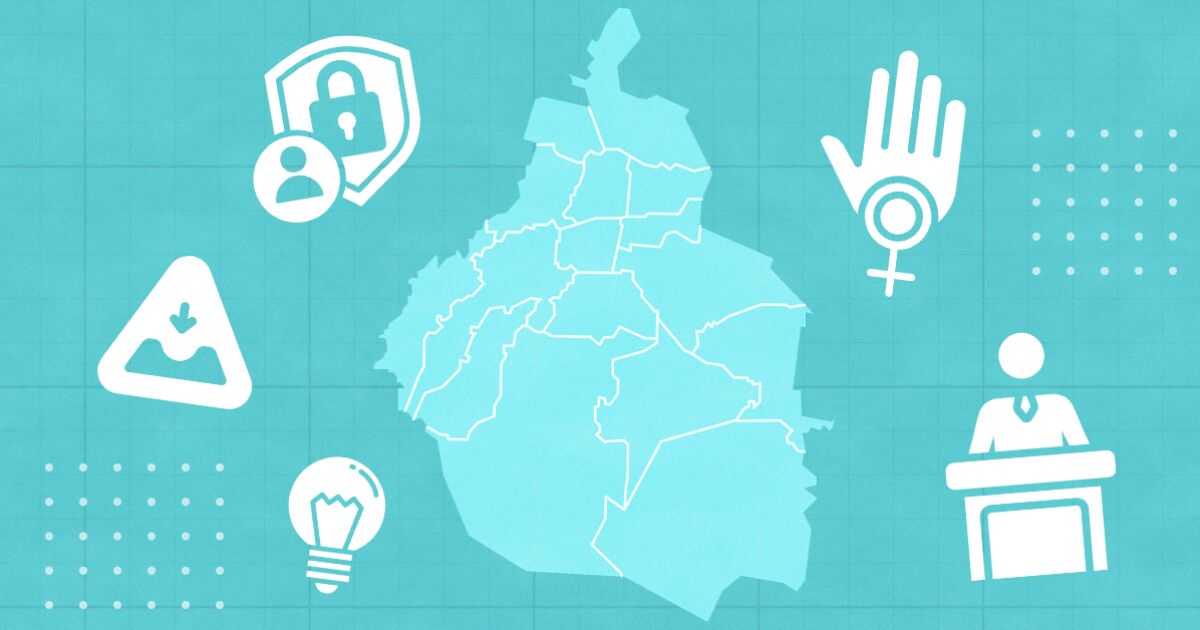
The mayor’s offices were born in the Political Constitution of Mexico City as “political administrative bodies that are made up of a mayor and a council, elected by universal, free, secret and direct voting for a period of three years.”
The reform changed the political and administrative structure of the 16 territorial demarcations, establishing functions such as the management of public services, public works, urban development and social participation, and provided the mayors with legal personality and autonomy with respect to their administration and the exercise of their budget, which has not been fulfilled to the letter.
“Permission even to go out and sweep”
Mauricio Tabe, mayor of Miguel Hidalgo since 2021, re-elected in his district in 2024, considers that the aspiration for political reform to give autonomy to the mayors has not really been completed because many permits still have to be requested from the city government to be able to make decisions that affect or benefit the neighbors.
For example, it points out that mayors must request authorization from the central government to contract public works and services, including the purchase of cell phones and computers for staff.
They have the mayors in a straitjacket to make decisions, even though the relationship with the city government is currently good, we should not be subject to asking for permission even to go out to sweep.
Mauricio Tabe, mayor of Miguel Hidalgo
Or in the case of security, the mayor’s office allocates 25% of its budget (around 200 million pesos) for the installation of monitoring centers, the hiring of police officers and the rental of patrol cars, however, these vehicles must be marked by the central government.
“It seems to people that the city government is the one who does things, with the resources of the mayor’s office,” says Tabe.
Another example of how mayors’ offices depend on the central government in various areas is the Law on the Right to Welfare and Social Equality for Mexico City approved in 2024, which the government of Miguel Hidalgo opposes because it considers that it centralizes social programs, which is why it filed a constitutional controversy before the Supreme Court of Justice of the Nation (SCJN).
“I question this suffocating centralism, this way of wearing down the administration and having control over the municipalities that we should have management and financial autonomy because we were elected by the people, we are not employees of the city government,” says the mayor of Miguel Hidalgo.
For Tabe, these restrictions and centralization of government functions affect the effectiveness with which a mayor’s government can respond to its citizens.
“It delays public administration a lot, it delays decisions, it increases costs because each authorization request requires many offices, a lot of waiting. There are rules that we have to change between the city government and the mayors,” considers the PAN mayor.