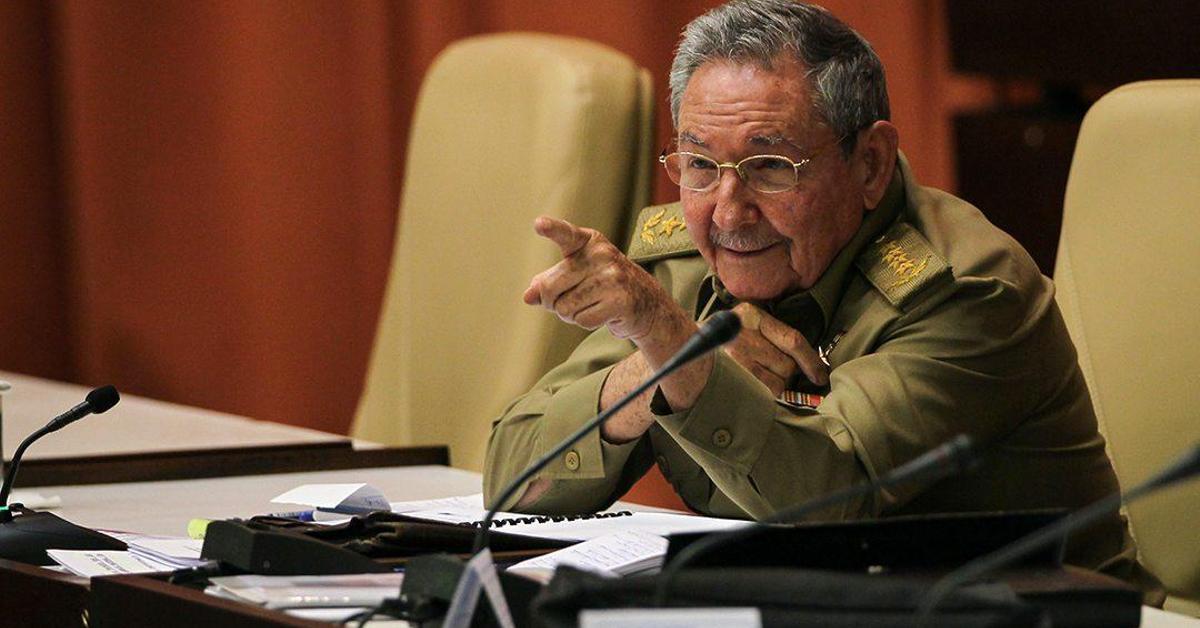
Havana/Network snipers – some pro-government, others apparently dissidents – took credit this month for having “killed” Raúl Castro. It was a meter, they argued. They were supposedly taking the temperature of the country’s unrest and the professionalism of the media. The sequence was the same as always: the 94-year-old man was finally hospitalized and, surrounded by his loved ones, he finally died. The only difference was the intensity of the rumor.
But Raúl is still alive. All kinds of ailments have been attributed to him – anal cancer, stomach cancer, lung cancer, Alzheimer’s, cirrhosis, arthritis, dementia – and countless predictions have been made about the country that will remain, the factions of power and the future of Cuba, or what remains of it.
Rumors about the death of the historical figures are, however, a litmus test for the independent press. The multitude of “newspapers”, “platforms”, “digital”, “magazines” of little credibility and ephemeral life absorb the uncritical reader and hinder the informative work of those who do journalism about the Island. Not to mention the botsthe clarias and the always active profiles of the Ministry of the Interior, including those of influencers Castroists like El Necio.
However, the reality is often disconcerting. The death of Raúl Castro or Ramiro Valdés was expected, but the headline in September was the death of the Richelieu of Foreign Trade, Ricardo Cabrisas.
Sinking into a misery from which no one hopes to escape, life in Cuba continues to constantly deteriorate. A term is repeated in networks: “Option Zero”. The expression is usually used to designate the total shortage of oil. Now the meaning has spread and also defines the total paralysis of the country, the impossibility of working, studying or carrying out any activity, whether work or domestic.
There is constant talk of donations from various international organizations, from the UN and the European Union to countries of any ideological stripe.
There is constant talk of donations from various international organizations, from the UN and the European Union to countries of any ideological stripe. However, users say, the humanitarian aid shipments are managed by the country’s Armed Forces and it is the military leaders who decide what destination to give it or if, as seems to be the case, they are going to retain it until the collapse is imminent.
Nobody escapes violence. Judging by the alleged beating that the first secretary of the Communist Party in Las Tunas received in his own home, being a picture of the “soul of the Revolution” has also become a high-risk sport. Osbel Lorenzo, elected last March after months of discontent and tensions caused by his predecessor, was beaten and robbed in his home in the Marabú neighborhood, according to several users. Their street, they add, is militarized and monitored by patrols.
For his part, a police officer arrived at the Santa Clara provincial hospital with a wound to his neck. Apparently, according to rumors, his throat was partially slit during an operation. Similar cases, reported in other provinces, demonstrate that neither agents nor officials of the regime are immune to the increase in violence on the Island.
Other cases, which also reflect the severity of social unrest, have been the subject of rumor. They claim that they threw excrement on the façade of the state inspection office of the Ministry of the Food Industry in Santiago de Cuba. Fires in the eastern area have affected, it is said, some monuments and tombs of heroes. Users point to Fidel Castro’s mausoleum in the Santa Ifigenia cemetery as the “next victim.”
Some rumors border on contradiction or joke, such as the alarm that spread in that same province due to the presence of an alleged cannibal.
Some rumors border on contradiction or joke, such as the alarm that spread in that same province due to the presence of an alleged cannibal who had stolen a supply book from a missing individual.
Two boats loaded with weapons for an imminent – and supposed – rebellion landed on the coast of Villa Clara this month, a user warns. The weapons, coming from the United States, will be used for an uprising that many in the networks see as imminent, given the anguish of Cubans in the face of poverty, shortages and blackouts that already seem to be the natural condition of the country.