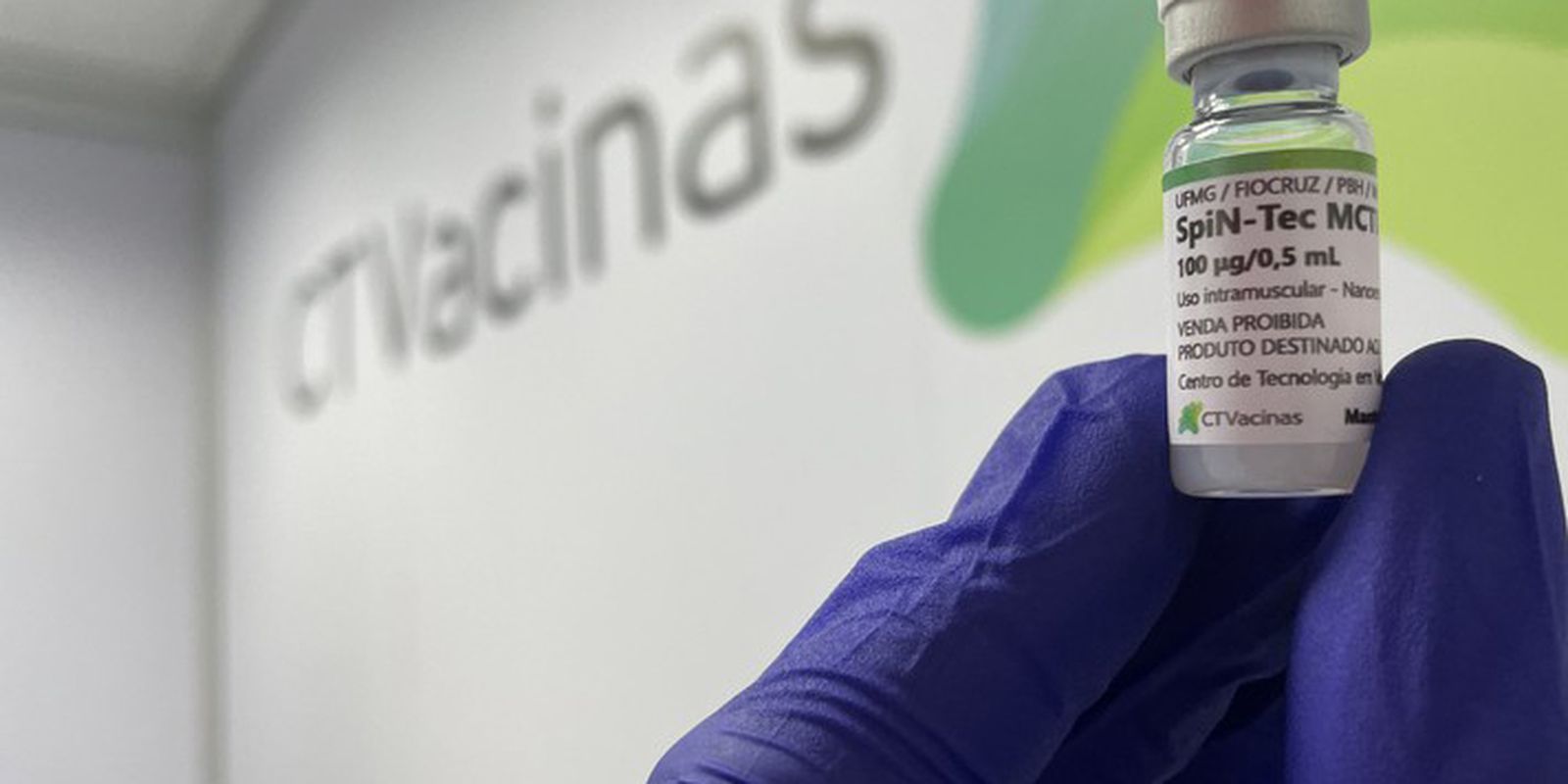
Brazil is about to have a fully national Covid vaccine. The country published the first scientific article on the results of safety tests for the SpiN-TEC vaccine, which show that the vaccine is safe. The vaccine is now moving into the final phase of clinical studies. The expectation is that by the beginning of 2027, it will be available to the population.
The vaccine was developed by the Vaccine Technology Center (CT-Vacinas) of the Federal University of Minas Gerais (UFMG), in partnership with the Ezequiel Dias Foundation (Funed), with resources from the National Fund for Scientific and Technological Development (FNDCT), managed by the Financier of Studies and Projects (Finep).
In the tests conducted, according to the researcher and coordinator of CT-Vacinas, Ricardo Gazzinelli, SpiN-TEC even showed fewer side effects than the vaccine from the North American company Pfizer.
“We concluded that the vaccine proved to be immunogenic, that is, capable of inducing an immune response in humans. The safety study was expanded and it maintained this profile, in fact it was even a little more, it induced fewer side effects than the vaccine we used, which is from Pfizer”, says the researcher.
SpiN-TEC adopts an innovative strategy, cellular immunity. This means that it prepares the cells so that they do not become infected. If infection occurs, the vaccine enables the immune system to attack only the affected cells, which are destroyed. This approach has been shown to be more effective against Covid-19 variants in animal trials and preliminary human data.
Clinical trials
In total, the Ministry of Science, Technology and Innovation (MCTI) invested R$140 million in the development of the vaccine, through RedeVírus, supporting all stages of testing, from pre-clinical trials to clinical phases 1, 2 and 3.
Phase 1 of the study included 36 volunteers, aged 18 to 54, and aimed to evaluate the safety of the vaccine at different dosages. Phase 2 had 320 volunteers. Now, researchers are awaiting authorization from the National Health Surveillance Agency (Anvisa) to begin phase 3, with an estimated 5,300 volunteers from all regions of Brazil.
According to Gazzinelli, this is also a milestone for Brazil. The country, according to the researcher, has “an almost complete vaccine ecosystem”, with research at universities, vaccine production factories and distribution of vaccines through the Unified Health System (SUS).
“What we don’t have is exactly this transposition from university to clinical trials, right? We don’t have an example of this done in Brazil. Clinical trials normally involve products coming from abroad. Ideas, vaccines designed abroad. And this was an example of a vaccine designed in Brazil and taken to clinical trials”, he explains.
Gazzinelli highlights that this is an important step for other research. “I think this adds expertise that we didn’t have and also a very important aspect not only in the area of technological innovation for vaccines, but for other inputs in the health sector”, he says.
If approved in all phases of the study, the expectation, according to the researcher, is that the Brazilian vaccine could be made available in the SUS by the beginning of 2027.
Other vaccines
CT-Vacinas is a biotechnology research center created in 2016, as a result of a partnership between UFMG, the René Rachou Institute of the Oswaldo Cruz Foundation (Fiocruz-Minas) and the Belo Horizonte Technological Park. Currently, it brings together around 120 researchers, students and technicians.
“The MCTI observed, during the pandemic, that Brazil did not have autonomy, did not have sovereignty to develop vaccines. I say that one of the great legacies of this program, besides, obviously, the vaccine against covid, is that we learned the way to take a vaccine to Anvisa and carry out the clinical test”, says Gazzinelli.
In addition to Covid research, the center works on developing vaccines against other diseases, such as malaria, leishmaniasis, chagas and monkeypox.
The researcher and coordinator of CT-Vacinas reinforces: “We know that vaccines really protect. They even prevent mortality. Again, the more people vaccinated, the more protected the population is.”