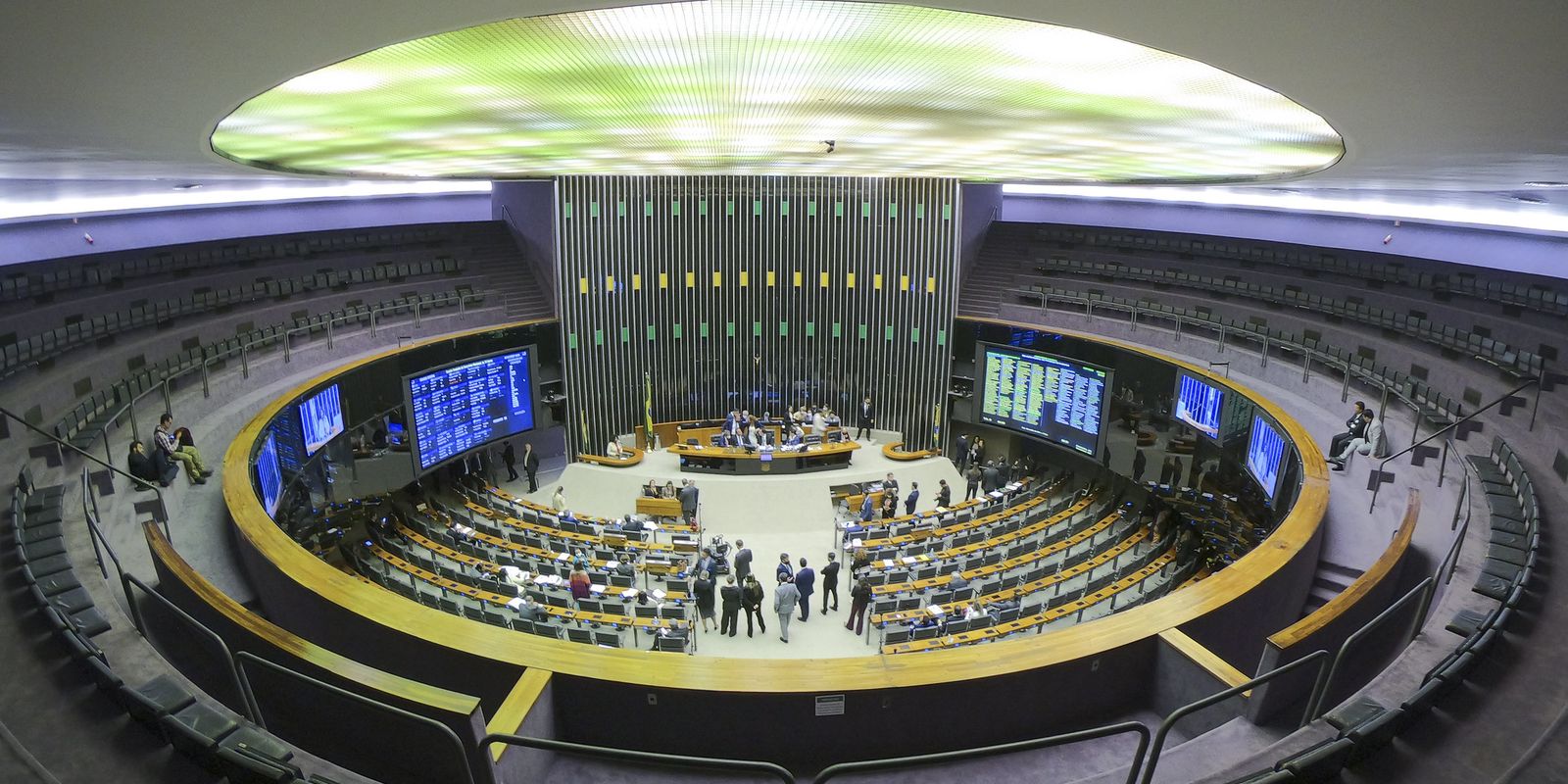
The Chamber of Deputies approved this Tuesday (7) two bills in the area of public security. One of them, PL 4498/25 establishes mechanisms for collaborative action between inspection and control bodies and criminal prosecution bodies. The matter goes to the Senate for analysis.
The proposal aims at greater institutional integration of these bodies to improve the State’s efficiency in combating corruption, organized crime and economic and financial illicit activities.
According to the text, inspection and control bodies must cooperate with the judicial police and the Public Prosecutor’s Office through joint actions, sharing of information and provision of specialized technical systems, always observing the confidentiality rules provided for by law.
Among the supervisory and control bodies involved are the Financial Activities Control Council (COAF), the National Institute of National Insurance (INSS), the Administrative Council for Economic Defense (CADE), the General Comptroller of the Union (CGU), the Securities and Exchange Commission (CVM); the Central Bank (BC), the Federal Revenue and other tax bodies, the Brazilian Intelligence Agency (ABIN), the Courts and Accounting Councils, regulatory agencies, guardianship councils, environmental bodies, traffic bodies, among others
The text determines that authorities and administrative bodies that discover signs of a criminal offense in the procedures within their jurisdiction must communicate, with due precautions, the judicial police for criminal investigation of the facts, “without prejudice to the reporting body’s own administrative procedure”.
Criminal association
Another approved project, PL 1307/2023, amends the Penal Code, to provide for the crime of criminal association, the conduct of the agent who, “in any way, requests or contracts the commission of a crime from a member of a criminal association, regardless of the application of the penalty. This crime is now punished with a prison sentence of 1 to 3 years.”
The project also establishes punishment for anyone committing violence or serious threats to a public agent, lawyer or witness in the context of proceedings against a criminal organization. The project considers the commission of this crime or the order to commit it as obstruction of actions against organized crime, with a penalty of 4 to 12 years in prison, and a fine.
According to the text, anyone who commits this crime against a spouse, partner, child or blood relative up to the 3rd degree or by affinity of these people will also be charged.
The sentence must begin to be served in a maximum security federal penal institution, and the provisional prisoner under investigation must also be held in a prison of the same type.
The text also expands the personal protection of public or procedural agents involved in the fight against organized crime to typify the conduct of obstructing actions against organized crime, extending it to “all professionals in the public security forces, Armed Forces, judicial authorities and members of the Public Ministry who fight organized crime in border regions”.
The assessment will be carried out by the judicial police or the management body of the respective police force. The matter will be sanctioned by President Luiz Inácio Lula da Silva.