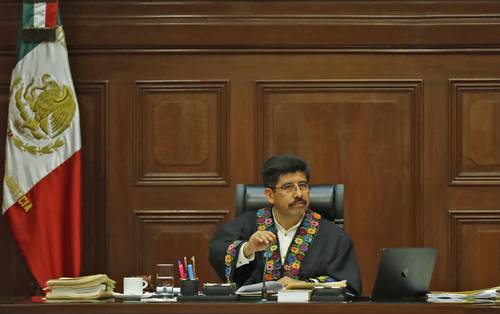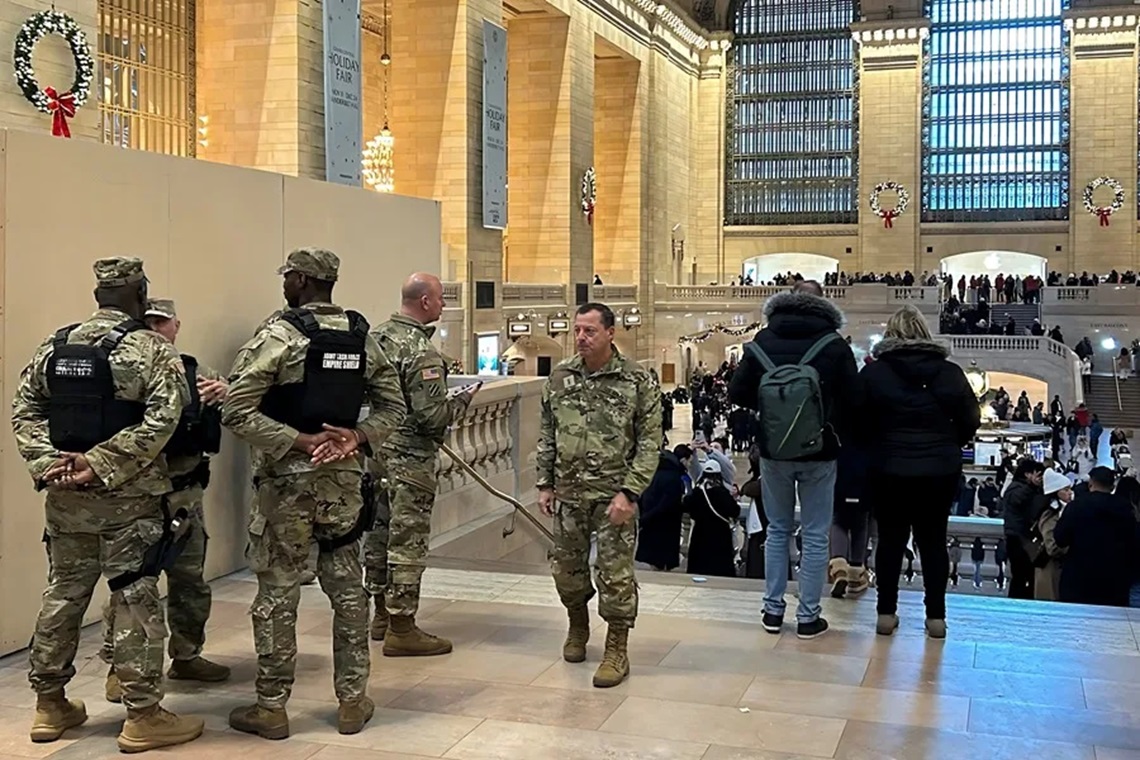
A federal judge in Oregon, Karin Immergut, imposed for the second time in a few days a temporary blockage to the deployment of National Guard units in Portland, the largest city in the state.
The judicial decision occurs after President Donald Trump ordered to send hundreds of military troops, including federalized troops from California and Texas, to control protests in the city, a decision that generated legal opposition of the state governments of Oregon and California.
Origin of controversy: military deployment and legal actions
Last Friday, Judge Immerut issued a court order that prevented the federal government from using the National Guard of the State of Oregon for deployment in Portland arguing that there was no insurrection or threat to national security that justified military intervention.
However, Trump ordered the Secretary of Defense, Pete Hegseth, to mobilize 300 members of the California National Guard and 400 of Texas, which led to a second request for a temporary restriction order by both states.
During the emergency telephone hearing, the judge showed her skepticism before the government’s arguments and questioned whether these actions represented an attempt to avoid their previous order, questioning the legality and adaptation of the military deployment in Portland.
Resistances of local and state governments
Both the governor of Oregon, Tina Kotek, and the governor of California, Gavin Newsom, have firmly opposed these measures.
Kotek said that there is no need for military intervention in Oregon or a real threat, qualifying the presidential order as a deliberate attempt to evade the judicial decision.
The governors expressed their commitment to continue legally facing this deployment, emphasizing that Portland does not live an insurrection or a scenario equivalent to a “war zone” as the president has described.
For his part, the Attorney General of California, Rob Bonta, condemned the presidential order and pointed out that the mobilization of troops from one State to another without adequate legal basis is out of norm under any presidency.
Meanwhile, the mayor of Portland, Keith Wilson, denounced undue force abuses by federal agents in peaceful protests against immigration and customs control facilities (ICE).
https://www.youtube.com/watch?v=saye4bksu1k
Protests against ICE
The protests in Portland have concentrated mainly in front of an ICE installation and have remained within relatively small and located limits, far from the city center.
Local authorities have indicated that isolated violence against federal agents and properties does not justify the militarization that the federal government seeks.
In contrast, Trump has repeatedly described the city of being “devastated by war” and has declared his intention to use these cities as “training fields” for the Armed Forces in order to control the alleged “invasion from within.”
Similar situation in other cities
The deployment of the National Guard has also tried to implement in other cities led by Democrats, such as Chicago and Los Angeles.
In Chicago, the Democratic governor JB Pritzker filed a lawsuit to prevent the sending of military troops, qualifying the measure of an “invasion” and a dangerous and disproportionate intervention that affects local democracy.
In response, the White House justified the mobilization based on supposed “violent disturbances and anarchy”, while local authorities insist that federal intervention has intensified and aggravated the situation, rather than helping to stabilize it.
Legal and future audience consequences
The temporary order of Judge Immerut has an initial duration of 14 days, a period in which a hearing will be convened to deliberate on a possible preliminary judicial order that can more permanently block military deployment in Oregon.
On the other hand, a lawyer from the California military department reported that the order to keep the federalized troops until January 2026 is held, adding pressure to the legal dispute.
Tina Kotek announced that Oregon will face President Trump in each step of this legal and democratic confrontation. Meanwhile, the Attorney General of California, Rob Bonta, stressed that the fight against this deployment does not conclude with the court order, and that the rejection of illegal actions is an important step in defense of the rule of law.
On the political level, military deployment and judicial claims constitute a new chapter in the struggle between the administration and several Democratic states, reflecting deep tensions about the use of federal power and state autonomy in public security management.
The conflict puts in the center of the debate the delimitation of the powers of the president and the defense of the rights of the states and cities, while at the popular level there is a nearby surveillance about the use of the military force within the territory of the United States.