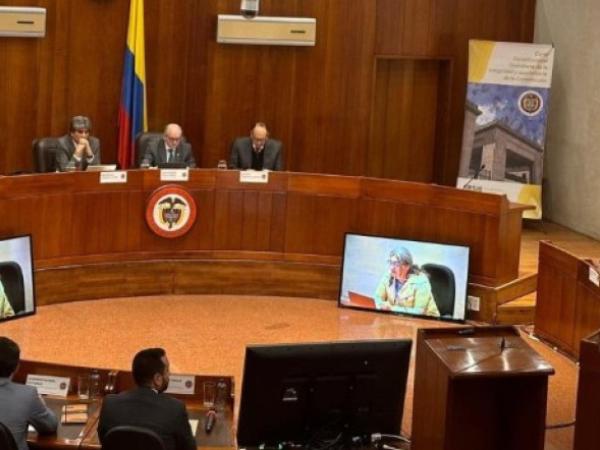
The Patient Colombia movement expressed concern about the lack of effective decisions of the Constitutional Court to guarantee compliance with orders issued to the government in health. According to the group, The persistent institutional inaction aggravates the deterioration of the health system and violates the fundamental rights of thousands of patients.
According to the organization, car 1283 of 2025 of the High Court “confirms what has been denounced for years: the Government does not comply or guarantee health care or delivery of medicines, and their negligence puts the lives of people with critical diagnoses at risk”
(See: Acute leukemias concentrate 38% of cases of child cancer in Colombia)
In his statement, patients Colombia said that breaches of the orders contained in cars 007 and 504, related to the Capitation Payment Unit (UPC), They have had direct consequences on the health of the population.
Denis Silva, spokesman for the movement, said that “It is unacceptable for the Court”
According to the Colombian Federation of Rare Diseases (FECOER)between January and August 2025, 1,501 patients with rare pathologies have dieda figure that exceeds the averages of previous years. “How many dead are needed to really assume their role and defend the rights of patients over bureaucratic interests and the executive’s delay?” Silva added.
(Read more: 80% of the population will contract the human papillomavirus at some point)
Colombia patients groups 200 organizations from all over the country that represent civil society in health issues.
Istock
Patients Colombia warns that the delay in the implementation of judicial orders generates legal insecurity and new barriers to access to health services. “It is inadmissible that the Constitutional Court, guarantor of the fundamental rights and safeguard of the Constitution, allows to consolidate the legal insecurity in Colombia by tolerating the repeated breaches of the national government”Said the statement.
The organization questioned that the deadlines set in the 1283 car are “extensive and permissive” and that sanction mechanisms against breaches are not established. “During the time that the fixed deadlines last, what will happen to patients and who will assume responsibility for the deterioration of their health and deaths?”Silva asked.
The movement proposed concrete monitoring measures, such as that the Ministry of Health and Social Protection reports monthly on the percentage of debts paid or corrected that affect the delivery of medicines. He also requested that the Comptroller General of the Republic maintain permanent surveillance on the payment and supply processesand that both the National Superintendence of Health, as well as the Attorney General’s Office and the Ombudsman guarantee that treatments effectively reach patients.
(Also read: FECODE CALLS 24 HOURS NATIONAL COLD TO REQUIRE SOLUTIONS IN HEALTH)

The movement asked the Constitutional Court immediate actions to guarantee the delivery of medicines and the fulfillment of judicial orders to the government.
Courtesy
Another call of the collective focuses on pharmaceutical policy. “A new pharmaceutical policy should not be required, Colombia already has one. The important thing is to enforce the policy established in the Statutory Health Law, approved by the Congress and ratified by the Court”Silva said. He recalled that these regulations define criteria for access, quality and cost-effectiveness in medication management, as well as state obligations for regulation and transparency in prices.
Patients Colombia asked the Constitutional Court to exercise stricter supervision on the government and stop expanding the deadlines for the fulfillment of their orders. “The Court must exert direct and forceful pressure so that the Executive responds without further delay, pays accounts and save lives,” concluded the spokesperson.
The organization reiterated that the protection of the right to health cannot continue to postpone through administrative or judicial decisions that, in practice, perpetuate the structural problems of the system.
(Read: There is no generalized shortage of medicines in Colombia, says Minsalud)
Diana K. Rodríguez T.
Portfolio journalist