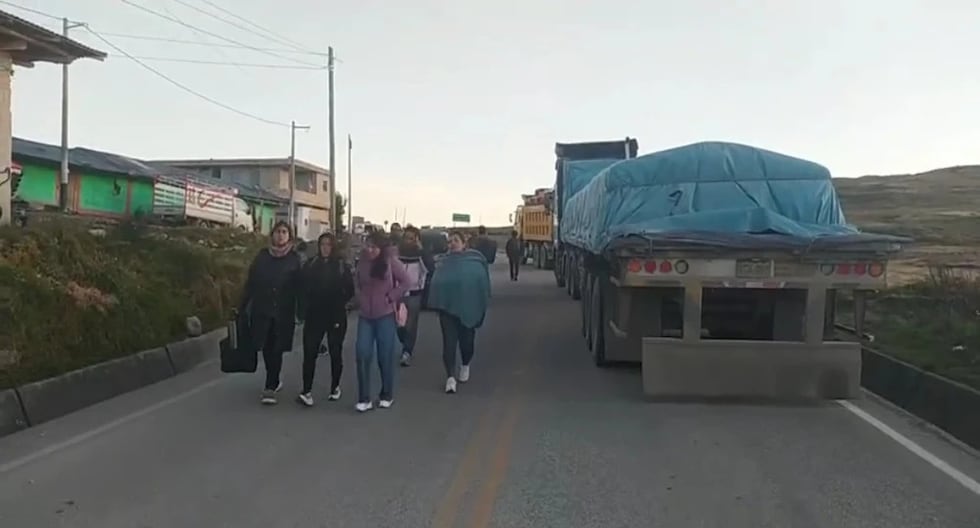
Three main roads of the Cajamarca region dawned by groups of ronders in the framework of the Regional unemployment convened by the Regional Federation of Peasant, Indigenous and Urban Roundstogether with various social organizations.
According to the report of the National Police of Peru (PNP)blockages are recorded from midnight in three strategic points:
- The sector Chipleon the road Catervo – Jaén – Chiclayoaround 1 000 protesters.
- The kilometer 3.5 of the Cajamarca -Bambamarca roadwhere two combis were crossed on the road.
- The kilometer 67 from the Cajamarca -Chota roadat the height of the crossing The junctionwith some 50 protesters.
The ronderos demand Culmination of the pending sections of the Longitudinal Highway of the Sierraparalyzed work for more than a decade, in addition to firm actions against illegal mining and growing crime in the region.
He President of the Unit Front and Fight for Progress and Good Living of Cajamarca (Fedipc), MARINO FLORES GONZALESsaid in statements to RPP that the measure responds to the lack of response from the central government:
“Although we have sent documents 20 days in advance, we have no response,” he said.
For its part, Jhoan Fernández CorreaPresident of the Regional Federation of Campesinas Rondas de Cajamarca, said that the objective of unemployment is make the state abandonment and not generate confrontations with the forces of order.
So far, the Road that connects Cajamarca with the coast remains freealthough a contingent of the Special Services Unit (USE) of the PNP moved to the city of Chilete As a preventive measure.
Effects in Chiclayo
In the region Lambayequeregional strike also affected mobility. In it Chiclayo interprovincial terrestrial terminal The sale of tickets to Jaén and San Ignacio Due to the blockade of Fernando Belaúnde Terry road.
Companies reported that They will only attend the parcel service until the step is restored. Meanwhile, the groups that cover the route to Jaén They operate partiallyleaving passengers in Puerto Chiplepoint where one of the blocks is maintained. The price of the passage rose from S/ 70 A S/ 80.
Every day, around 15 buses They leave for these cities, transporting an average of 900 passengerswho have been directly affected by the paralysis.