Australia and Colombia celebrate half a century of diplomatic relations at a time when bilateral cooperation is going through one of its highest points. Along with the traditional links in education and culture, lThe economic agenda is marked by mining and energy transition, sectors in which the oceanic country wants to put their experience on the table.
Anna Chrisp, Australian ambassador to ColombiaHe said that with about 80 Australian companies operating in Colombia, many of them in infrastructure and extraction of resources, the interest of investing in the country is strengthened in the midst of sustainability challenges and the shared goal of moving towards low carbon economies.
(See: Australia consolidates its appeal among Colombian students)
How does this bilateral relationship Colombia/Australia come?
At this time, bilateral relations between Australia and Colombia are closer and more warm than ever. We are two countries very in common, with challenges but also potential. We are megabiodiversas nations, with extractive economies, but with the challenge of energy transition. We have a cultural wealth with our indigenous peoples.
There are shared priorities in the multilateral system, in global issues such as climate change, human rights, international law, gender equity, which we work very closely.
We celebrate fifty years of diplomatic relations. It has been an interesting exercise to see where we were and of course, where we are going. We have many projects, for example, in education. We have a fairly natural connection, despite the distance.
What are working on business matters?
We have about 80 Australian companies working in Colombia, in several sectors. The majority of the investment is in the infrastructure line, for example, at the El Dorado airport in Bogotá, in Cartagena, on highways and other companies that work in the mining sector.
In Australia we have very high standards of sustainability, not only environmental, but also social to work hand in hand with indigenous communities. There are more and more companies interested in coming to Colombia, such as those in the health sector, for example, with cochlear implants, which are an Australian invention.
Additionally, we have the Business Council of Australia Colombia Business Council, which is based in Bogotá and that plays a very important role in helping companies communicate information in both directions.
(Also read: Trump tariffs: Colombia is saved from additional rates, for now)
Anna Chrisp, Australian ambassador to Colombia
Courtesy
In terms of foreign trade, how are the figures?
On the Australian side the most important export is education. There are a little more than 30,000 Colombian students in Australia this year, in fact, it is the sixth country in the world in terms of student population in Australia and the largest in Latin America.
From Colombia to Australia, we have more and more flowers, coffee and a Colombian community that is introducing arepas and chocoram, which are very rich products.
Under his mining and transition experience, what can they contribute to Colombia?
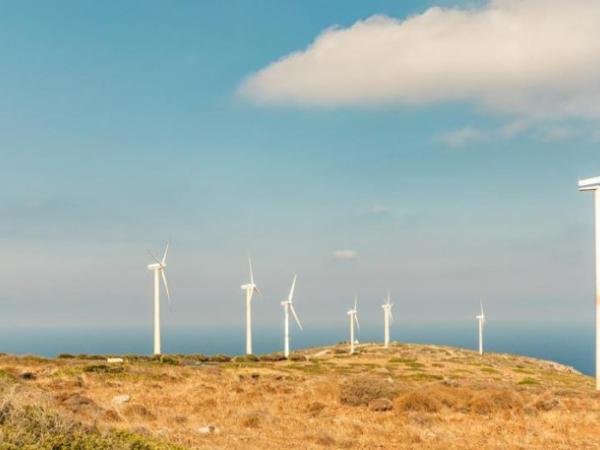
We have an interesting experience and some lessons learned in Australia that can serve Colombia. Our economy is very strong in natural resources and in extraction, but we also have challenges to achieve netzero in 2050.
We are working in sectors such as green hydrogen and critical minerals in a sustainable way. We have had very interesting exchanges with Colombia, for example, on clean energy projects, solar panels and green hydrogen, with local communities in Australia that are part of these projects as shareholders.
We organize with the Foreign Ministry an exchange with representatives of indigenous peoples in Colombia and indigenous Australian experts, talking about these issues and clean energy in very remote regions.
(Read more: New passports from Uruguay generate warnings from Germany, France and Japan)

More than 30,000 Colombian students study today in Australia, the Latin American country with the greatest educational presence there.
Istock
Education is the flag of this cooperation, how are they advancing?
This has been one of the richest experiences of my time here in Colombia. Education is very important in our relationship and a priority for the embassy. But it is not simply an exchange of students, we want to go further with joint research, with relations between institutions, supporting delegations from Colombian universities towards Australia and vice versa.
It is a very interesting opportunity to attract students, but also to strengthen this research on very important issues, such as tropical medicine, sustainability, biodiversity, artificial intelligence, among others.
We have an offer of very interesting scholarships and agreements, we work hand in hand with colfuturo. This year we had the honor of being the second destination of choice for Colombian students. This is due to the quality of our education, for the return on investment, for the possibility of working in Australia while studying and for the very diverse culture we have on campus.
In terms of economic cooperation, how are you behaving?
In Australia we have a rather stable economy, with very careful policies to ensure the growth of the economy and of course, the energy transition is part of this. Doing politics and producing regulations and laws gives certainty to investors on the way to the future, as they bring confidence in the rules of the game to invest in long -term projects.
Australia works a lot with Colombia, for example, in the World Trade Organization, to ensure that agricultural trade is more fair. We work together with that interest in having the rules of the game very clear and stable to be able to invest in Colombia.
(See also: Colombian Laura Gil assumes her position as Deputy General Secretary of the OAS)

About 80 Australian companies currently operate in Colombia.
Istock
What plans and expectations do they have forward?
We have many plans for the future of bilateral relations. We are working with Colombia on the way to Cop30, in Bethlehem, about climate change. In addition, Australia wants to be host in COP31. If we achieve it, we will be working hand in hand with Colombia to achieve very ambitious goals in the fight against climate change.
Working in the UN forums with Colombia, in the Commission for the Construction of Peace, in Gender Affairs, for example. We have enough things on the cultural side, in attracting dance groups, of Australia opera, to come to Colombia.
(Read:Foreign trade with the US, between diplomacy and the crisis )
Diana K. Rodríguez T.
Portfolio journalist