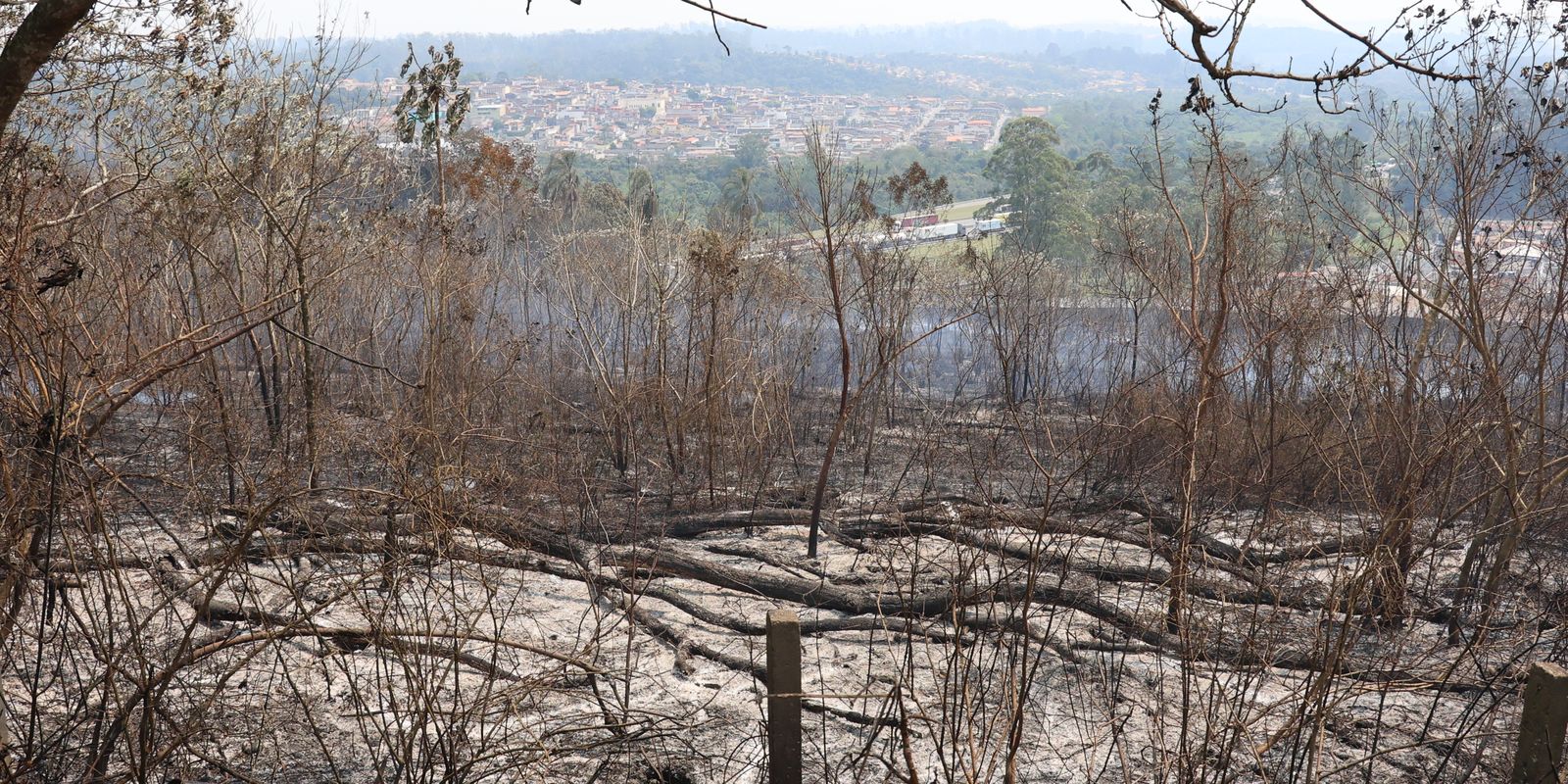
The dry climate in the capital region and in the interior of São Paulo place the metropolitan region, with more than 10% of the country’s population, in a delicate situation.
According to the State Civil Defense the risk of vegetation fires, it is high in virtually the entire territory of São Paulo, with areas at the level of emergency in the regions of Ribeirão Preto, Bauru, Araraquara and Presidente Prudente.
The red alert level is mainly concentrated in the Paraíba Valley, São Paulo Metropolitan Region and South Coast, where the combination of low humidity and constant winds also favors the spread of fire.
“The analysis of the last days shows that the typical critical conditions of the drought period continue to demand extra attention of municipal and state teams,” the statement reports.
The east range of the state, including the Ribeira Valley and the North Coast, are expected to enter into an emergency on Monday (6), according to the agency. The situation begins to change on Tuesday (7), with sensitive improvement only from Wednesday (8).
This Sunday (5) were registered outbreaks of large fire in the cities of Presidente Venceslau, Presidente Prudente, Espírito Santo do Pinhal and Itapura, without registration of victims.
Reservoir
The intensity of the drought in the region has decreased the amount of water in the reservoirs to a pace of about 0.3% of reserves per day.
This Sunday, they were 30.3%. The 30% landmark is considered critical and from which the system is considered in an emergency situation, as has been the case since October 1st in the Cantareira reservoir, the largest in the state.
Fires in the country
The state of Maranhão exceeded Mato Grosso as a federative unit with the largest number of burning records in the country this year, with 11,511 outbreaks to this day, and a 4% drop in relation to the total of 2024 outbreaks.
The state is, among the large in number of outbreaks, the only one that has not shown a relevant drop this year, with virtually null variation since 2022 and the possibility of increasing over the last three years.
Negative highlight last year, Mato Grosso had 80% decrease in outbreaks, but is still the second on the list, with 9,399 outbreaks in 2025.
Third with more records, Tocantins (8,849 outbreaks) fell by 42%.
Until October Brazil registered 81,374 burning outbreaks, a 62% drop from 2024 and the lowest value of the decade. The data are from the Portal of the National Institute for Space Research (INPE).