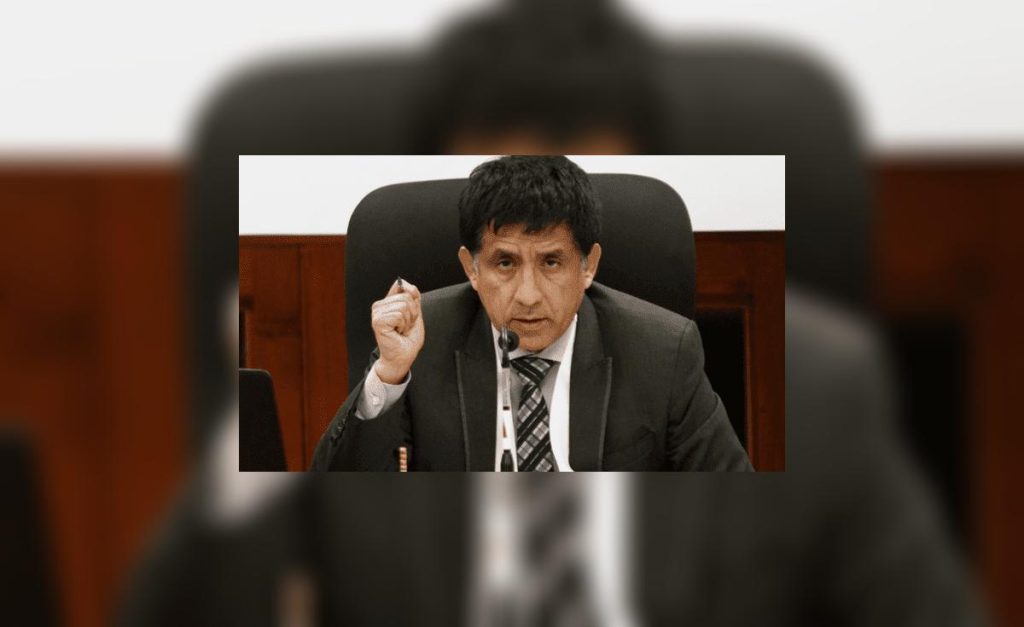
If the legislative does not make the correction, the SCJN will do, Aguilar Ortiz declares
César Arellano García
La Jornada newspaper
Saturday, October 4, 2025, p. 3
The Amparo Law is necessary, however it should not be retroactive, considered Hugo Aguilar Ortiz, Minister President of the Supreme Court of Justice of the Nation (SCJN).
During a meeting with media he said that the transitory article of the amendment reform, which gives retroactive character to the new provisions in the matter is inappropriate and has to be adjusted, but in case the legislative power does not carry out the correction, the highest court would be responsible for doing so.
He said that currently the amparo procedure is very “bureaucratized” or there are many means of challenge that make the judgments become endless. “Then, it is necessary to simplify a good part of the procedure in some cases in the issue of sentence execution.”
This week, the Senate of the Republic approved with adjustments the presidential initiative in amparo. The amendment is aimed at modernizing and strengthening that legal mechanism for the defense of citizens and eliminating the abuses in which it has been incurred, especially in the case of tax credits.
It also establishes that the suspension may be denied when social interest and public order are affected. In this regard, Aguilar joined President Claudia Sheinbaum, who rejected the retroactivity of the new amparo law.
On the other hand, he said that he is very happy with the results achieved 30 days after starting the Court, since the yield is good, which allows to reduce the lag of the matters.
In that sense, he said that from 2003 to 2024 the highest court in the country had a productivity that went from one to five cases resolved per session.
“Today we are in 11 cases per session. On September 11, October 1, we resolved a total of 116 cases and that gives us a productivity of approximately 12 cases per session. Then, with this, before, full and rooms, around 120 to 125 cases arrived per month. We are in 116. It means that, still operating in full, we are reaching the productivity that had before working in full and rooms.”
He added that productivity will increase, as next week, he and ministers will deliver their first resolution projects.
“Citizenship really has confidence in the new Court, goes here to resolve their emerging issues, have guidance and we have increased citizen care, exponentially. I have received unions, authorities, presidents of courts, community authorities, citizenship.
“We have attended to protesters, to all of them, to those who have come to express. In this new era they do not need to make a demonstration so that the President Minister is received, they only need to announce, find a time or a space and it will be attended. So, for me this other part is also satisfactory because it speaks that citizenship is seeing us and seeing us with hope.