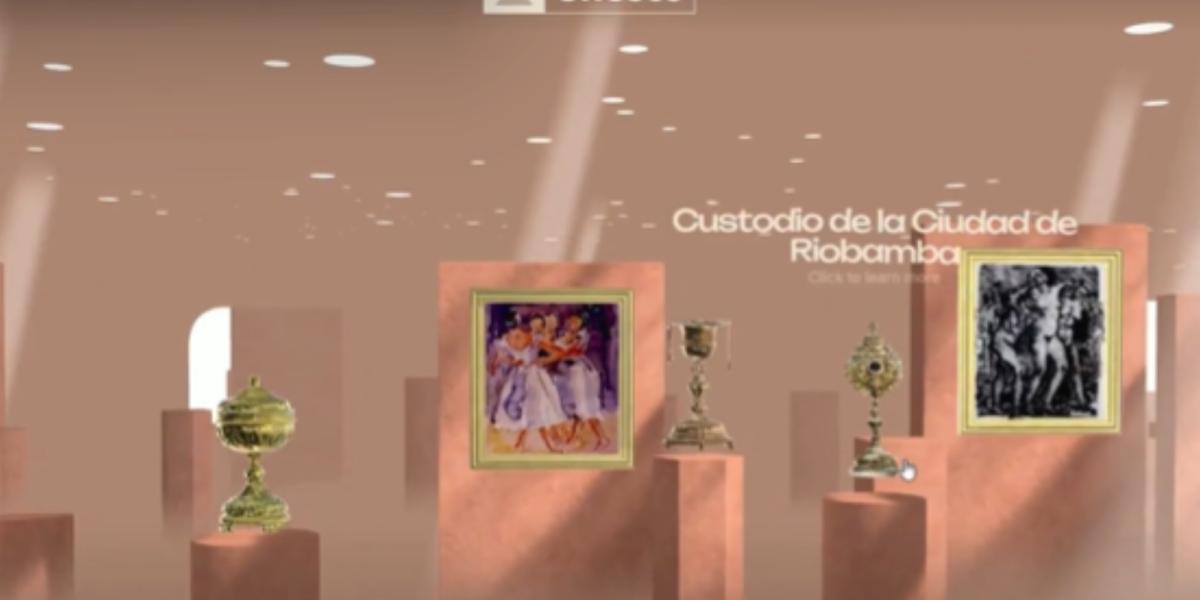
A mask of Zambia rituals, a pendant from the ancient city of Palmira or a painter by the Swedish painter Anders Zorn, are some of the objects that, like so many others looted or stolen, are now exposed in a virtual museum opened Monday by UNESCO.
The initiative seeks to raise awareness about the traffic of cultural goods in the world.
This interactive platform, designed by Burkinés Architect Francis Kéré (winner of the Pritzker Prize in 2022), brings together about 250 objects, a small look of a gigantic traffic that affects at least 57,000 goods according to Interpol, partner of this initiative.
“It is a unique museum in the world,” Unesco, Audrey Azoulay, who launched the project in 2022, told AFP.
Through this unique space, “we share with the greatest possible number the challenges of the fight against the illicit traffic of cultural goods, a traffic that hurts the memoirs, breaks the links of generations and prevents science.”
When touring this “digital shelter”, the visitor can discover – and even examine thanks to 3D modeling – these missing objects, track their origins and their function (funeral rite, war, decoration …) through stories, testimonies and photos that accompany them.
“The objective of this museum is to highlight these works, give them visibility and return pride to the communities to which they belong. Each stolen piece drags fragments of identity, memory and ancestral knowledge of their culture of origin,” says Sunna Altnoder, head of the Unity against Illicit Traffic of UNESCO.
The initial collection is intended to enrich itself with many other stolen artifacts, once modeled. But in the long term, UNESCO hopes above all to see its “gallery of stolen cultural goods” to empty in favor of the “Return and Restitutions” adjacent, where the pieces found or returned to their countries or communities of origin will be exposed.
“The starting approach is (…) even that the museum closes because all objects will have been recovered,” says Sunna Altnoder.
This initiative also seeks to bring together the actors involved in the traffic of cultural goods.
“A network is needed – with police, judicial forces, the art market, the Member States, civil society, communities – to overcome another network, which is the criminal network,” said Altnoder.
The illicit traffic of cultural goods is a little known criminal activity, whose main source of reference is the Interpol database. This crime includes the looting of heritage in conflict areas, illegal archaeological excavations, robberies in cultural institutions and the falsification of works of art.