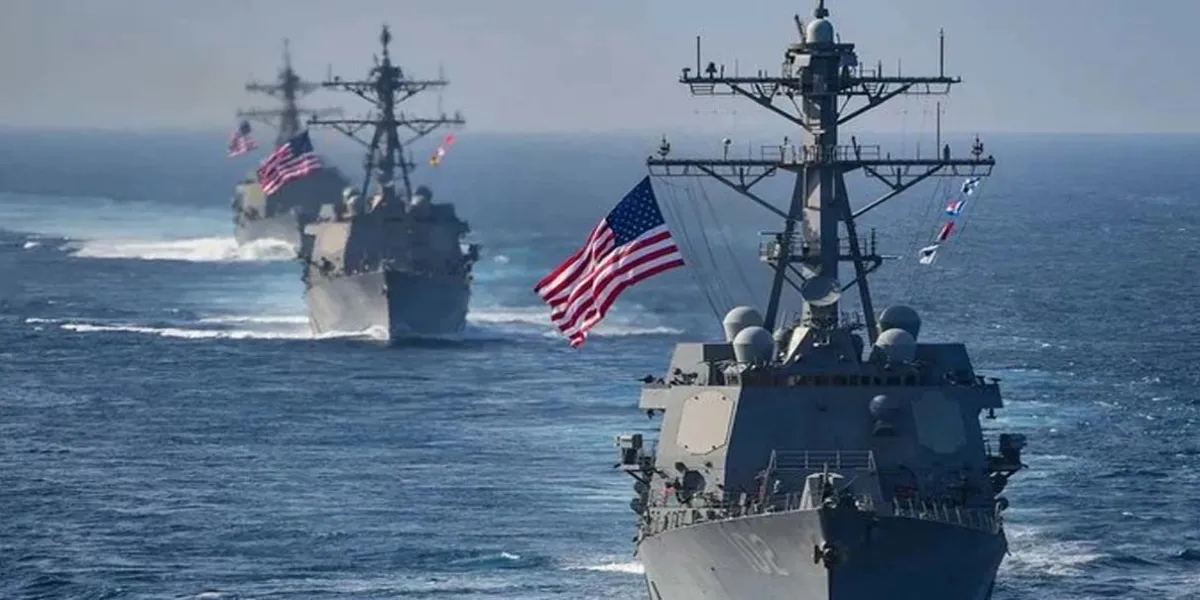
Venezuela anticipates Christmas, Alist troops and prepares to decree the state of exception with special powers for Nicolás Maduro, while American warships travel through the Caribbean In what Caracas considers a “military threat.”
The Maduro government denounces seven weeks of “psychological war” and “siege” with this deployment, which according to Washington seeks to combat a drug trafficking network allegedly led by the official leader.
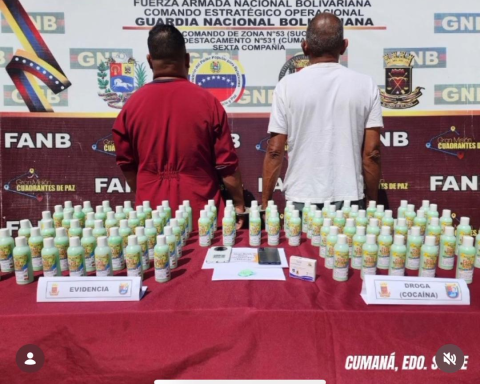
Four boats of alleged drug traffickers were destroyed by US attacks in recent weeks. Venezuela, which denounces a “death penalty” on the high seas, believes that President Donald Trump is using drug trafficking as a pretext to overthrow Maduro and seize the world’s largest oil reserves.
Maduro responded with the mobilization of militias and military exercises. But he also advanced by decree the beginning of Christmas for the first of October in order to defend “the right to happiness.” The same did in 2024 after post -electoral protests that left 28 dead and 2,400 detainees.
External shock decree
The presence of eight warships in the Caribbean constitutes a “excessive threat” and “unjustifiable”, according to Maduro, who has already prepared a decree of external shock, exceptional measure for armed conflicts that expands his powers.
“It can be decreed in case of external conflict, which seriously endangers the security of the nation, its citizens, or its institutions,” says the text.
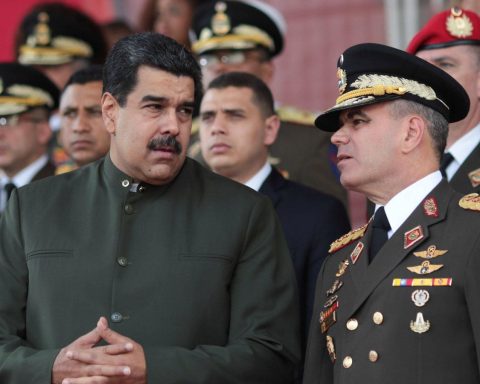
It is a “constitutional instrument (which) I have in my hand in case the country is militarily attacked, which we hope with the favor of God does not happen,” Maduro said.
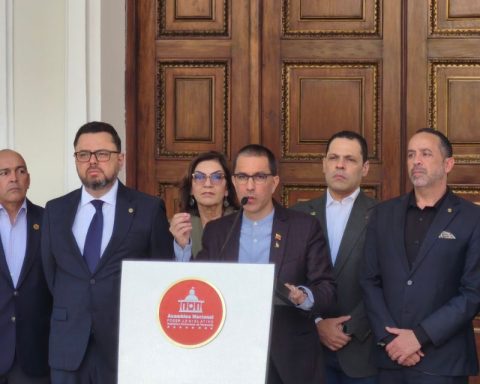
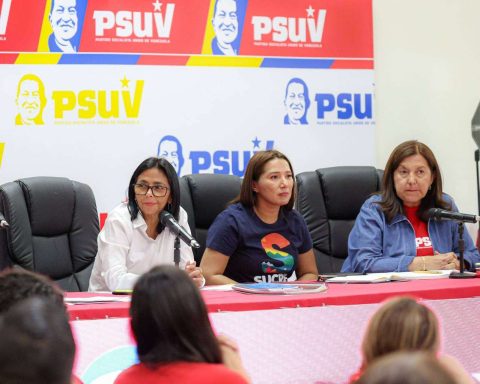
It is “a measure of defense of the nation, which is an exclusive attribution of the President of the Republic to take actions, extraordinary measures to an imminent threat,” the official deputy Iris Varela told AFP.
“Venezuela is not a narco -state, Venezuela is an oil state, Venezuela has a lot of wealth,” he said.
The scope of the exterior shock decree is not clear. It has never been applied before and could lead to the suspension of certain constitutional guarantees.
Juan Carlos Apitz, dean of the Faculty of Legal and Political Sciences of the Central University of Venezuela (UCV), clarified that “” fundamental rights such as life, equality or information cannot be limited.
“Deterrent”
Although there is talk of an eventual foreign invasion in social networks and family gatherings, Venezuelans are more concerned with inflation and low income, and most fear in public of the matter.
“We have such number of problems in our daily lives that we do not feel that conflict: devaluation, economic contraction are situations that do not allow Venezuelans to look at other situations,” said Apitz.
Benigno Alarcón, a political analyst specialized in conflict and negotiation, considers that “there is an operation that is in a deterrent stage”, but “the deterrent stages can wear very quickly.”
“The way of making a threat credible is by progressive approaches,” he said.
Military sources cited by the US chain NBC News They indicated that the United States prepares attacks on drug traffickers within Venezuela.
Venezuela is “object of a real naval block, even if they want to disguise it as an anti -narcotics struggle,” denounced the opposition deputy Timoteo Zambrano. “We are in a prewar situation,” he said.
“Prolonged active resistance”
Venezuela accuses Trump of making fun of the country’s military capacities and encouraging a war in the Caribbean, while urging him to negotiate. Maduro even sent a letter to his American pair with a call to dialogue.
The White House ruled out changing its position.
Key figures of the Venezuelan government, such as Interior Minister, Diosdado Cabello, have recognized that Venezuela is far from the military power of the United States.
“Who said we have an armed force equal to that of the United States? (…) Who said we have the aviation that the United States has? Nobody has said that,” Cabello observed. “It’s stupid to think that.”
“Our strategy is prolonged active resistance, permanent offensive,” Cabello said by equating the military power of the United States with allies such as China, Russia and Iran.