Santo Domingo.- He National Council of the Magistracy (CNM) This Thursday, October 2 begins the performance evaluation process of three judges of the Supreme Court of Justice (SCJ), in compliance with the provisions of the Constitution, Law 138-11 and Regulation 1-25.
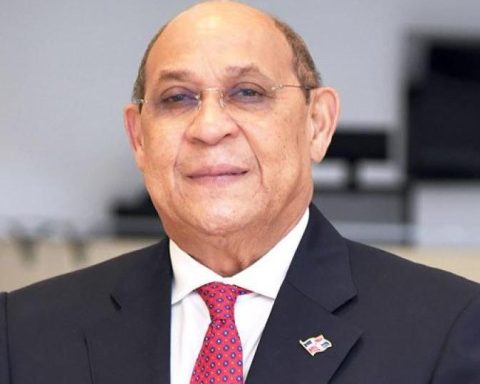
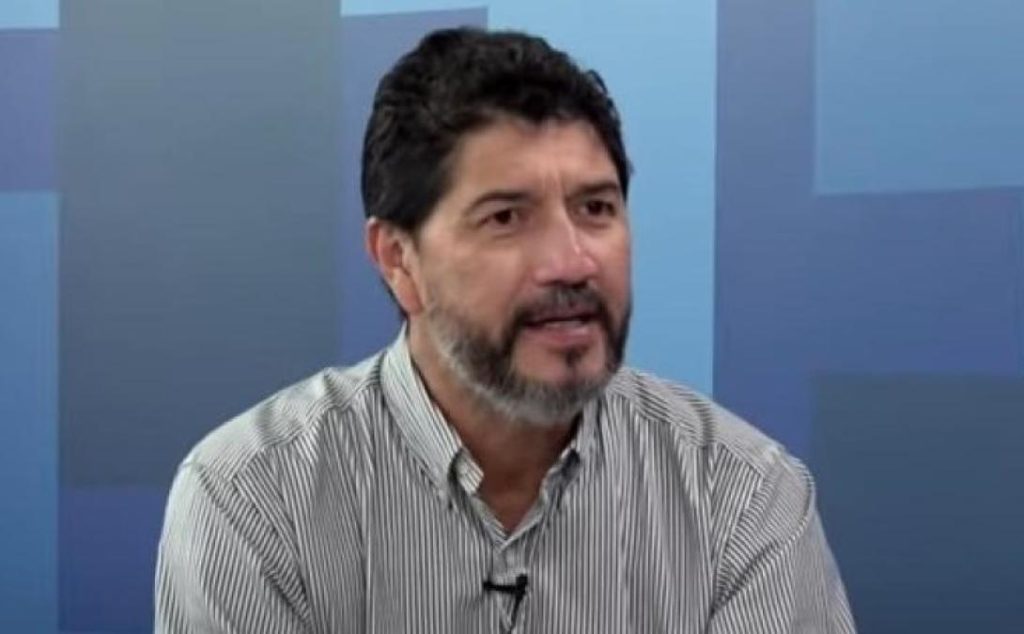
These are the judges of the SCJ Pilar Jiménez Ortiz, president of the First Chamber; Manuel Alexis Read Ortiz and Moisés Ferrer Landrón, president and member of the Third Chamber, respectively.
In addition to these judges, others also fulfill their management as magistrates of the Supreme Court of Justice (SCJ).
With this process, the CNM reaffirms its commitment to transparency and to ensure that the Supreme Court of Justice continues to be guarantor of the legality and unifying law in the Dominican Republic.
Evaluation every seven years
The evaluation, which is carried out every seven years, seeks to measure not only the jurisdictional productivity, but also the integrity, independence and reputation of the magistrates.
The regulation establishes technical indicators such as the number of sentences issued, as well as ethical and personal criteria, including discipline, punctuality and academic production.
The Constitutional Court, in Judgment TC/0270/20, established that any CNM decision must be objective and transparent. If a judge is not ratified, the decision must be properly motivated and supported by clear reasons, in accordance with article 181 of the Constitution.
Transparency and access
The complete performance reports of the three magistrates, as well as all the judges of the Supreme Court from 2020 to date, are available on the CNM portal for public consultation.
The National Council of the Magistracy will meet twice this week: on Thursday, October 2, at 5:00 in the afternoon, in the Ambassadors Hall of the National Palace, and on Friday, October 3, at 5:00 a.m., to decide on performance evaluations.
Judges of the Supreme Court of Justice that will be evaluated by the CNM
Pilar Jiménez Ortiz: Modernization and record in judicial decisions, who was appointed as Judge of the SCJ in July 2017, and assumed in 2019 the presidency of the First Chamber, specialized in civil and commercial matters.
He faced a historical delay of 11,654 files, some earrings since 1992, and managed to eliminate that cluster. Between 2019 and August 2025, the Chamber issued 24,707 cassation decisions, marking an institutional record.
Jiménez Ortiz is a doctor in Law by the UASD (1986) and has multiple postgraduate and masters in Civil, Business, Administrative and Constitutional Procedural Law in universities of the Dominican Republic, Costa Rica and Spain.
She has been a judge of peace, judge of first instance, president of civil chambers and judge of the Superior Land Court.
He is currently commissioned Ibero -American Judicial Ethics, where she has issued opinions on performance and integrity of judges in the region. It also exercises teaching at the National School of the Judiciary and in the PUCMM.
Manuel Alexis Read Ortiz: Experience and doctrinal production
He was appointed Judge of the Supreme Court in 2017, and appointed in 2019 President of the Third SCJ Chamber, knows land issues, labor, tax and administrative contentious.
Under its management, the Chamber resolved a historical cluster of labor and land files, continuous riubutario and contentious admission, including pending cases since 1984. Between 2019 and 2025 he issued 15,808 cassation sentences.
Read Ortiz is a doctor of law for the UASD with more than 30 years in the judiciary. He has completed specialized studies in Costa Rica, the National School of Judicial and Spanish Universities.
He has chaired Civil Salas, Courts of Appeal and the Superior Land Court.
It is also a prolific doctrinal author. Among its publications include: the means of inadmissibility in the Dominican civil process (two volumes); Disabilities in civil law (two volumes); Of the referral and Other topics. In addition to several studies co -written on civil jurisprudence.
Moisés Ferrer Landrón: Trajectory of the Public Ministry to the Judiciary, appointed judge of the Supreme Court in 2017, is part of the third room. He has been a speaker at more than 450 decision projects and has stood out as a special instruction judge in high public impact processes.
He has represented the Judiciary at the World Bank Land Conference (Washington, 2025) and at the Judicial Power Conference (Santo Domingo, 2024).
He has a law degree from the UASD and has extensive academic training in Spain and the Dominican Republic. He has masters in: electoral political studies (PUCMM and University of Granada); Administrative Law and Municipal Management (UCLM); Constitutional Law and Public Law (UCLM)
He has also carried out specialties in constitutional justice, administrative law, civil proceedings, criminal law and criminal procedural.