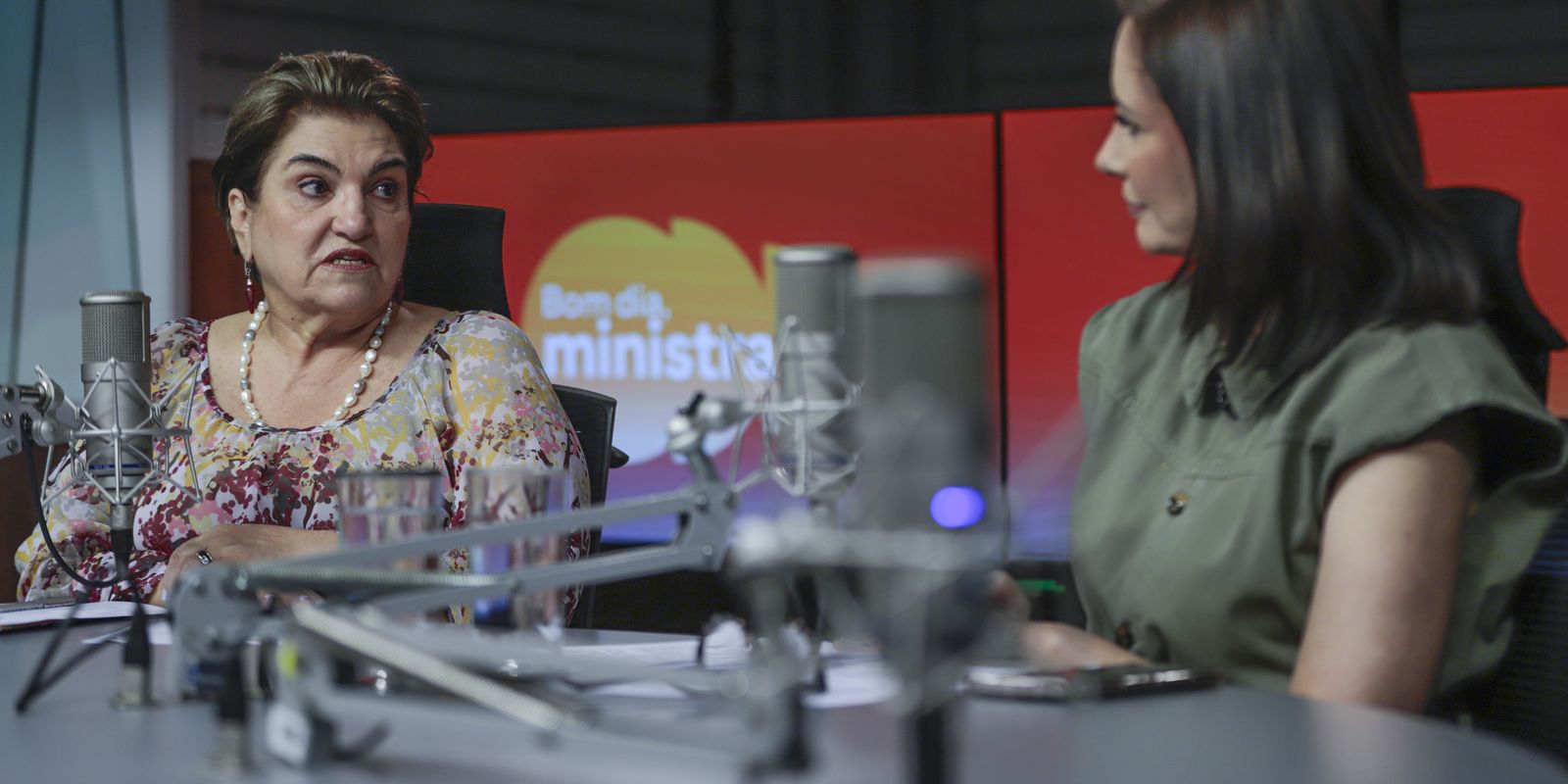
The suggestions for measures to combat the femicide presented by participants of the 5th National Conference on Women’s Policies (5th CNPM) will be analyzed by the Ministry of Women, said the minister, Márcia Lopes, who participated in program Good morning, ministerproduced by GOVbroadcaster of Brazil Communication Company (EBC).
“We have a great diversity, and each region of the country has a characteristic, has an incidence [de feminicídio]there is a way that this violence against women happens. Therefore, I am very interested in looking at the answers of these women, ”said the minister, about proposals that were deposited in a ballot box during the conference.
During the program, Marcia Lopes classified femicide as unacceptable. The minister said that she will seek the faster implementation as possible of pensions for children and dependents of victims of the crime. Second the regulation of the law establishing the benefitof a minimum wage, the payment will come into force within 60 days and must be required by the website or application of the National Institute of Social Security (INSS).
“Let’s talk to the minister [da Previdência Social] Wolney, for us to quickly organize and establish this process, so that families whose mothers have died – so that these children – to have security to continue at school, to have access to their fundamental needs. ”
800 deaths in six months
Marcia Lopes mentioned that there were about 800 deaths from femicide in Brazil, between January and June this year. In 2024, a record of 1,492 murders was recorded.
The minister said that a national plan to confront femicide will be announced by the government soonwith new measures, and defended the need for more unified actions against crime, such as permanent campaigns by the Secretariat of Social Communication, heavier penalties for criminals and inclusion of gender violence prevention contents in school curricula.
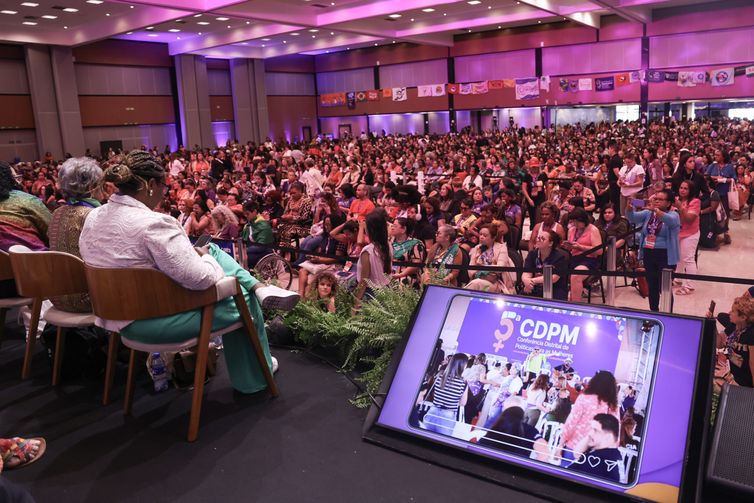
5th National Conference on Policies for Women was held in Brasilia this week José Cruz/Agência Brasil
Punishment for violence
Regarding the effectiveness of the Maria da Penha Law, which fights domestic violence, Márcia Lopes evaluates that the legislation is “firm and strong”, but it is necessary to apply it, punish aggressors and analyze new measures to reduce the number of femicides in Brazil.
“We have to punish, and we have to analyze new measures so that we can completely reduce femicides in Brazil.”
The minister also points out that the Maria da Penha Law is an important mechanism for classifying the different forms of violence (physical, verbal, psychological, patrimonial and political). She warns that women should not normalize psychological violence.
“Psychological violence is terrible. It is invisible from the point of view of appearance, but verbal violence is everyday.”
The minister guides women to seek support in public and community services, such as the Reference Center for Social Assistance (CRAS) and Specialized Reference Center for Social Assistance (CREAS). She counteracts the saying that “no one gets the spoon in a fight of husband and wife”
“It is the duty of the state to have the presence and interfere. We still have a very conservative relationship about it.”
Another way to denounce violence against women is the phone call 180 of the Women’s Call Center, which operates 24 hours a day, every day of the week, including holidays.