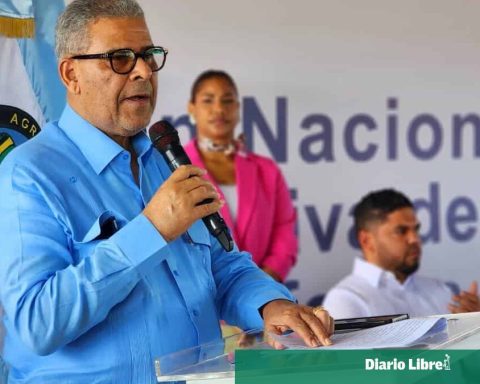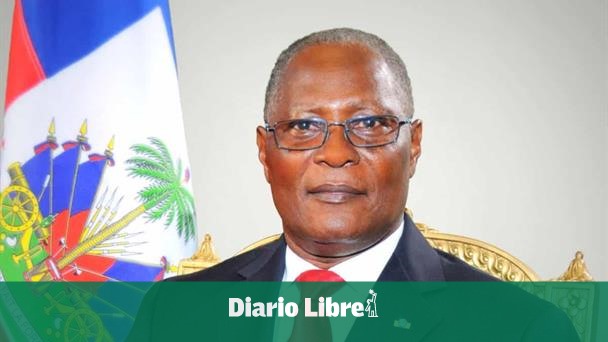
The former president of Haiti Jocelerme Privert He spoke in favor of the resolution of the United Nations Organization (UN) for the formation of a Gang elimination forcethat “given this national tragedy, it is urgent that the national forces of securitywith the effective support of this new one, they manage to restore the authority of the State and put an end, definitively and irreversibly, to this kingdom of terror. ”
In an interview with Free newspaperPrivert said that the population can no longer pay the price of Irreflective decisions of political leaders who have strengthened the control of these criminals about the country. He said that, four years after the cowardly murder of Jovenel Moïsethe true authors and crime instigators are not known.
“Four years ago, some hitmen murdered President Jovenel Moïse.” Has justice been done?
More than four years have passed since the Haitian President, Jovenel MoïseHe was cowardly killed in his residence. From that tragedy, the Judicial investigation open in Haiti He has known a succession of magistrates without achieving, to this day, identify the true authors and crime instigators.
While the Haitian justice It sinks in a perpetual instruction, which the United States judicial authorities are carrying out quickly. Several people involved have already been judged and convicted, or are waiting for their process. This contrast highlights bitterly Structural failures of our judicial institution.
– What was missing in the investigation of this incident to recover confidence not only nationwide, but also within the international community?
Frankly, no one can reasonably justify similar anomaly. He closing car dictated by him coroner manager of the investigation Around this murder formally identified several accused, referred to a criminal jurisdiction. However, despite the seriousness of the facts that are reproached, they all proclaimed their innocence and immediately filed a Appeal.
The procedure was reactivated, in particular with the audience of the arrested, as well as those still released but mentioned in the investigation. The especially worrying thing is that some accused – among the most influential – took refuge abroad and categorically refuse to respond to justice citations. The arrest orders issued against them have been left, so far, without effect.
This dysfunction illustrates, once again, the impact of this long political crisis on the very foundations of the Haitian State. He Judicial Branchlike the Executive and the Legislative, it suffers the direct consequences. Its inability to guarantee equitable and accessible justice to all reinforces the feeling of impunity and contributes to the collapse of institutions that should guarantee democracy and the rule of law.
Do not forget that the president himself Jovenel Moïse He had publicly recognized, from abroad, having been forced to appoint about fifty corrupt judges. This statement, as serious as symbolic, deeply damaged the credibility of the judicial system.
Today, it is urgent – it would even vital – to undertake a deep reform of the judicial system. Not only to restore citizens’ confidence, but also to return an image of seriousness and credibility to the country internationally. Without justice, there can be no peace lasting or real democracy.
—What are the problems that led to the first free town of America (Haiti) to fall into the hole in which it is today?
Answer this question already raised in 1882 by Edmond Paulin the Causes of our illsIt is not easy, because the problems of Haiti They are deep and multiple. The former French colony, after conquering its independence At the price of blood, he had to face the hostility of slave powers. In 1825, he was forced to pay a exorbitant rescue For the recognition of his freedom, borrowing strongly with the banks of the old settlers. This double debt, added to the internal divisions Among old and new free, the national construction efforts lastly mortgaged.
In the contemporary era, forty years after the end of the Duvalier dictatorship, the promises of the 1987 Constitution remain unfinished. The rights, the pluralism And the democratic alternation desired by the people have never been priorities for political actors, too often refractory to the demands of a democratic regime. Since 1990, La Institutional instability —Mhased by repeated provisional administrations and constant dysfunctions in the Legislative Power – has sunk the country into a spiral of uncertainties and legal emptiness.
To these political fragilities are added serious economic crisissocial, humanitarian and environmental, aggravated by the inevitable catastrophes of 2010, 2016 and 2021, whose sequelae widely exceed national capacities. These challenges require joint, national and international efforts, in order to initiate a real process of recovery.
– What does Haiti need to advance like the other democratic countries of the continent and become a strong democratic state?
Six long years ago the country lacks Parliament. The Territorial collectivities They are directed by interim executive agents, devoid of all electoral legitimacy. For almost five years, the Executive Power, in its two branches, is also exercised by illegitimate leaders. Between 2010 and 2025, Haiti He has only organized one choice-that of 2015-2016-and, for four years, there has been any chosen in the country. It is the total collapse of our Republican institutions.
The transition opened by the murder of the president Jovenel Moïseon July 7, 2021, it has become the longest ever registered under the framework of the 1987 Constitution. Now, the mission of every transition government is clear: to restore the Constitutional normality and institutional. No previous transition exceeded two years. How to expect to offer better living conditions to our fellow citizens, if our only collective ambition remains the perpetuation of an endless transition, where the struggle for power supplants to the general interest?
Haiti has a vital need for peace, security and political stabilityindispensable conditions for economic and social progress.
—In the United Nations bosom, has a mission of 5,000 men established to restore stability and organize free elections after the end of the mandate of the Presidential Transition Council?
In fact, the available information suggests that an initiative was presented by the US administration, with the support of the Panama Government, before the Security Council of the United Nations, in order to authorize the deployment in Haiti of one Multinational force estimated at 5,500 men. This force would have as its main mission neutralize armed bands, restore free circulation in the main arteries of the country and contribute to the creation of a climate of security propitious to the organization of free electionscredible and transparent.
He Security Councilon the afternoon of Tuesday, September 30, 2025 approved a resolution that authorizes the deployment of that force. The Haitian people are today at the limit, overwhelmed by a generalized insecurity that seems to be installed in all regions of the country. Daily, the armed gangswith total impunity, impose their law, killing, violating, looting and burning the residences of peaceful citizens.
It is urgent that the national forces of securitywith the effective support of this new Multinational force (FMR), manage to restore authority.
“Are you optimistic that, with the collaboration of the international community, Haiti can leave the multidimensional crises she faces?”
I have the deep conviction that Haiti can get out of this crisis, but under an essential condition: that the effort comes first from the Haitians themselves. No lasting solution can be imposed from the outside. The international community can play a support role, offering technical, logistics and financial accompaniment, but we are, Haitians and Haitians, who must define the way to follow and assume our responsibilities.
What we need today is to restore trust, guarantee security and create a stable political climate. If we manage to build a solid national consensus, with the support of the international community, to restore safety conditions, organize credible elections and restore legitimate and effective governance, we can put the country re -place in the path of stability and development.
Haiti is going through one of the most difficult periods in its recent history today. But I remain convinced that, despite the evidence, our people have resilience, intelligence and the ability to get up. We have no right to yield to discouragement or resign ourselves to failure. The real challenge today is to place national interest above personal ambitions, recreate trust between institutions and citizens, and return hope to a youth in search of the future.