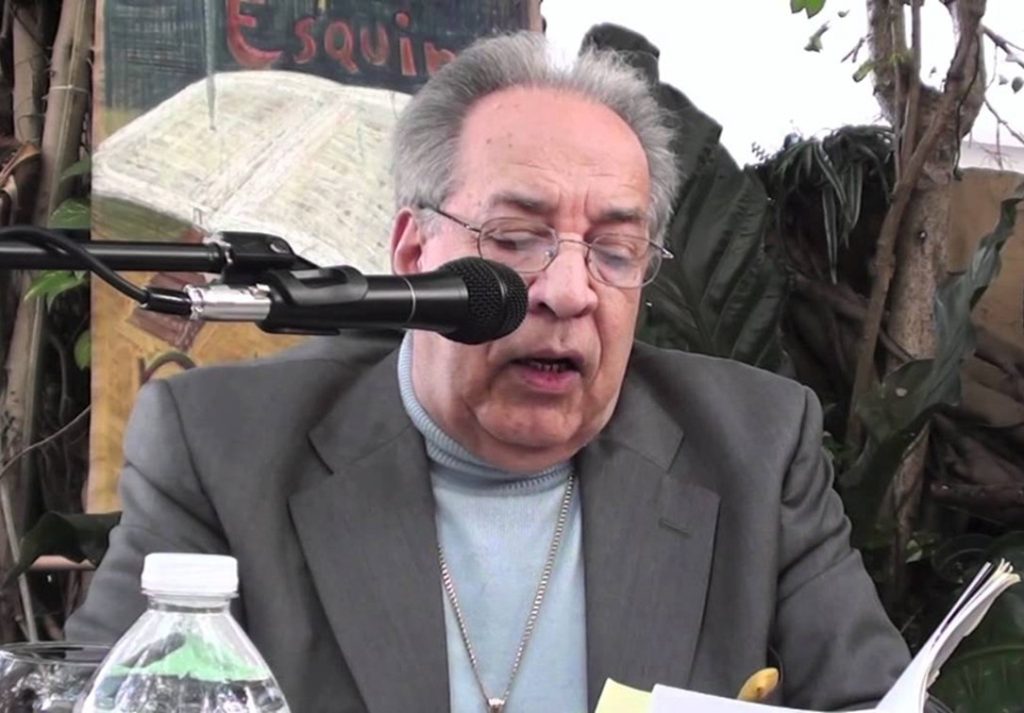
Areli Carreón, founder of the Bicitekas AC organization, highlights that with the cyclevia Granchtitlán the mobility of cyclists as well as pedestrians with the renewal of the banquets is improved.
“Despite being one of the main avenues of the city where we traveled every day, it is a road that was totally abandoned, dirty, with very old infrastructure that had not had proper maintenance,” he said.
It is not enough to see that it is an integral recovery, for all mobility modes.
Areli Carreón, founder of the Bicitekas AC organization
The construction advances in different sections where the Banquetas renewal which includes new gardeners, The adequacy of the side lane where the cycle path will go with gardeners that will serve as confinement, to separate cyclists and drivers from motor vehicles.
The “Green Trails” will be formed with the planting of trees, shrubs and another smaller vegetation to confine the cycle and will run along the 34 kilometers in both directions of the Tlalpan road.
“With these safe, cycle and elevated park projects, (Tlalpan Calzada) is going to be an avenue with more than 1,000 trees that we are going to put along the 34 kilometers of bike path,” said the Secretary of Works and Services, Raúl Basulto, in an interview with Political expansion.
Connect the center and south
The cycle path in Tlalpan Calzada It will have a connection with five other cycling routes: Lorenzo Boturini; South Axis and South Axis; Miguel Ángel de Quevedo, and the cyclevías of Norte and Acoxpa division, which are projected to be ready in December of this 2025.
According to the Mobility Secretariat, it is estimated that this new cycle path and its connections allow to increase between 20% and 30% the number of cyclists traveling through the area.
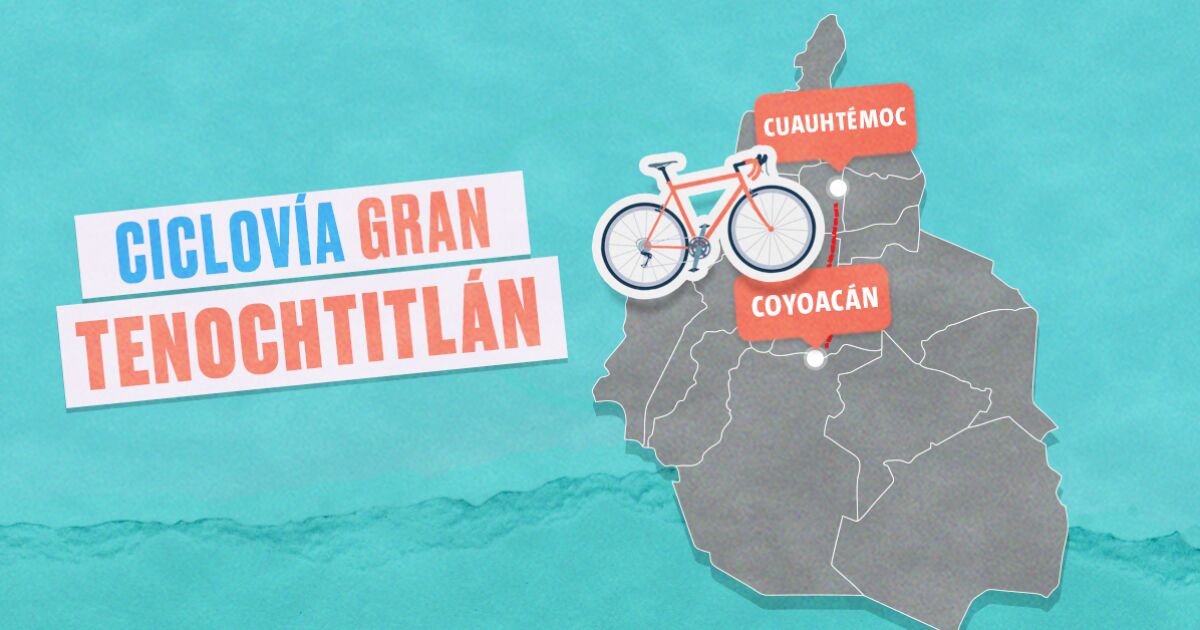
The Croaket Gran Tenochtitlán will allow connecting the south of Mexico City to the Historic Center safely, being a track with physical confinement through the planters.
In addition to the cycling lane, it entails the recovery of the avenue with the change of pedestrian sidewalks, new lighting, bays for the promotion and descent of concessioned public transport and the creation of a green road with the gardeners.
“It is a good decision to be addressed, to recover; it is also a good decision that is made in an integral way, this is contemplating the hierarchy of mobility, first of all the pedestrians guaranteeing accessibility and dignity for the paths that are made on foot, then of course the cycle and after the public transport stops are improved,” said the activist Areli Carreón.
In a congested city such as Mexico City, one of the proposals to offer alternatives is precisely the bicycle. The lesson comes from Paris, where it became transportation for thousands of citizens during the 2024 Olympic Games.
The experience in the Paris Olympics
The bicycle in Paris was not thought only as a vehicle to enter the venues of the Olympic Games in 2024, it also functioned as a means to visit museums, neighborhoods and tourist areas, avoiding the saturation of the subway or buses in the city of Luz.
This was said Vélib ‘ which resulted in more than 1,000 kilometers of cyclovia, the authorization of 27,000 biciestaciones and more than 211,000 trips in one day.
In Previous interview with works —Wart Expansion – the official recommended that the local government make cycling routes and previous events for people to begin to know and familiarize themselves with the route and pointed out that in Paris the regulations helped to turn the French capital into a more cycling city, since the law forces to include cycle paths in any urban road work.
So far from the government headed by Clara Brugada, 7.4 kilometers of new cycling infrastructure have been installed in the city, to add a total of 419.6 kilometers of cycling roads in the capital. With the Cyclist Plan 2025-2030 The objective is the construction of 300 kilometers of new cyclevías in Mexico City .