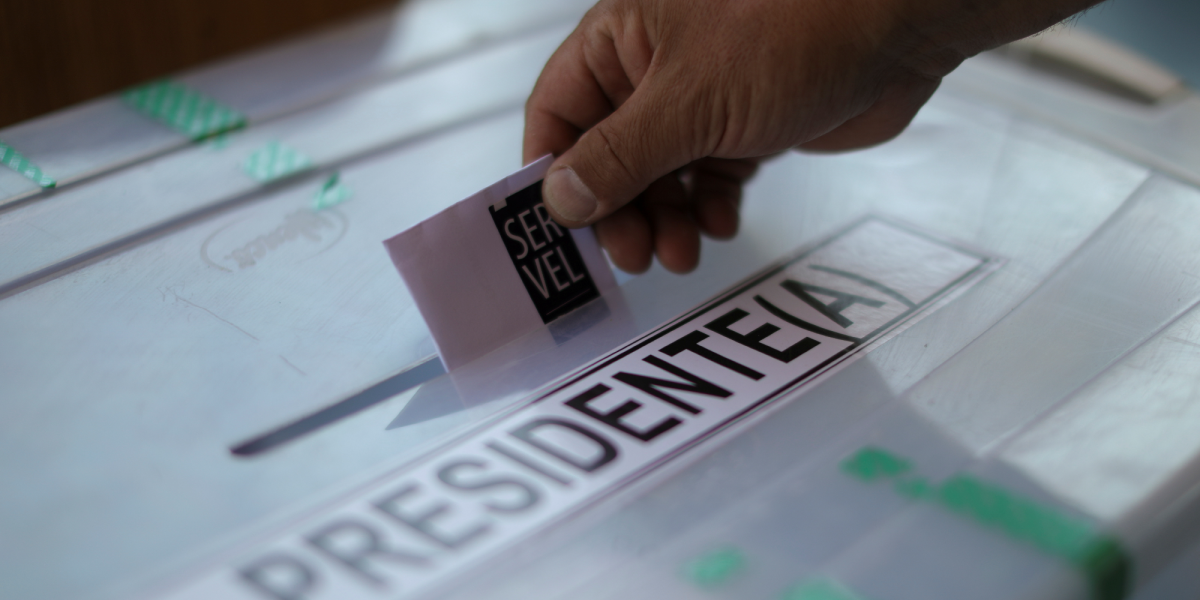
The Congress of Chile on Monday approved a bill that fine up to $ 100 who does not vote in the next November elections, after restoring the mandatory suffrage due to the low participation.
The Chamber of Deputies gave the green light to the initiative endorsed by the Senate on September 10, for a major majority, after an interparty pact.
“A good agreement was achieved. The Chileans are going to be the ones who choose the authorities and those authorities will have an even greater support,” said the president of the Chamber, the opponent José Miguel Castro, after the vote transmitted by the Legislative Canal.
In 2022, after a decade of voluntary vote, Chile restored the mandatory suffrage, to increase the participation that in the last presidential (2021) reached 55%.
The new law will govern the general elections of November 16, in which the ultraconservator José Antonio Kast and the communist candidate Jeannette Jara lead the intention to vote, according to probes.
In the same session this Monday, the voting requirements for foreigners based in Chile were approved, but the regulations will begin to govern in 2026. In the November elections, they will vote as they have done so far.
Chile allows us to vote in any choice of foreigners who have five years of residence in the country.
In the world, only Uruguay, New Zealand, Chile, Malawi and Ecuador allow foreigners to vote in general elections, according to the International Institute for Democracy and Electoral Assistance, based in Sweden.
The approved regulations elevate the requirement to vote to 10 years of uninterrupted residence.
The immigrant population in Chile doubled in the last seven years and reached 8.8% in 2024, promoted by the arrival of Venezuelans, according to the National Institute of Statistics (INE).
Of the 15.6 million people enabled to vote in November, 880,000 are foreigners, according to the INE.
“As never before, the foreign vote will be so incident and can be completely decisive,” the Diego Portales University analyst Rodrigo Espinoza told AFP.
The fine for not voting, meanwhile, will lead to “that we have an important level of participation, both in first and second round”, with a majority of “obligatory” voters that “would be decaying” by Kast, according to Espinoza.