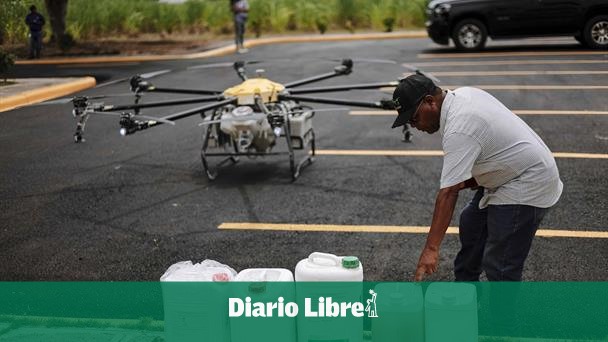
The incorporation of drones To automate true agricultural work like the seed planting In fields, crop fertilization and their subsequent fumigation It has become a successful innovation that is saving time, money and supplies to those who decide to make the investment.
From the arrival of the first agricultural drone to the Dominican Republic In 2016 – a DJI Agras MG1 model – until today – in those who have entered the country more sophisticated models, such as lines T70 and T100 of the same brand – 148 producers already fly drones in their agricultural farmshaving a high demand for crops such as rice, bananas or sugar cane.
This was stated by the Executive President of the Dominican agro -business board (JAD), Osmar Benítez. The agro -business, who has a pioneer in the use of this technologyhe said that he reduced from 15 days to just one day the time of fumigation of its 1,514 tasks bananas farm.
In addition, what I previously needed the intervention of eight workers, now only requires a young man who pile the drone About the farm, thus replacing Uncoalized employees and minimizing the Costs.
“What are the goodness of these Air equipment unmanned? Uniformity, time, application efficiency (product), (minors) Costs and precision“He listed.
Advantages in its use for cane
He Engineer Juan Isidro MedinaAdministrator of the Ingenio Porvenir, coincides. The sugar central It has three drones of the HT F72 brand that have been able to cover an area of up to 1,100 daily tasks, replacing the work of 200 men and representing a saving of 35 % in the wages that would be paid.
The manufacturer of this brand indicates on its website that the model HT F72 It has capacity to sprinkle agrochemical products between 28 and 30 hectares per hourequivalent to 448 tasks per hour, about 3,584 in eight hours.
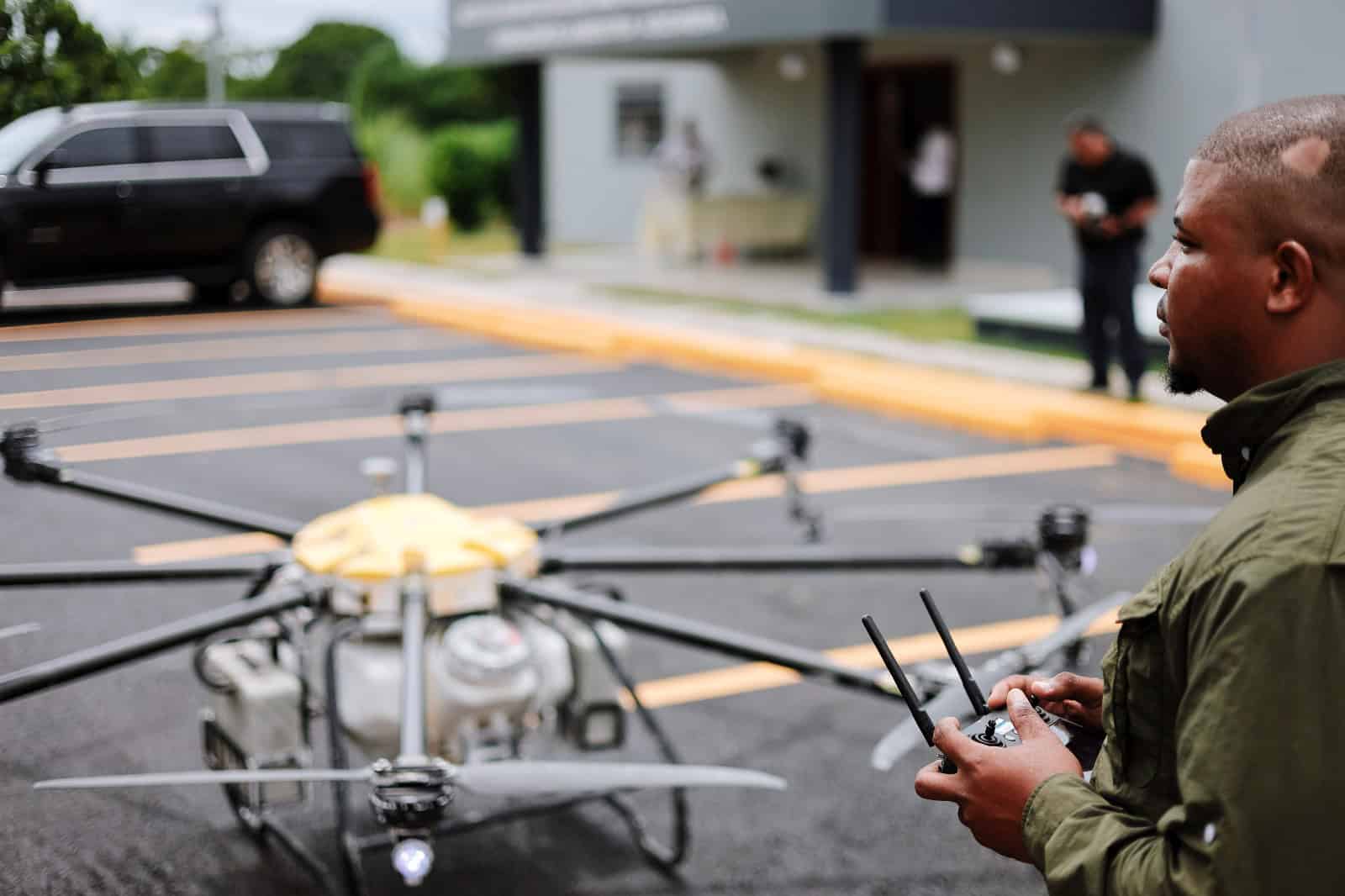
Medina states that another of its advantages is that The ground does not spoilsince the use of Pisa tractors and lies the cane. It is also more accurate, because works with a satellite mapping And when they have to recharge the liquid, they resume the work “at the precise point in which they left it.”
Ingenuity plans to use it In the next harvest to apply maturechemicals that improve the concentration of sucrose in the cane.
Medina says they are currently working with drones In weed control and fertilization the mills of the Roman Central, Christopher Columbus and the company Fine Dominican alcohols.
Are they affordable?
As expected, this technology It requires one important investment To get it. Depending on the model, a drone can cost between $ 12,000 and $ 13,000, without having indispensable access such as batteriesloaders or additional tanks according to the need for products.
If several of these items are purchased, including Electric generators Specific to load them, and thus have a “more complete” team, the price It would rise to 32,000 dollars.
However, Benítez said that the Jad has been able to negotiate with the government and the companies that matter to reduce the price as much as possible for producers.
Since 2024, these products are tax exemptwhich previously represented up to 40 % of the total cost to pay to obtain them.
They can rent
Those who cannot buy it also have the option to rent it.
That was what the Ingenio Porvenir did to be able to technology to its production. The three drones that rent The Ingenio Porvenir costs $ 17,960 each, which would come to a total of 53,880 dollars –3,329,946 pesos at the current exchange rate.
“A company gives us the service Already three other sugar mills, because we get more comfortable. We do not have to invest in the drone, we do not have to have technical staff, we do not have to walk with pilots, and they do the service Complete, “said Medina.
At present, the country has four registered companies that are dedicated to offering these services, said the Executive President of the JAD, who stressed that they have a cost of fumigation between 70 and 90 pesos per task, which remains much cheaper than what a worker must be paid to do the same work.
Human capital and spare parts
The use of agricultural drones in the farms also has two other important challenges: the need for human capital specialized in piloting these unmanned aircraft and guaranteeing the availability of spare parts.
For the first case, the JAD created the DJI Academy, which offers courses for up to 15 young people per session of different provinces of the country that, once formed, receive a certification and an operating license endorsed by the Dominican Institute of Civil Aviation (IDAC), so they culminate with all the law regulations. Farmers in case some piece of their drones are damaged or they need repair. It is being managed that these spare parts also enter the country free of taxes.