The main news about Mining in Peru have gone from being associated with prosperity, economic bonanza and increasing investments, to occupy the first plans of the notes related to serious crimes that ironically threaten the fiscal stability.
In fact, according to the IPSOS Survey of this year that published Peru2181% of Peruvians believe that illegal mining threatens national security. In the Perumin Mining Convention, held in recent days, The risk of illegal mining to stop the country’s development was approachedpromoting harmful public policies from positions of power obtained under their financing.
In the center of the discussion is Pataz, an Andean province of the La Libertad region of approximately 86 thousand inhabitants, and that houses coveted informal gold mines – or formal mines invaded by illegal under the protection of the reinfill – that have become the bastion of criminal organizations. At least until May of this year, the bocaminas were stained with blood without anyone being able to do anything.
However, on May 9 the Pataz Unified Command (Cupaz) assumed the internal order of the area and the situation has begun to change. At this time, it has assaulted important blows to illegal mining that represent more than S/240 million in losses to its illegal activity, and finally it seems that the state of emergency that began in February last year seems to take effect.
Accurate blows
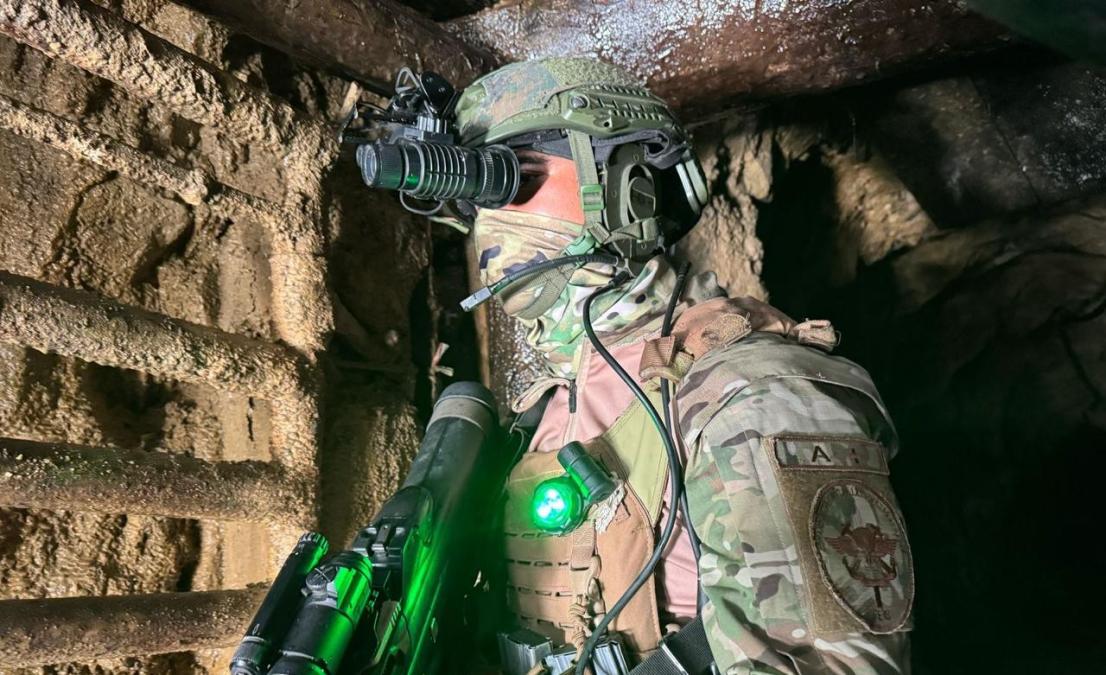
The Cupaz, under the jurisdiction of the operational command of the North of the Joint Command of the Armed Forces (CCFFAA), articulates in a single effort to military of the Special Special Force – Elite Operators of the Army, members of the Special Operations Force (FOES) of the Navy and the Division of Special Operations (DOES) of the Air Force – as well as special units of the Police with the mission of recovering territorial control.
The deployment has the support of the Intelligence and Joint Operations Command (CIOEC) and Army Intelligence, which allows Cupaz to effectively face illegal miners.
As he could know Peru21between May and September, this command has made 33 operations (see detail in the attached table). The most important of all was the Lobo operation, carried out in May in the Pueblo Nuevo Annex, which meant a blow to illegal mining for S/56’855,783. At that time, the Avatar I operation was also carried out in the Suyubamba Annex, which allowed damage to the illegals of S/42’797,840.
The following month the Armageddon I operation was organized in the Zarumilla Poblado Center, which represented S/43’563,700 in losses to this scourge. Already in August the Amaru I shock operation was given in the La Ciénega sector, which was worth s/24’382.920 against illegal mining in Pataz.
In total, since May, CUPAZ has managed to interdict 70 mouths, 22 socavones and 52 mining camps. He has seized 7 backhoes, 79 mining vehicles, 1,350 dynamite units, 4,731 detonators, as well as carbines, guns, rifles, ammunition, bulletproof vests and many more items that served to cause anxiety in the area.
Territorial control occurs in the positions of Sicun, Calquiche, Pamparracra, Parcoy and Tayabamba, but there are also effective in Pueblo Nuevo, Hualanga, Chagual and Alto Pataz. 1,936 patrols have been made in control actions, interventions and interdiction against illegal mining.
Constant effort
The numbers talk about a notorious advance. What changed since CUPAZ took control of operations in Pataz? Iván Arenas, a specialist in mining issues and political analyst, told Peru21 That there was a new strategy.
“The task was to have control of the territory and the routes of illegality. The Army knew it,” he said.
In addition, he continued, “he changed his gaze towards the illegal extraction of minerals, whose activity is absolutely illicit and intolerable. Likewise, the army is authority and deterrence against disorder in that jurisdiction. To this we must add that there is a positive perception of the citizenship of the army against the disruption in the area.”
To all this, Arenas assured that more “technical specialization is needed to enter the undercuts and illegal work.” The task, although directed, is still in progress.
Recommended video